

Expert Opinion
There is no single best crushing form. In the field across a dozen countries, Vanguard Machinery (a Chinese-made crushing and grinding equipment brand) keeps seeing the same pattern: the cost of picking the wrong format is rarely the equipment price. It is the project that starts trapped from day one — either it cannot be moved when the pit shifts, or the civil works quietly crush the cash flow before ramp-up. The real rule is simple: understand project life, relocation frequency and total cost of ownership first, then talk machines. The tables below draw the boundaries in one read.
A second field lesson matters just as much. Owners often compare the three forms only on the sticker price of the crushers, then discover that the hidden costs sit elsewhere: a stationary line looks cheap until you add the foundation, the piling and the months of schedule; a mobile unit looks expensive until you remember it needs no foundation at all. The honest comparison is never machine against machine. It is the whole delivery model against the project's clock and cash.
Quick Answer
If you will run continuously for three to five years at one site and may relocate once or twice, a modular plant (MBP) is usually the safest value: lighter civil works than a fixed line, more scale than a pure mobile unit. If the job is under eighteen months and moves often, a mobile crusher (tyre or crawler) is working the same day. If you are building a large permanent aggregate base for a decade and chase the lowest cost per ton, a stationary line remains the benchmark. The three do not replace each other; they sit in layers by project life.
To put numbers on it: a mobile train typically reaches production within one to three days of arriving, a modular plant within two to four weeks, and a stationary line within six to sixteen weeks once the civil works are done. That gap is not trivia. It is the difference between catching a market window and missing it.
Key Differences
| Comparison | Modular Plant | Mobile Crusher | Stationary Line |
| Best Application | Mid-size quarry, medium-term aggregate | Short job, frequent moves, urban edge | Large permanent base, high output |
| Suitable Material | Limestone, granite, cobble and more | Same, plus construction waste | Nearly all, including hard rock |
| Feed Size | Typical up to 600 mm | Typical up to 500 mm | Up to about 1000 mm with primary |
| Finished Product | Good cubicality with cone | Good cubicality | Good cubicality |
| Capex | Medium, between the two | Higher per unit, saves civil | Lowest per ton, heavy civil |
| Opex | Medium | Slightly higher (diesel or tow) | Lowest per ton |
| Relocation | Modular reassembly, days | Drives or tows away, hours | Essentially not relocatable |
| Commissioning Time | Typical 2 to 4 weeks | 1 to 3 days | Typical 6 to 16 weeks |
Read the table as a spectrum rather than a scoreboard. On the left, mobility is highest and scale is lowest; on the right, scale and economy are highest and mobility vanishes. The modular plant is the pivot in the middle: it trades a little mobility for a lot of scale, and trades a little scale for a lot of mobility. Most real projects land somewhere in that middle band.
Product Overview
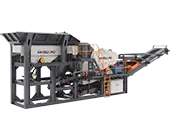
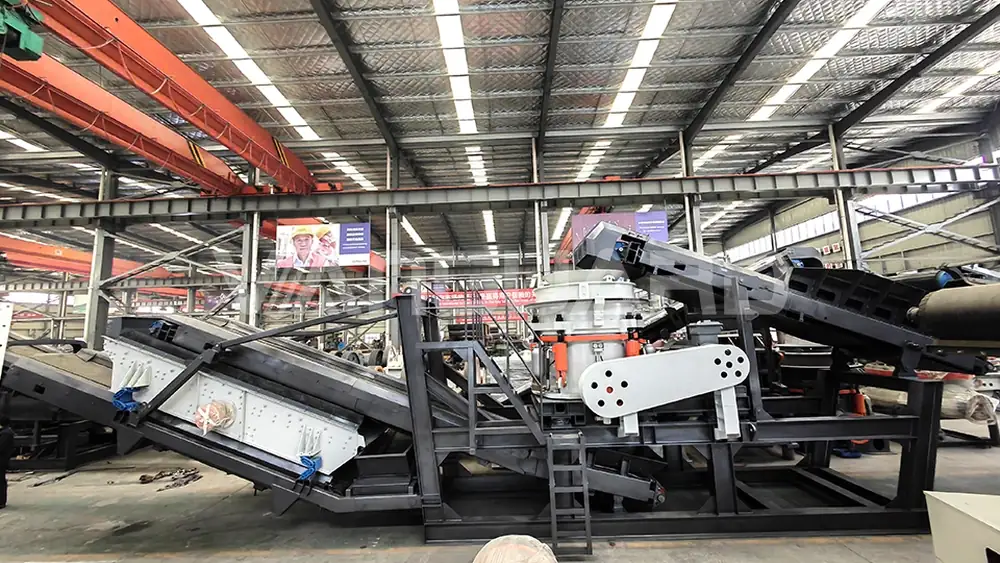
A modular crushing plant (MBP) packages feeding, crushing and screening into bolt-together independent modules that land on a simple foundation and clip together fast; when the site closes, the modules come apart and re-form elsewhere. It keeps the scale and serviceability of a fixed line while dropping most of the heavy civil works. Think of it as a fixed line that learned to travel. Vanguard Machinery builds the MBP family on exactly this travelling-fixed-line idea.
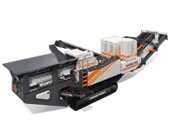
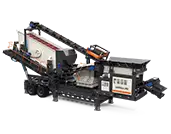
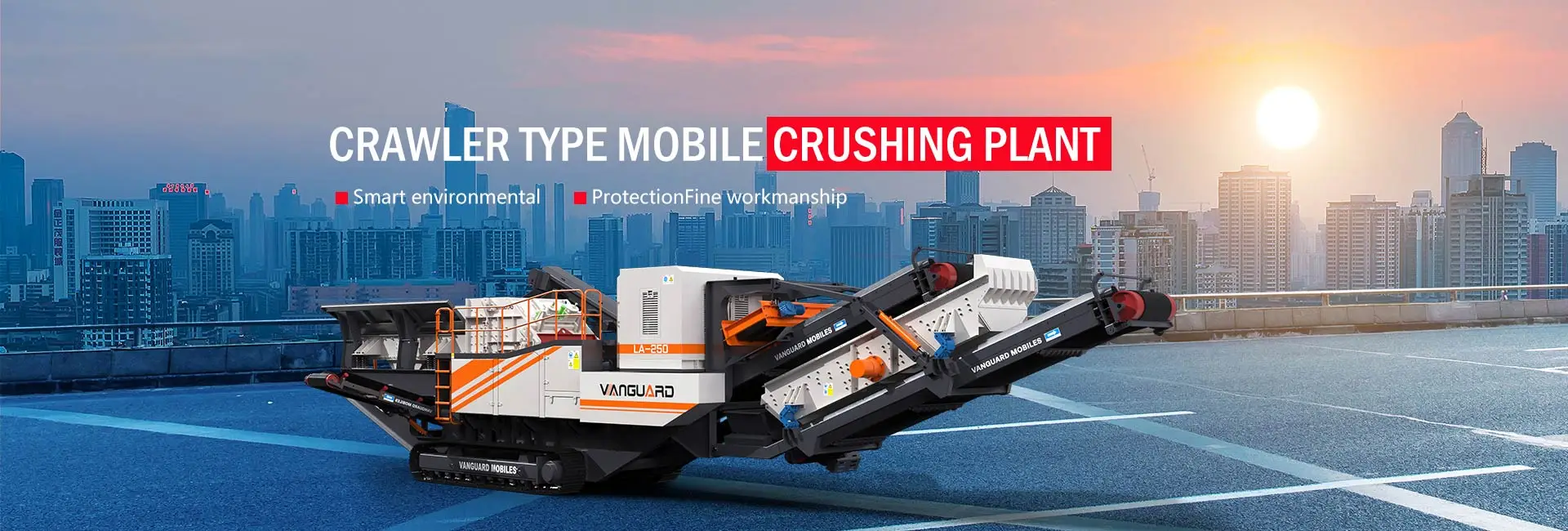
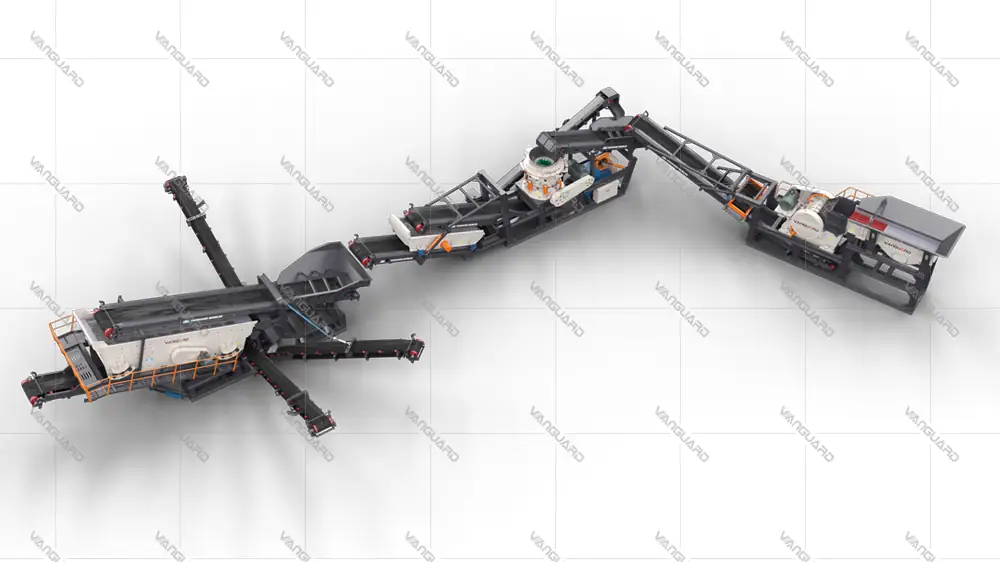
A mobile crusher (for example the tyre-mounted VPE, VPF and VPC series, or the crawler C series and LA series) is a complete line pre-built on one chassis. Arrive, connect water and power, and it produces. It removes installation and foundations almost entirely. Its whole identity is speed: from road to running in a single shift.
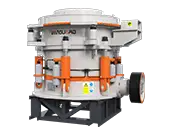
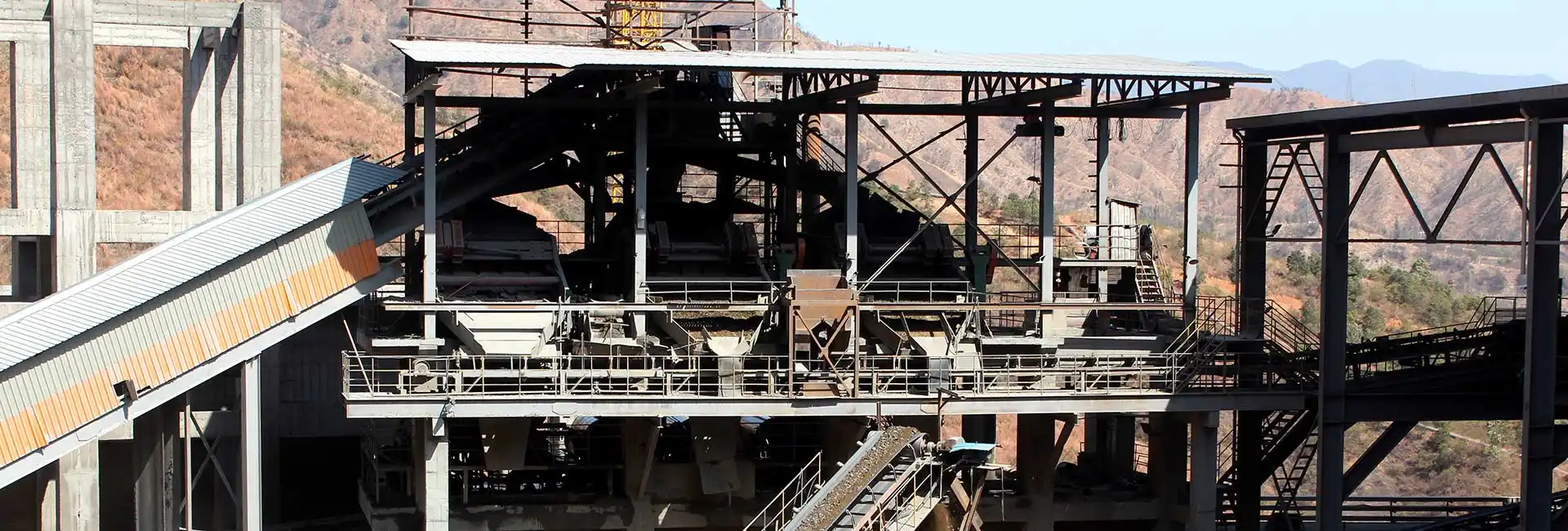
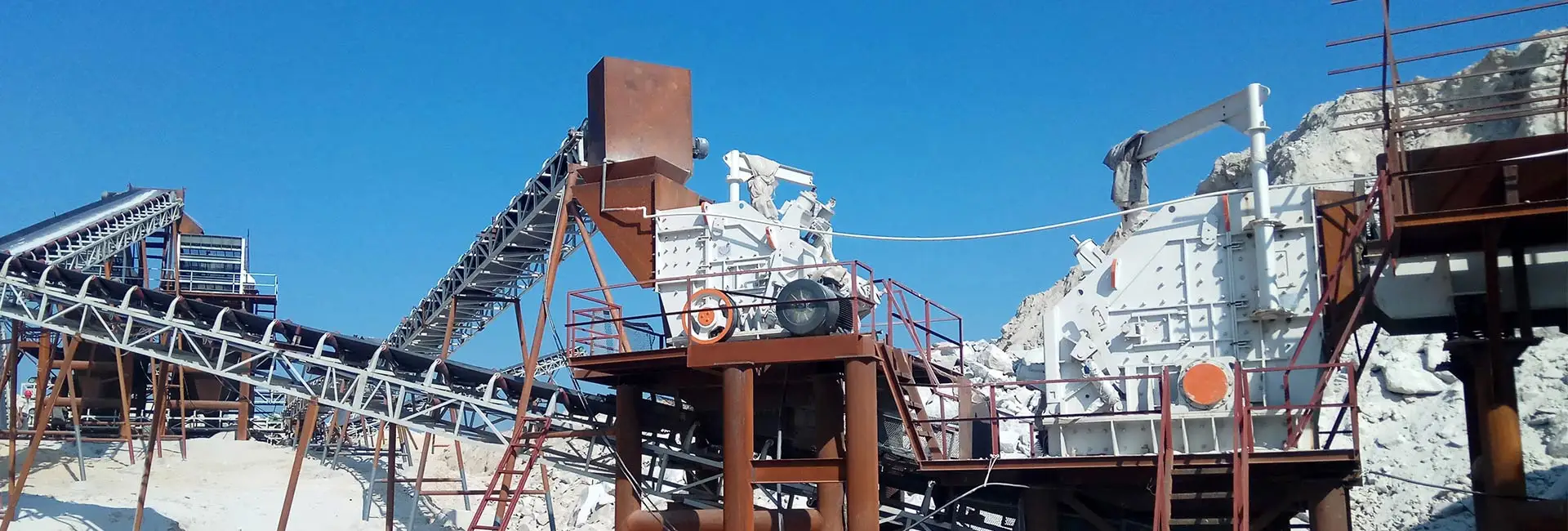
A stationary crushing line (such as 6CX or PE jaw, CS or CH cone, and a vibrating screen) sits on concrete foundations with chutes and belts rigidly linked between machines. It gives the lowest and steadiest cost per ton but locks the location once it is built. Where a project is truly permanent, nothing else matches its economy.
Spec Snapshot
| Spec | Modular Plant | Mobile Crusher | Stationary Line |
| Typical capacity | About 50 to 600 t/h | About 50 to 500 t/h | About 50 to 1500 t/h |
| Footprint and base | Simple base, side by side | Almost no base, on chassis | Heavy concrete, more land |
| Commissioning | 2 to 4 weeks | 1 to 3 days | 6 to 16 weeks |
| Relocation effort | Module teardown, days | Drives away, hours | Not relocatable |
| Fit project life | 1 to 5 years medium | Under 2 years short | Over 5 years long |
The snapshot confirms the spectrum. Notice that capacity overlaps heavily in the 50 to 500 t/h band, where all three can technically do the job. The decision there is not about whether a form can, but about how often you will move and how long you will stay.
Performance Comparison
| Metric | Modular Plant | Mobile Crusher | Stationary Line |
| Capacity elasticity | Medium-high, add modules | Medium | High, easy to expand |
| Feed adaptability | Medium-high | Medium | Highest |
| Product shape | Good with cone | Good | Good |
| Wear consumption | Medium | Medium | Lower per ton |
| Energy per ton | Medium | Slightly higher | Lowest |
| Maintenance access | Good, modules separate | Compact, a bit tight | Easiest, more room |
Product quality is not where these forms diverge. With a cone in the circuit and a closed screen loop, all three deliver cubical aggregate that meets specifications. The real performance differences are in how the plant scales, how it wears over a long run, and how comfortably a technician can stand next to it with a wrench.
Best Applications
A mid-size quarry or aggregate site planned for two to four years with one possible move is the textbook modular case. The plant grows with the pit, then picks up and follows the ore body when the first face is exhausted. This is where the modular form earns its keep.
Municipal demolition, road works or short stripping are the mobile case. The machine arrives on a permit, processes the pile, and leaves before the contract's noise limits expire. Nobody wants to pour a foundation for a three-month job.
A large aggregate base, a cement-plant tie-in or a decade-scale mine is the stationary case. Here the economics of scale overwhelm every other factor, and the absence of relocation stops being a drawback and becomes a feature. Vanguard Machinery supplies such decade-scale lines for cement-plant tie-ins and mega-quarries.
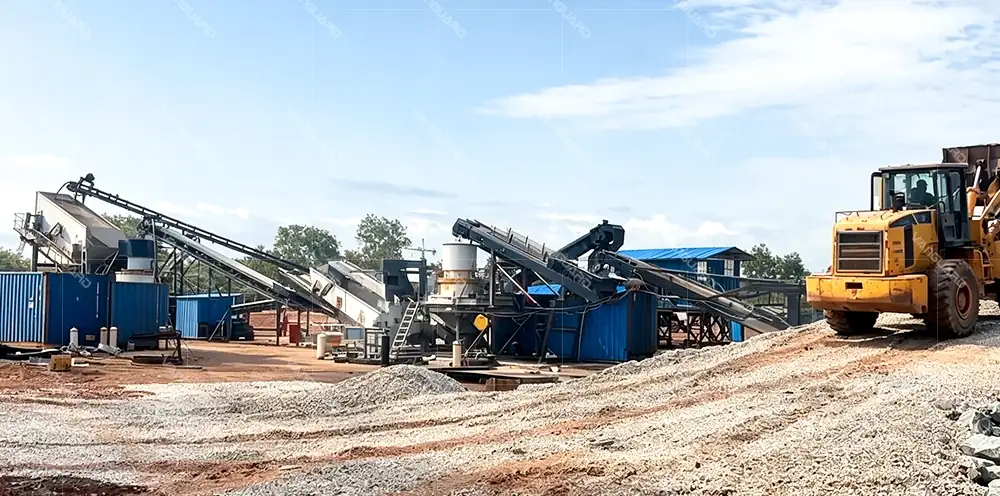
Regions with strict permits or hard land acquisition favor modular for a quieter reason: a smaller footprint and a lighter foundation mean fewer approvals, fewer neighbours and a faster start.
Advantages and Limitations
Modular plant: the upside is fast commissioning, real scale, easier relocation than a fixed line, and lower unit investment than a big mobile train. The downside is a simple foundation is still needed, per-ton cost stays above a stationary line, and module assembly takes some site organization.
Mobile crusher: the upside is zero foundation, fastest relocation and light cash-flow pressure. The downside is a ceiling on single-unit capacity, slightly higher per-ton opex once diesel or towing is counted, and a tight layout that makes daily service a bit cramped.
Stationary line: the upside is the lowest per-ton cost, the steadiest run and the easiest expansion and service. The downside is heavy early civil works, slow commissioning and no relocation at all, so a wrong site or capacity call becomes a large sunk cost.
Which One Should You Choose?
By material: hard rock, large feed and high output point to a stationary line or a scaled-up modular; medium-hard and below, or urban demolition, point to mobile. By capacity: under 300 t/h short term looks mobile; 300 to 800 t/h medium term looks modular; above 800 t/h long term looks stationary. By budget: tight cash flow that avoids civil works leans mobile or modular; chasing the lowest per-ton cost leans stationary. By relocation: moving several times a year leans mobile; moving every few years leans modular; never moving for a decade leans stationary.
A practical shortcut: write the project life on a sticky note. Under two years, mobile. Two to five years with moves, modular. Over five years in one place, stationary. The capacity and budget questions then fine-tune within that lane rather than overriding it.
Lessons From the Field
One point Vanguard Machinery has validated again and again on site: many owners read "mobile" as "move it anywhere". In practice a modular plant relocates through standardized module interfaces and pre-planned foundations, not by improvising on arrival. The projects that run smoothly tend to write relocation count, target grade and power interface into the spec at the tender stage. Another common trap is comparing only the equipment quote and ignoring total cost of ownership — a stationary line looks cheap but hides civil works and schedule, a mobile unit looks pricey but saves the foundation. Put commissioning time, move count and per-ton cost on one sheet and the answer often differs from "who is cheapest".
The field also teaches patience on the spec sheet. A line quoted at a slightly higher capacity but with cramped service access will cost more over five years than a lower-rated line a technician can actually maintain. Look past the headline tonnage and read the maintenance aisle.
FAQ
The landing method. A mobile crusher is one machine that arrives and works; a modular plant is several standard modules that land on a simple base and bolt together, giving more scale and stability but one extra assembly step. Simply put, mobile chases speed, modular chases steady flexibility.
Prefer a mobile crusher. It needs no foundation and relocates in hours, ideal for short jobs that move often. Sinking money into civil works does not pay; the mobile unit simply moves to the next section when done.
Usually on a per-ton basis, but only if the project truly runs a decade and the site is right. It carries heavy early civil works and slow commissioning, so a wrong capacity call or a mid-life move makes the sunk cost far higher than modular or mobile.
Typically a simple concrete pad or hardened floor with anchor bolts, far shallower than a fixed-line raft. Exact depth follows module weight and local soil, usually in the few-hundred-millimetre range rather than the metre-scale base of a stationary line.
Not if all use a cone for medium and fine crushing with a closed screen loop; shape and gradation both meet aggregate standards. The difference is in production organization and stability, not in the shape of a single stone.
That is the sweet spot of a modular plant: standard modules build a 500 t/h-class line that tears down far easier than a fixed line when moved every few years, yet stays steadier and lower in unit cost than a pure mobile train.
Mostly short jobs on tight sites that move often, so a mobile crusher fits best; if the work spans a year or two on a relatively fixed site, a modular plant also works and scales more comfortably.
No absolute answer; it follows project life and move count. The experience range: short and frequent moves leans mobile; medium one-to-five years with occasional moves leans modular; long high-output leans stationary. Counting commissioning, moves and per-ton cost together is the fair way.
Yes. Standardized interfaces are the core of modular, so adding a crushing or screening module or a belt transfer later is straightforward. Elasticity sits between a mobile unit and a fixed line, fitting projects whose capacity ramps gradually.
Two things: first, the schedule pressure of commissioning time, where a fixed line takes months while mobile and modular count in days; second, the real frequency of relocation, where many quote "might move" yet actually move three times in two years, making modular or mobile clearly worth more.
Related Articles
• 300 TPH Mobile Crusher: Configuration, Capacity and Selection(2026-07-22)
• Crawler Mobile Crusher Price: What Drives the Cost of a Crawler Plant(2026-07-20)
• Why Choose a Crawler Mobile Crusher?(2026-07-15)
• Hydraulic vs Spring Cone Crusher: What Sets Them Apart and How to Choose(2026-07-22)
• Why Is My Jaw Crusher Wearing Out Too Fast? Causes and Fixes(2026-07-09)
• Vanguard Machinery Showcases Mobile Crushing and Screening Plants at MINEENTRA 2026 Zimbabwe
• 200 t/h Limestone Crushing-and-Sand-Making Plant in Malaysia: Five-Size Mobile Line
• Why Mobile Crushing Plants Are Becoming Popular in Zimbabwe Mining Projects(2026-07-23)




