

Quick Answer
Mobile crushing plants are gaining ground in Zimbabwe's mining sector because they bundle feeding, crushing and screening into one unit that moves with the ore body - a direct fit for a country where deposits are scattered, remote, poorly served by roads and often short on stable grid power. Whether it is small-scale gold, chrome, lithium or construction aggregate, the mine is usually far from any fixed plant, so hauling ROM ore over long distances to a stationary line is neither cheap nor practical. A mobile plant goes to the pit face, crushes on site, cuts haulage, skips the concrete foundation and starts producing in days. Hard rock runs "mobile jaw + mobile cone"; soft rock and aggregate run "mobile jaw + mobile impact"; add a sand module for fine material. Vanguard Machinery's crawler units (LA series) and wheel units (VP series) cover every ore and tonnage. Need a recommendation? Contact Vanguard Machinery for a free material analysis and tailored proposal.
Key Takeaways
- ✔ Zimbabwe's deposits are scattered, remote, road-poor and grid-weak; mobile plants' "produce on arrival, move as one unit" nature fits exactly - ✔ A mobile plant integrates feeder, crusher and screen on one chassis - less haulage, no civil works, fast start-up - ✔ Crawler (wide track, low center, powers up on arrival, no external supports) suits no-road sites; wheel moves fast on existing roads - ✔ Hard rock (gold, chrome, granite) -> jaw + cone; soft rock and aggregate -> jaw + impact; add a sand module for fines - ✔ How to choose: ore hardness, tonnage, road and power first, then crawler vs wheel, then the model
Why Zimbabwe Mining Favors Mobile
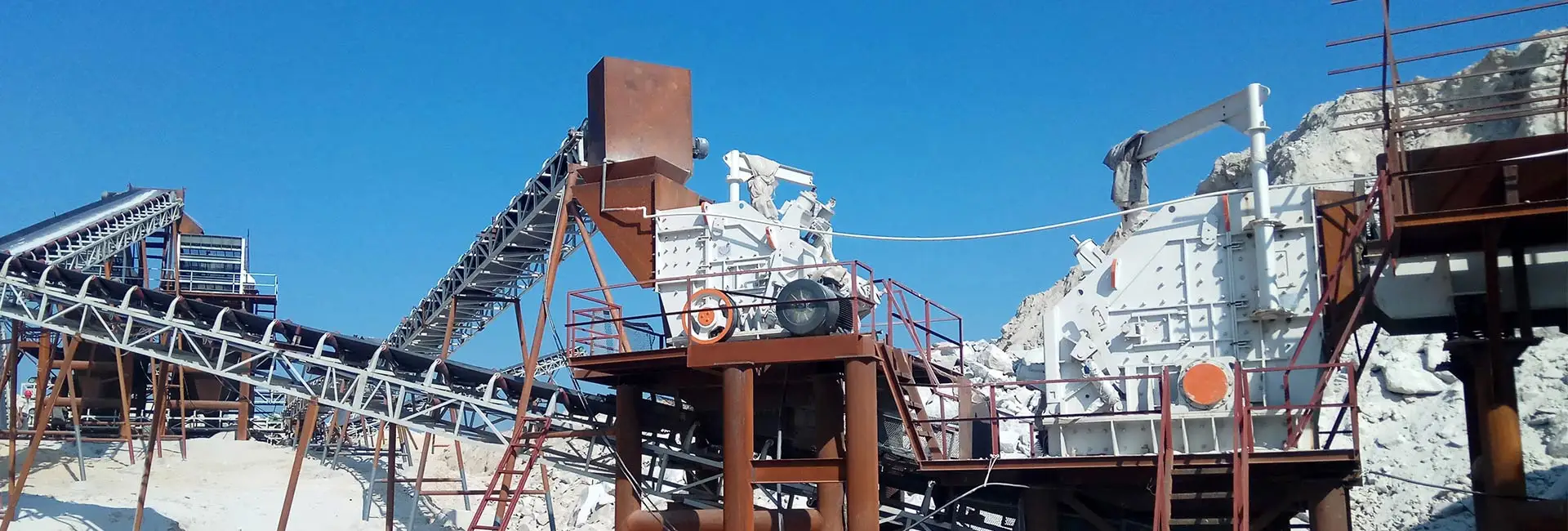
Zimbabwe's mines share a pattern: plenty of ore, but rarely next to an existing plant. Gold is mostly small, scattered vein and oxide deposits; chrome (ferrochrome feed) and lithium (spodumene) also sit in remote belts.
Building a fixed crushing line means land, civil works and a power connection - measured in months and real money. For many operators the practical move is to bring the crusher to the ore, process as they mine, ship the product, then relocate the whole plant to the next face. Mobile plants turned that idea into hardware.
What a Mobile Crushing Plant Is
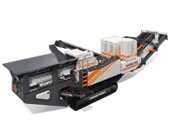
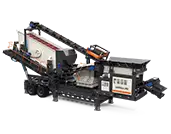
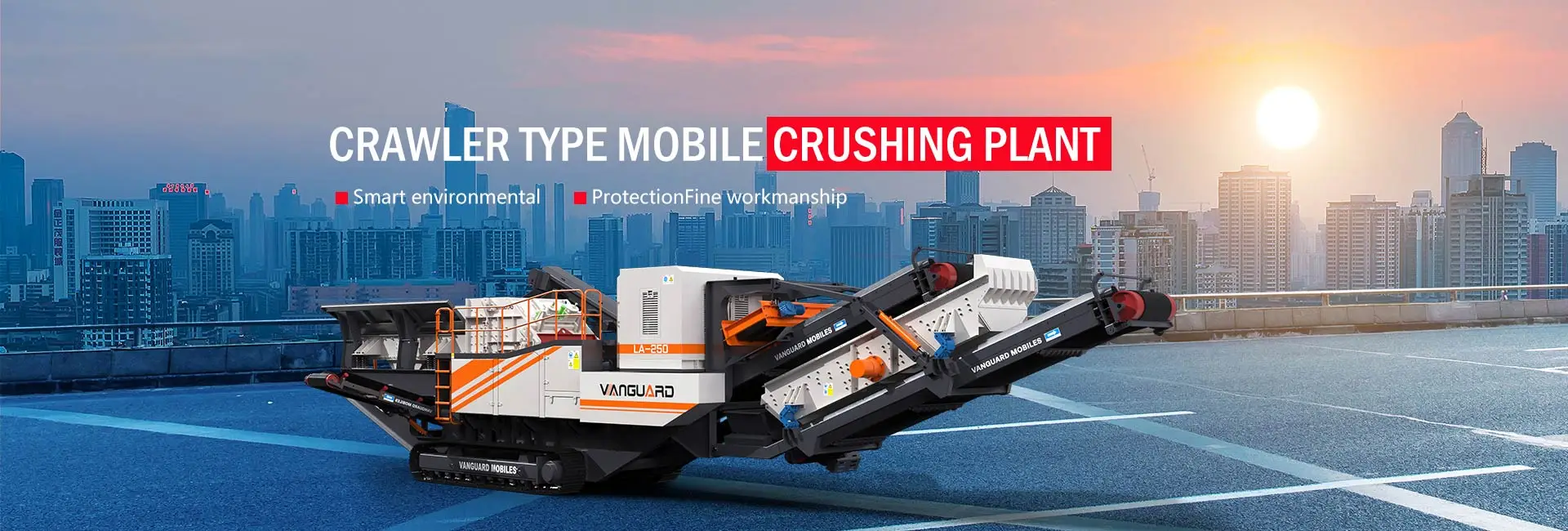
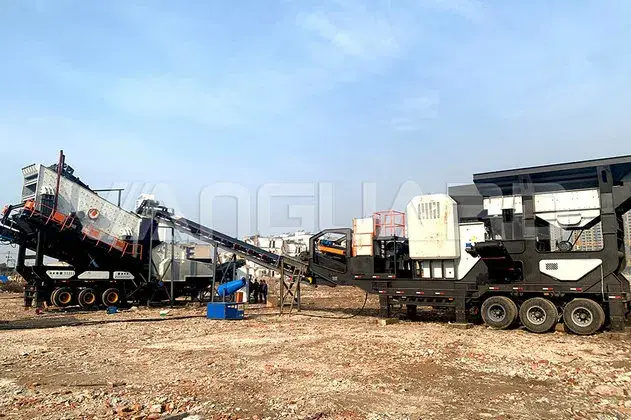
A mobile crushing plant packs feeder, crusher and screen onto a self-propelled chassis that starts producing once power is connected.
Two travel types: crawler (hydraulic track drive) and wheel (trailer or semi-trailer, moved by a tractor). Both do the same job - turn run-of-mine rock into spec aggregate or mill feed - they just suit different terrain and relocation styles.
Crawler vs Wheel: The Core Difference
One table to see where each fits.
| Aspect | Crawler mobile plant | Wheel mobile plant |
| Travel | Self-propelled on tracks, reaches rough/no roads | Moved by low-bed, needs roads |
| Set-up | Wide track, low center, powers up on arrival, no external supports | Needs outriggers to level, then produces |
| Relocation speed | Self-drives short hops; long haul needs a low-bed | Fast on highways, hook and go |
| Power | Diesel, electric, or dual-fuel | Mostly electric, generator optional |
| Best for | Remote hard-rock, no-road sites | Road-reachable, multi-site rotation |
| Models | LA series (e.g. C96/C106 jaw, LA cone/impact/screen) | VP series (VPE jaw, VPC cone and others) |
Deployment and Cost Advantages
The most concrete benefit is cutting the up-front cost of getting into production.
A fixed line needs concrete foundations, a building and conveyor galleries. A mobile plant needs almost no civil work - level a pad and it stands and produces. Both CAPEX and schedule shrink.
The expensive part of ore is often "from pit to crusher." A mobile plant crushes at the face, so only product or semi-product leaves the site. Same truck payload, far fewer trips and kilometers - a difference that compounds at remote mines.
Adaptability and Compliance Advantages
Beyond time and money, mobile plants suit Zimbabwe's site conditions.
Many sites have small grid capacity and unstable supply. Mobile plants take diesel or genset power, independent of steady mains, and keep running through outages - vital for continuous output.
A mobile plant is compact and moves with the ore, unlike a fixed line that occupies land long term. Near villages, the smaller footprint and controlled dust/noise clear community and environmental review more easily.
| Advantage | What it means for Zimbabwe mines |
| Produce on arrival, zero civil | Shorter start-up, lower up-front cost |
| Follow the ore body | Rotate across faces, no idle equipment |
| Diesel / dual-fuel | Fits weak-grid and off-grid sites |
| Compact and movable | Less land, easier community/env clearance |
| Modular scale-up | Start small, add modules as tonnage grows |
Typical Process Flow (where the mobile plant sits)
A mobile plant is not a single machine; it strings primary to screen into a movable short line.
Feed (ROM) -> ZSW grizzly/vibrating feeder (scalps clay/fines) -> mobile jaw crusher (primary: crawler LA series or wheel VP series) -> mobile cone/impact crusher (secondary: crawler LA cone, or wheel VP series impact/cone) -> mobile vibrating screen (sizing) -> finished aggregate (0-5 / 5-10 / 10-20 mm) or mill feed; oversize returns in closed circuit. The crawler is stabilized by its wide track and low center and powers up on arrival; the wheel levels on outriggers after set-up.
Selection for Zimbabwe Conditions
Down to the ore type, the configuration is clear.
| Your ore | Recommended train | Vanguard model |
| Gold (hard rock, oxide) | Jaw + cone, with scalping feed | Crawler LA series (jaw+cone), or wheel VP series (jaw+cone) |
| Chrome / chromite | Jaw + cone, wear parts upgraded | Crawler LA series (jaw+cone), or wheel VP series (jaw+cone) |
| Lithium (spodumene, hard abrasive) | Jaw + cone, fine close | Crawler LA series (jaw+cone, fine close) |
| Granite / aggregate | Jaw + cone or impact | Crawler LA series, or wheel VP series (jaw+cone/impact) |
| Limestone / soft rock | Jaw + impact, add sand | Wheel VP series (jaw+impact, add sand) |
| Need manufactured sand | Add sand module | VP series sand module (VSI) |
Lessons From the Field
We have supported similar setups across several African countries; a few points worth stating up front.
Relocation frequency decides crawler vs wheel. Sites that move every few months - crawler self-drives into place and saves the most. Several road-reachable sites on rotation - wheel hooks and goes, cheaper. First ask "how often do we move."
Do not force impact on hard rock. Gold, chrome and spodumene are all hard and abrasive; a cone's laminated chamber wears better and shapes more steadily. Running impact on such feed burns through blow bars fast. Pick the primary by ore, not by sticker price.
Scalping matters more than people think. A lot of Zimbabwean gold oxide carries clay; skip scalping and the screen and chamber clog. Keep the ZSW feeder's scalping deck generous, add washing if needed.
At higher, steadier tonnage, mobile alone falls short. Once the mid-stage tonnage is stable and the body is long-lived, semi-mobile or fixed lines are usually cheaper. Mobile's value is "fast early, flexible" - not forever replacing fixed.
Selection Checklist and Common Mistakes
Break selection into a few items you can tick off.
1. Hard and abrasive ore? Hard -> jaw + cone; soft -> jaw + impact. 2. Big, continuous tonnage? Big and steady -> crawler or fixed is steadier. 3. What are the roads? No-road/rough -> crawler; roads and many sites -> wheel. 4. Stable power? Weak/off-grid -> diesel or dual-fuel. 5. Need sand? Yes -> add a VP series sand (VSI) module.
Mistake one: mobile means tiny tonnage - crawler lines at 100-200 tph are common, not toys. Mistake two: people think a crawler must be secured before it stands steady - it is stabilized by wide track and low center and powers up on arrival, needing no external supports at all. Mistake three: crawler and wheel are about the same - one self-drives on rough ground, the other hooks onto a highway; wrong match wastes the purchase. Mistake four: skip scalping - clayey feed without scalping clogs chamber and screen, killing output.
FAQ
Scattered, remote, road-poor, grid-weak deposits; mobile plants "produce on arrival, move as one unit" fit exactly - less haulage, no civil, fast start.
No-road/rough site -> crawler (wide track, low center, powers up on arrival, no external supports). Several road-reachable sites on rotation -> wheel, faster to move.
Yes. Hard rock runs "jaw + cone": crawler LA series (jaw + cone), or wheel VP series (jaw + cone); laminated crushing wears well and shapes steadily.
Common mobile lines run tens to a couple of hundred tph; larger crawler lines go higher, by model and chamber.
Almost no civil works - level the pad, connect power, produce. Usually days to a couple of weeks, far faster than a fixed line.
Yes. Diesel or genset power, dual-fuel; weak-grid and off-grid sites keep running.
Compact and movable, with dust and noise control the footprint and impact stay manageable - easier for communities to accept than a long-term fixed line.
Strong early and for flexibility; once mid-stage tonnage is stable and the body long-lived, semi-mobile or fixed is usually cheaper. Mobile is not always the final answer.
Crawler is built around the LA series (C-series jaw, LA cone/impact/screen, plus a crawler hammer). Wheel is the VP series (VPE jaw, VPC cone and more, with impact and sand modules). Modular MBP also available.
Ore hardness, tonnage, road, power first. Hard rock + no road -> crawler jaw + cone; soft rock + roads -> wheel jaw + impact; add sand module for fines.
Feed -> ZSW scalping -> mobile jaw primary -> mobile cone/impact secondary -> mobile screen -> product; oversize returns in closed circuit. Crawler stabilized by wide track, low center, powers up on arrival.
Fix ore, tonnage, road, power and sand need, then crawler vs wheel and model. Need help? Contact Vanguard Machinery for a free material analysis and tailored proposal.
Conclusion
Mobile crushing plants are not a fad in Zimbabwe - they solve the local headaches at once: less haulage, no civil works, fast start-up, and the ability to follow the ore. The crawler (LA series) is stabilized by wide track and low center, powers up on arrival and needs no external supports - right for remote hard-rock, no-road sites. The wheel (VP series) moves fast on roads, right for road-reachable sites. Hard rock -> jaw + cone; soft rock -> jaw + impact; add a sand module for fines; do not skip feed scalping. Before buying, ask: how hard the ore, how big the tonnage, how bad the road, how stable the power, and whether you need sand. Vanguard Machinery covers both crawler and wheel mobile plants - each a movable short line of "feeder -> primary -> secondary -> screen -> product." Need a pick? Contact Vanguard Machinery for a free material analysis and tailored proposal.




