

Key Takeaways
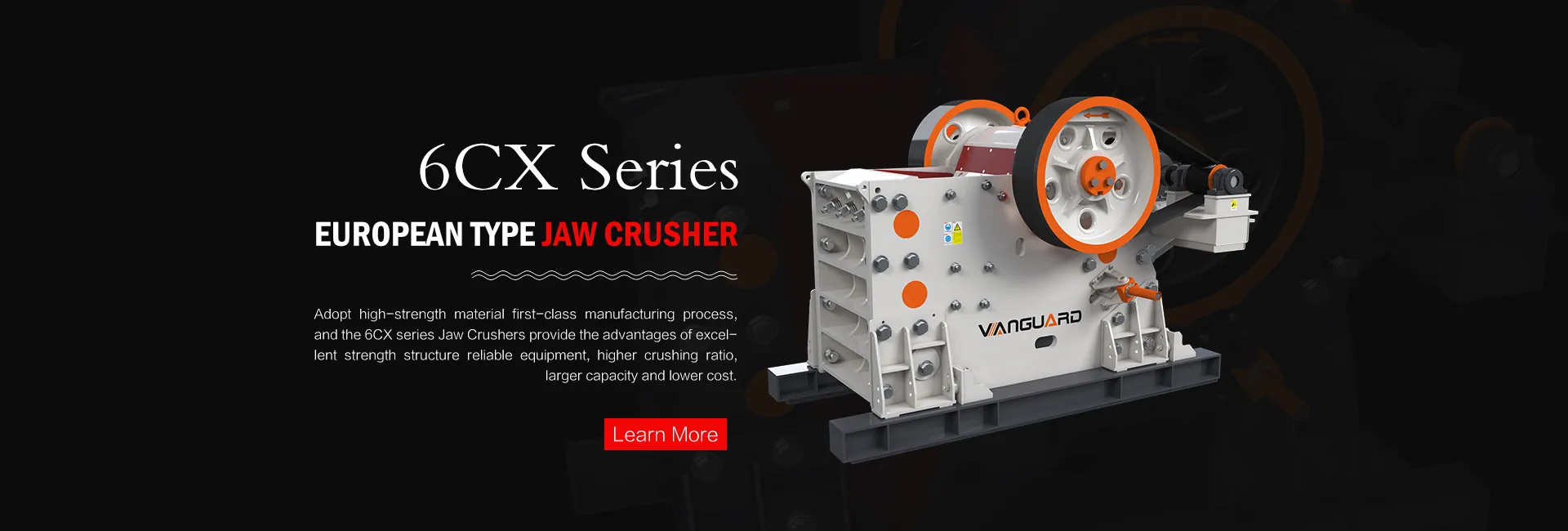
For abrasive hard rock - granite, basalt and river stone - primary crushing almost always starts with a jaw, not an impact crusher. But there is no single "best model"; it depends on max feed size, target capacity, product size, material and whether the line is fixed or mobile. For most granite, basalt and river-stone jobs, a heavy jaw on primary, a cone on secondary and a screen is the most practical setup. Common machines across scales are the 6CX European jaw crusher and the PE-series jaw crusher in PE600x900, PE750x1060 and PE900x1200.
1. Why a jaw for hard-rock primary
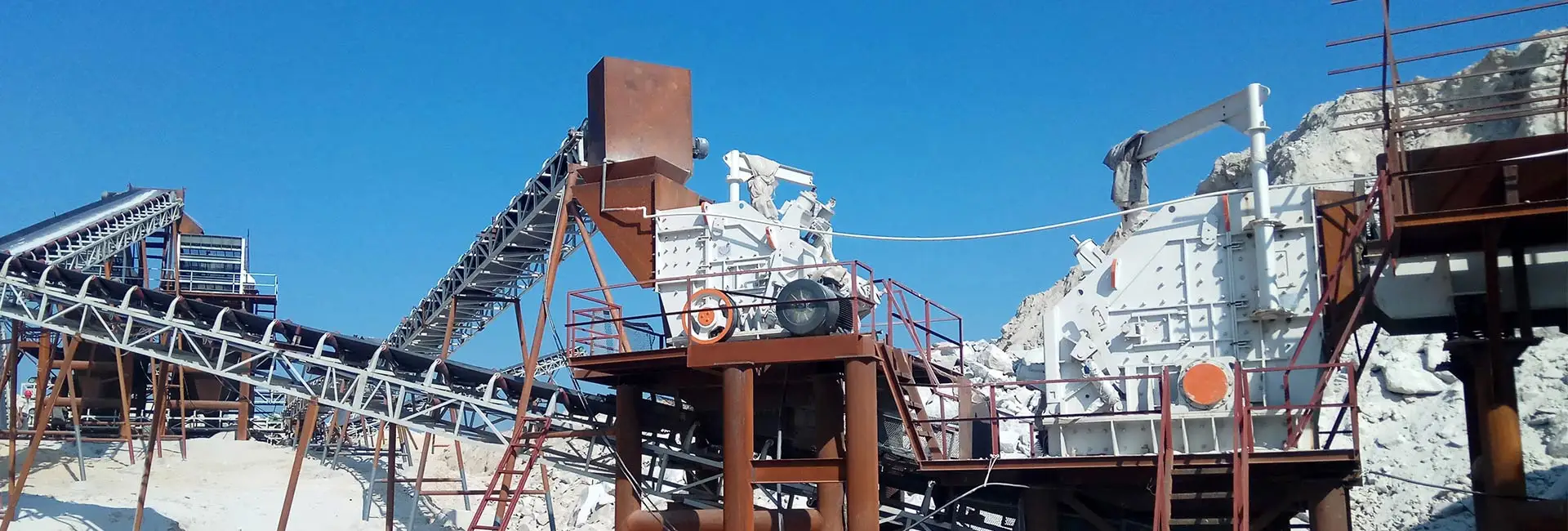
A jaw crushes big rock between a fixed and a moving plate down to a size the second and third stages can eat - ideal for high-compression, high-abrasion feeds: granite, basalt, river stone, andesite, quartzite, hard limestone, iron ore. Hard rock does not ask for "big enough nameplate capacity"; it asks the machine to survive four things at once: high crushing force + continuous load + abrasive feed + large feed lump.
2. Why granite, basalt and river stone are hard
- Granite: a hard, dense igneous rock for construction aggregate, road base, ballast, concrete and asphalt; high hardness and abrasion wear jaw plates and downstream machines fast. - Basalt: a very durable volcanic rock for highways, rail, concrete, asphalt and high-grade aggregate; hard and abrasive, so the primary jaw must be robust and the secondary a cone. - River stone: round does not mean easy. It often carries quartz and other hard minerals, so abrasion is high; hence jaw -> cone -> screen, not a single stage.
3. Two kinds of hard-rock jaw
| Type | Representative | Best for |
| Modern heavy jaw | 6CX European jaw crusher | High tonnage, heavy build, large feed, full-line integration, long mine campaign |
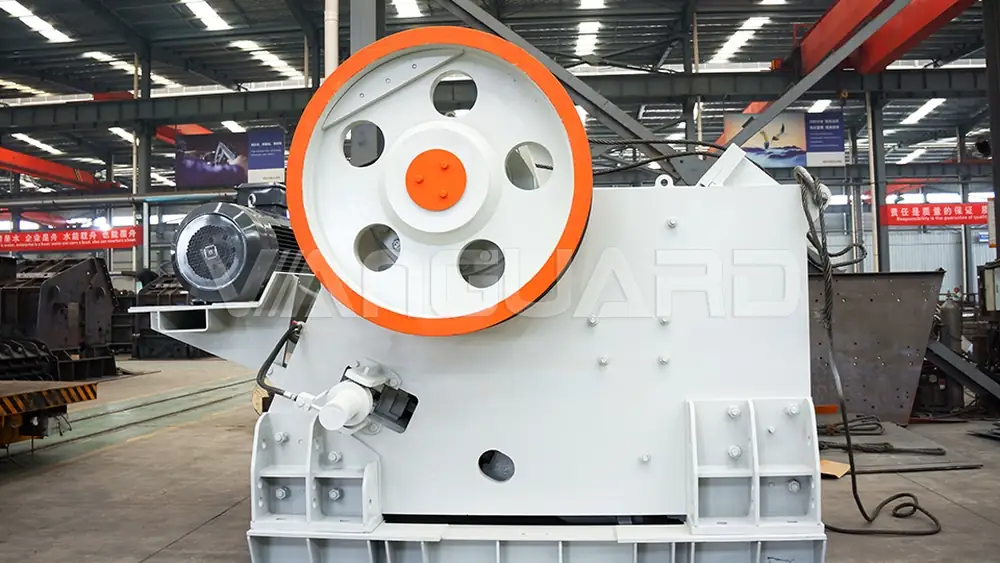
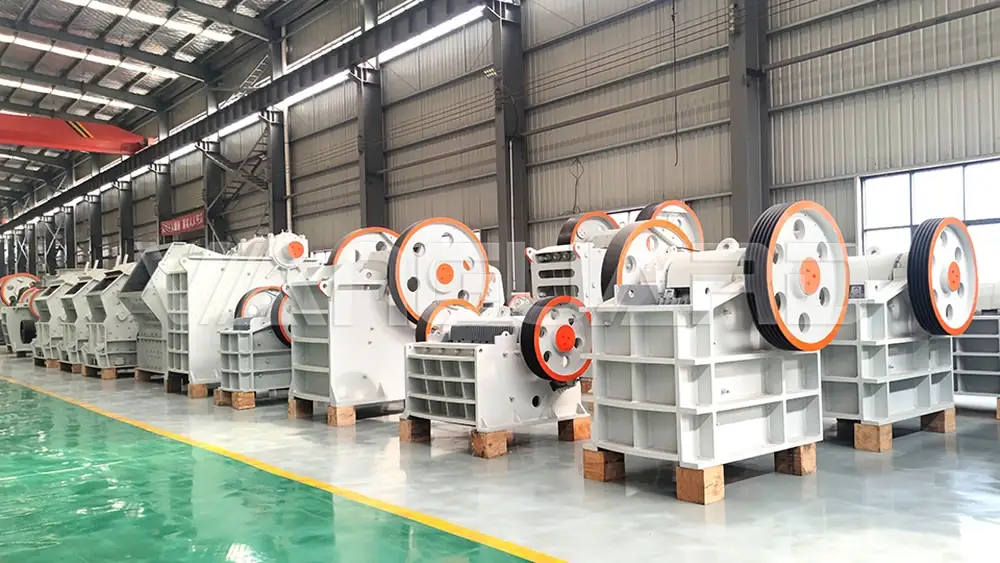
| Traditional PE series | PE-series jaw crusher PE600x900 / 750x1060 / 900x1200 | Simple, full model range, easy maintenance, good value |
Both crush hard rock; which you pick follows scale, budget and whether it feeds a full line. Do not choose on feed-opening size alone - match the real material and duty.
4. Specific models by scale
- PE600x900 jaw crusher : the common small-to-mid choice, moderate capacity, simple setup, good for fixed granite/basalt/river-stone lines.- PE750x1060 jaw crusher : the step up when tonnage rises, bigger feed opening and higher output, for mid-size quarries and aggregate lines.- PE900x1200 jaw crusher : for large quarries and mines with high feed and output; but bigger is not better - forcing a 900x1200 on a 100-150 t/h job only adds capital, power and wear-part cost.- 6CX European jaw crusher : a modern primary with deep chamber, hydraulic setting and a forged eccentric shaft, for jobs that must take large feed while running steady; pairs with feeder + cone + screen into a complete line.
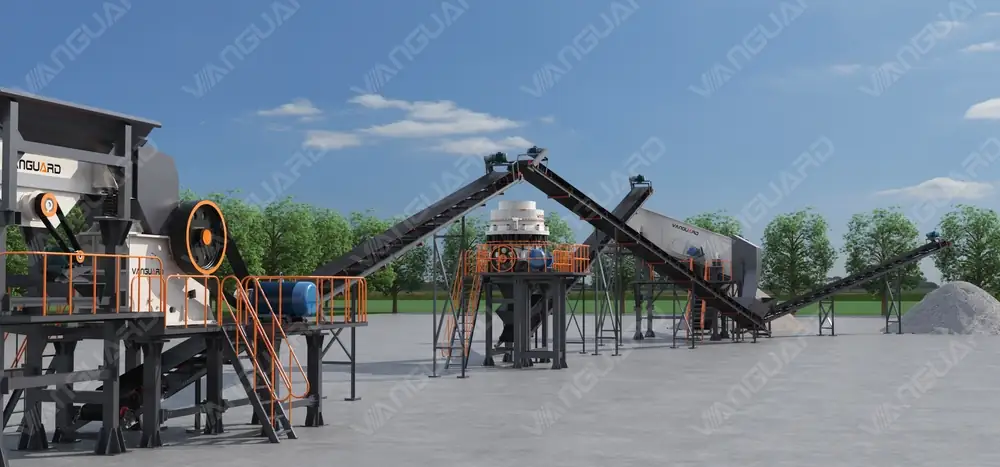
Typical small-mid setup: vibrating feeder -> PE600x900 -> cone crusher -> vibrating screen.
5. Quick pick by capacity
| Target capacity | Jaw options | Typical use |
| 50-100 t/h | Small PE / 6CX | Small quarry |
| 80-180 t/h | PE600x900 / same-class 6CX | Granite, basalt, river stone |
| 150-300 t/h | PE750x1060 / large 6CX | Mid-size quarry |
| 250-450 t/h | PE900x1200 / large jaw | Large aggregate line |
| 400+ t/h | Large heavy jaw | Large quarry / mine |
Note: this is a general range, not a guarantee. Real output is calculated from material, feed size, max feed, CSS, moisture and configuration.
6. Max feed size and CSS matter as much as t/h
Chasing t/h only is a classic mistake. Example: 200 t/h needed, max feed 800 mm - if the feed opening cannot swallow 800 mm rock, the nameplate means nothing. The opening must match the largest rock; frequent oversize may force a pre-crush stage. A jaw rarely makes final aggregate directly; it prepares feed for the next stage - CSS sets its discharge, then cone and screen set the final sizes.
7. Why jaw + cone, not all-impact, on hard rock
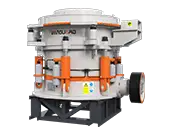
An impact crusher shapes well and is widely used, but on very hard, abrasive feed it eats blow bars, impact plates and rotor fast. The common play is jaw primary -> cone secondary -> screen, cutting the amount of impact crushing on highly abrasive rock. River stone especially almost always runs jaw + cone.
| Option | Wear-part load | Use |
| Jaw + cone | Low (mostly squeeze) | Hard rock, high abrasion |
| All-impact | High (fast bar loss) | Medium-hard, shape-driven |
8. Fixed or mobile
| Mode | Best when |
| Fixed jaw crusher | Fixed quarry, long campaign, high output, permanent civil works OK |
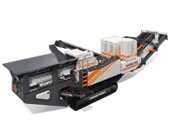
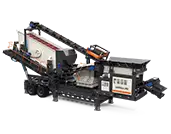
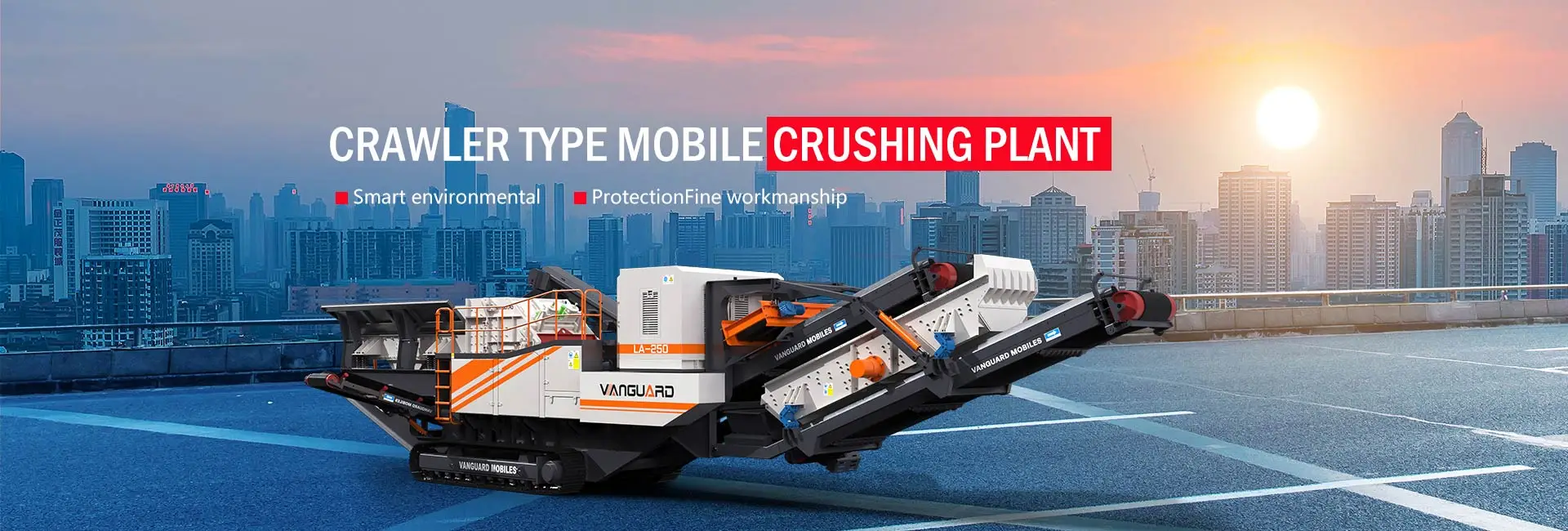
| crawler mobile jaw plant | Shifting faces, harsh sites, short haul, little civil work, need flexibility |
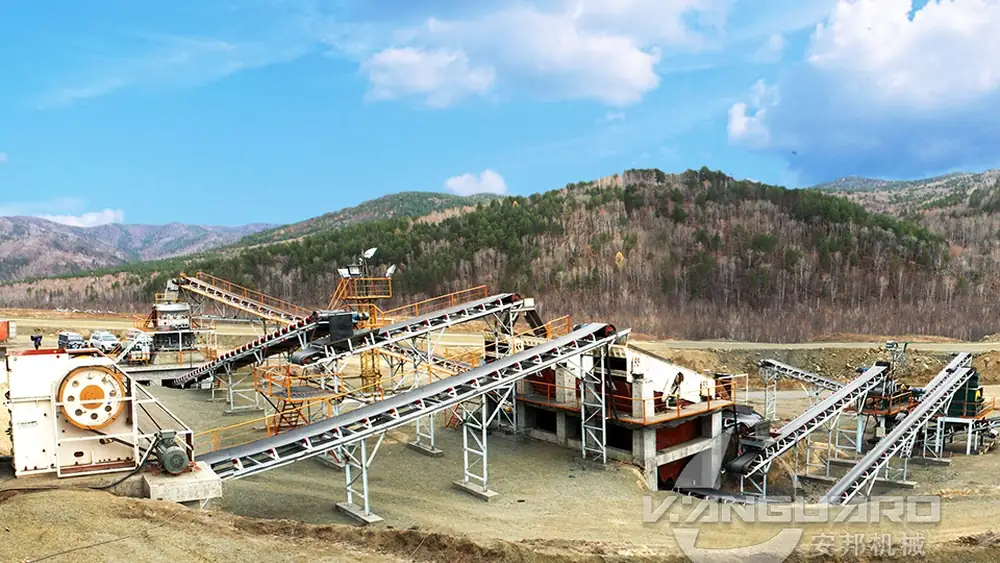
Mobile hard-rock setup: mobile jaw -> mobile cone -> mobile screen; or a single mobile jaw for primary, then haul to a fixed secondary line.
9. Wear parts and total cost of ownership (TCO)
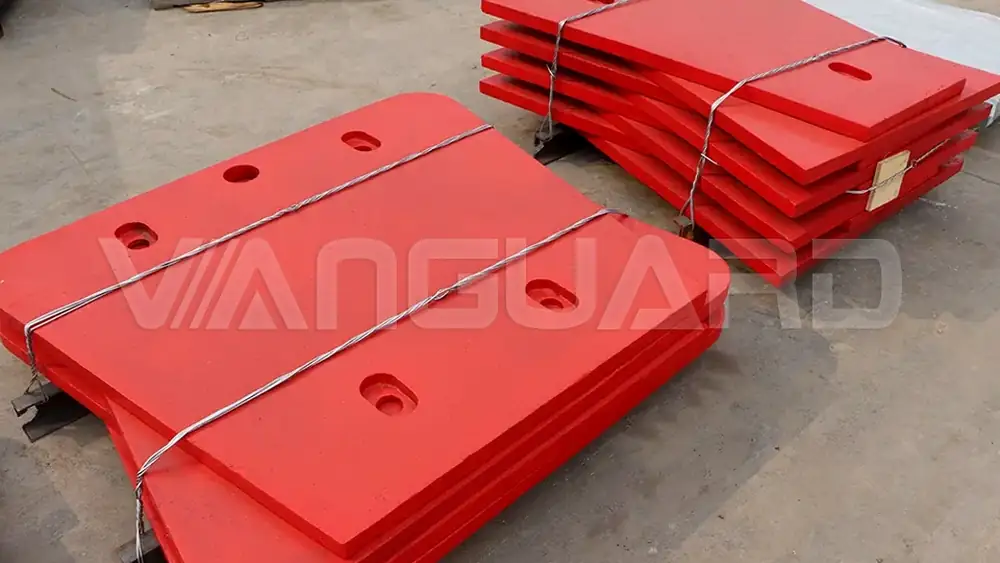
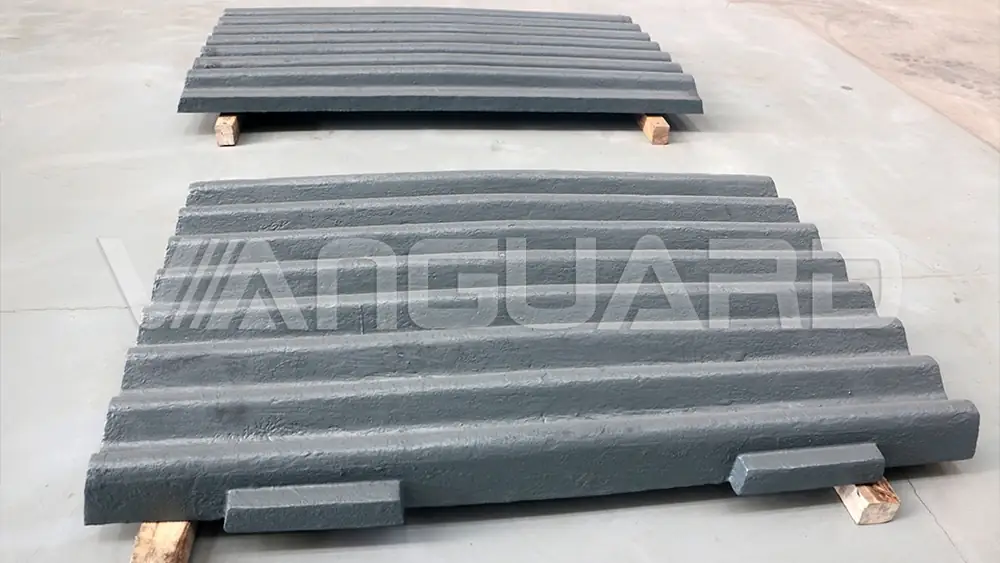
On granite, basalt and river stone, wear parts are the main running cost. As jaw plates thin, chamber geometry changes and efficiency drops, so watch material, wear life, change frequency, local supply and change cost. Compare TCO, not just the sticker price.
10. Lower your operating cost
- Control feed size; oversize loads the machine and wears it- Use a vibrating feeder for steady, controlled feed and no overload- Pre-screen out fines to lift efficiency- Hold the right CSS for the product and downstream need- Monitor wear parts; change in time to keep efficiency- Keep the chamber full with steady feed
11. Typical configuration cases
| Material | Max feed | Capacity | Flow |
| Granite | 600 mm | 150 t/h | Feeder -> 6CX/PE750x1060 -> cone -> screen -> sized aggregate |
| Basalt | Large lump | Continuous | Feeder -> heavy jaw -> hydraulic cone -> screen -> road aggregate |
| River stone | - | - | Bar/grizzly feeder -> jaw -> cone -> screen -> aggregate (add VSI for sand) |
For manufactured sand or better shape, add a VSI crusher after the cone: jaw -> cone -> VSI -> screen.
12. Seven parameters to send the maker
| Parameter | Example |
| 1. Material type | Granite / basalt / river stone / andesite |
| 2. Max feed size | 600 mm |
| 3. Required capacity | 200 t/h |
| 4. Target product sizes | 0-5 / 5-10 / 10-20 / 20-40 mm |
| 5. Run hours | 8 h or 16 h per day |
| 6. Fixed or mobile | State if the line must move |
| 7. End use | Road / concrete / asphalt / ballast / building |
Give these and a proper maker runs the full process calculation before naming a model.
13. Final selection guide
- Small job: PE500x750 / small 6CX- Mid job: PE600x900 / PE750x1060 / 6CX- Large job: PE900x1200 or larger heavy jaw- Mobile job: crawler mobile jaw plant / mobile jaw- Highly abrasive hard rock: jaw -> cone -> screen, not all-impact
14. FAQ
No universal model. Small job PE500x750, mid job PE600x900 / PE750x1060, large job PE900x1200; for hard rock at high tonnage prefer 6CX; for mobile, pick a crawler mobile jaw. It comes down to feed, capacity and duty.
Not advised (Mohs 7-8, very abrasive, bars wear out fast); jaw + cone is the economical line, add VSI only for sand.
6CX is a deep European chamber with hydraulic setting for hard rock and high tonnage; PE is a conventional chamber with shims, simple and good value. For hard rock at high output, choose 6CX.
From the top product size you need: open it for coarser, higher output; close for finer but risk bridging. On hard rock leave margin for the cone.
No. Forcing a PE900x1200 on 100-150 t/h only adds capital, power, wear parts and footprint; the best crusher is the best fit.
No. You also need max feed, material, CSS, moisture and configuration; send the 7 parameters to Vanguard Machinery for a process calculation.
15. Wrap-up
The best jaw for hard rock is not the one with the highest capacity or the widest feed opening, but the one that fits your material, feed, capacity, product and full line. For granite, basalt and hard river stone, a heavy jaw is the right primary; the 6CX European jaw crusher, PE600x900, PE750x1060 and PE900x1200 cover the scales, but the final pick follows duty. The most practical hard-rock line is heavy jaw -> cone -> screen -> product; add VSI for quality sand. Choose from the rock, not from the model - hand your feed, capacity and product specs to Vanguard Machinery and let the process calculation pick the model.




