

Project Overview
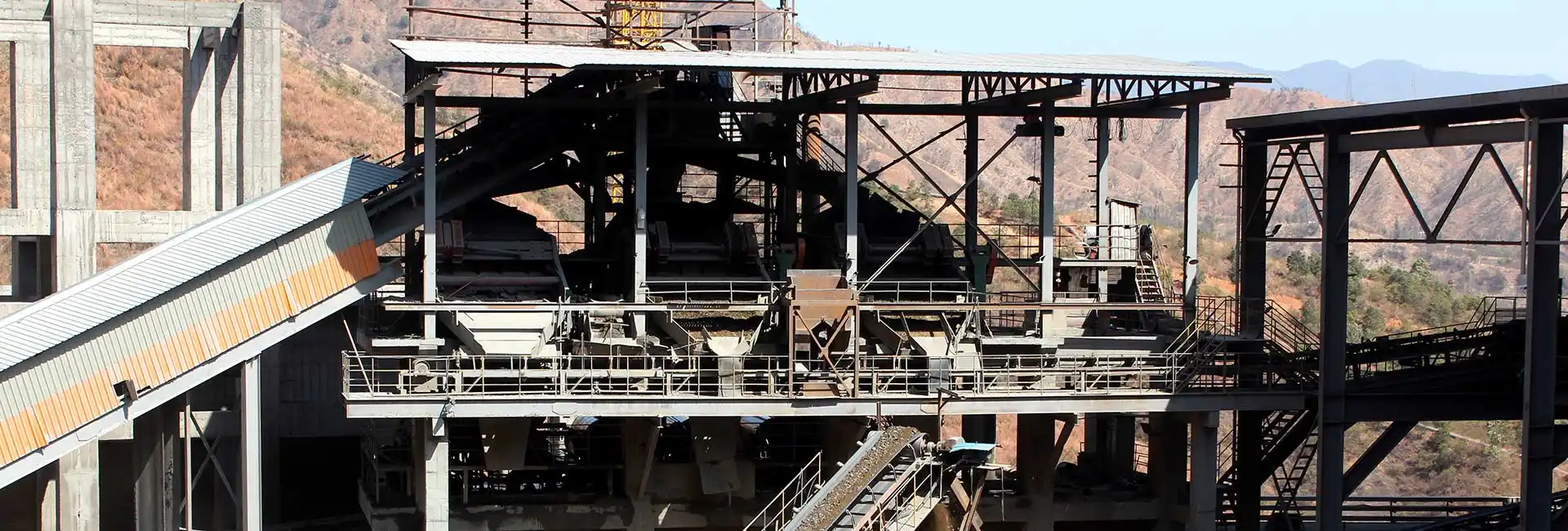
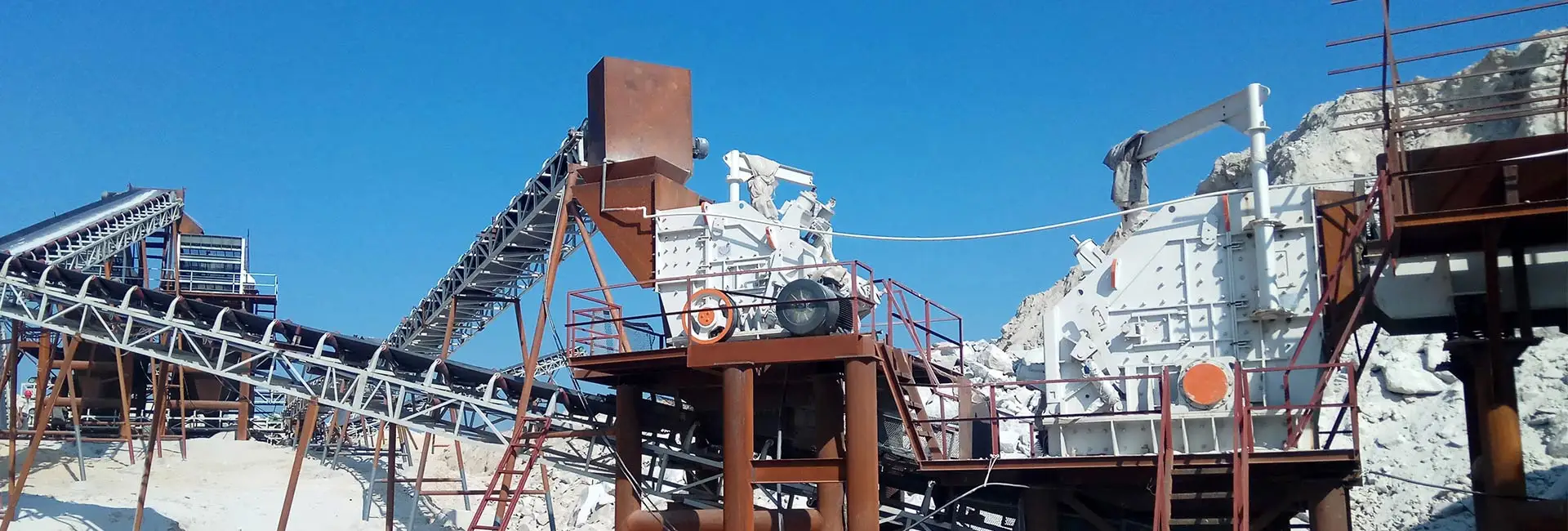
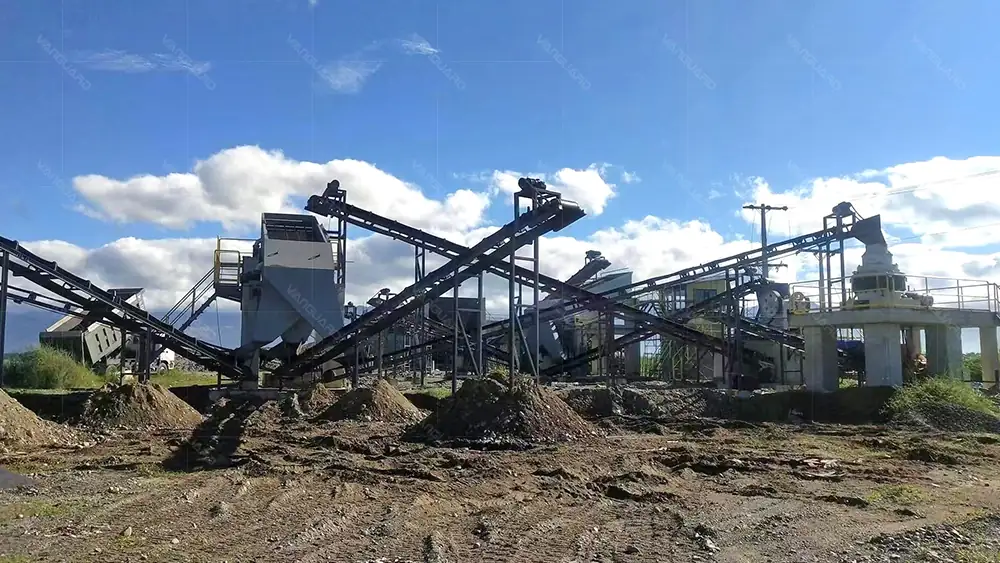
A fixed crushing plant in the Philippines processes river stone - rounded pebbles worn smooth by river transport. The owner needed one stationary line rated at 150 tons per hour, producing three aggregate sizes, 5-10 mm, 10-20 mm and 20-30 mm, for local infrastructure and ready-mix concrete. River pebble is hard, high in silica and abrasive with a rounded shape, so the line is built on the classic river-stone circuit: feed - pre-screen - jaw - cone - screen - closed-circuit return. Below we walk through the project background, what the customer required, the material behaviour, the process logic, the equipment list, how it performs in service, and what the field taught us.
Customer Requirements
The owner's hard specs were clear: - Feed: river stone (rounded pebble) - Capacity: 150 TPH - Products: 5-10 / 10-20 / 20-30 mm, continuous gradation, low flakiness - Form: fixed (stable material source, long-term run)
| Product | Size | Screen split (mm) | Typical use |
| Fine | 5-10 mm | below 10 mm deck | asphalt / concrete fine agg |
| Mid | 10-20 mm | 10-20 mm deck | ready-mix concrete agg |
| Coarse | 20-30 mm | 20-30 mm deck | road base / coarse agg |
Material Analysis
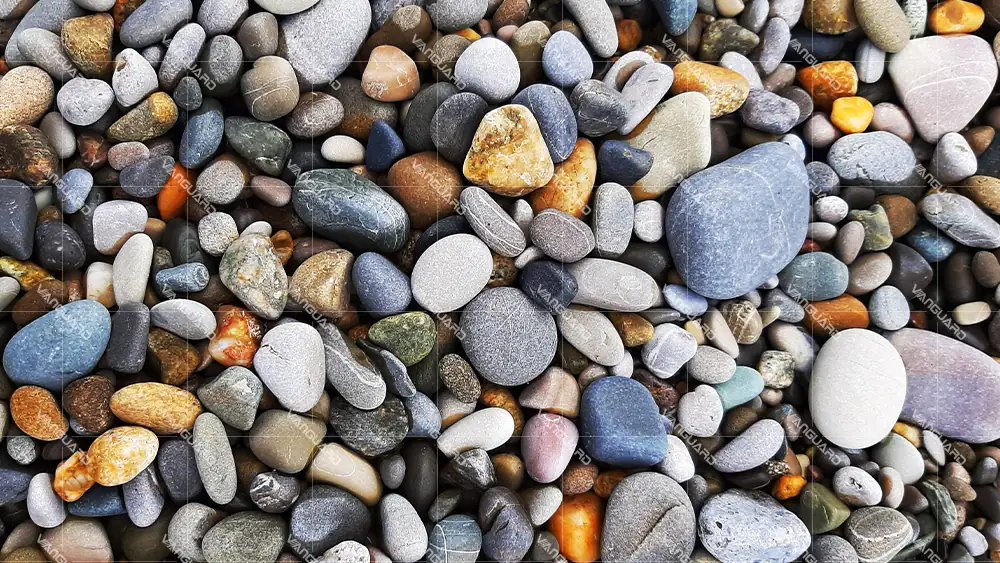
River pebble runs Mohs 7-8, high in silica, abrasive, and naturally rounded. It is the toughest common aggregate feed: it resists being grabbed by crusher teeth, and it chews through wear parts fast.
- Rounded, hard rock that will not bite: the smooth pebbles slip instead of being gripped, so impact crushers wear brutally and the product shape suffers. - High silica wears impact parts: silica is what destroys blow bars; on river stone an impact crusher's wear cost can run several times a cone's. - Long rainy season, mud and clogging: the Philippines sees a long wet season; surface mud and high moisture blind the screen and stick the product together, so pre-screening and drainage must be planned up front. - Three sizes with strict gradation: three fractions with a hard top-size limit leave no room for an open circuit - oversize has to be caught and sent back.
Process Design
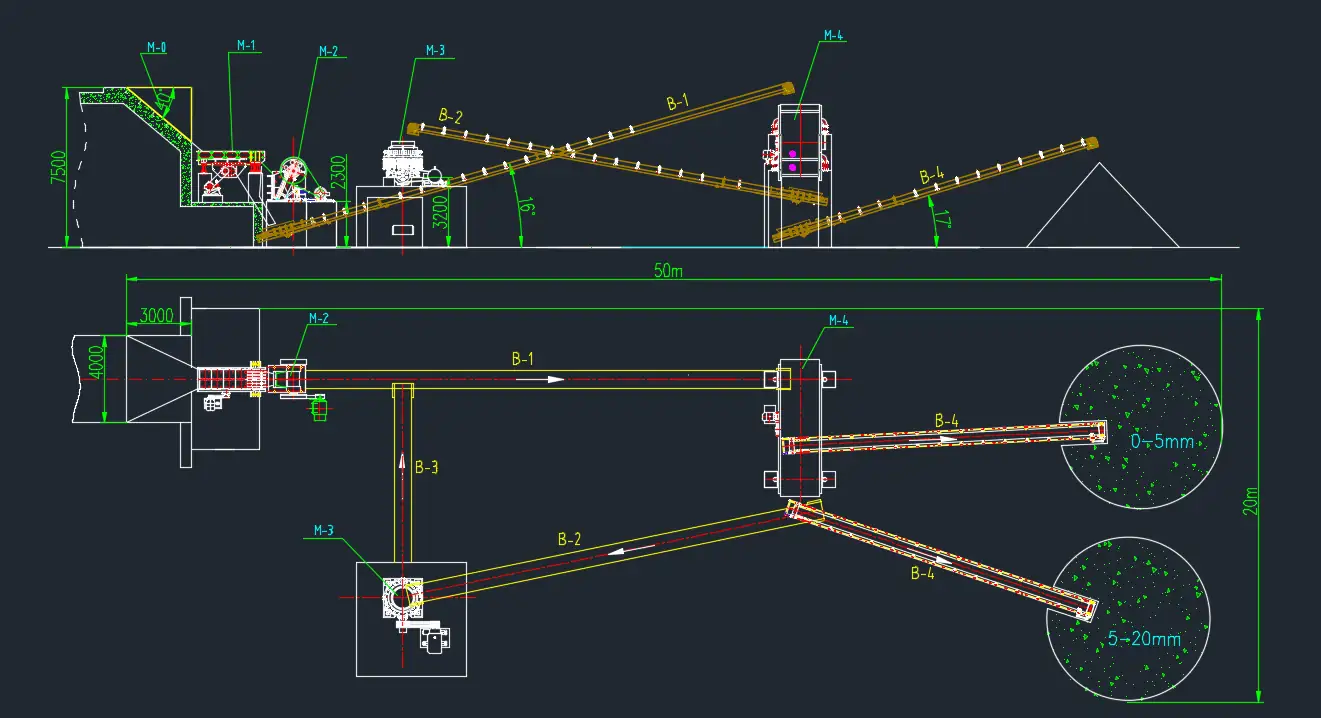
The line follows a proven river-stone circuit: feed - pre-screen - jaw - cone - screen - (return oversize) - product.
River stone's silica and abrasiveness make a cone the only sane mid-stage. The cone squeezes slowly, so mantle and concave wear gradually and predictably. An impact crusher's blow bars would be a monthly - sometimes weekly - expense on this rock.
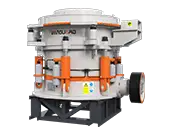
The CSV160 is a Symons-chamber cone. For a line that already has a jaw doing the coarse break, a Symons cone in the secondary slot gives a round, well-shaped product and a mature spare-parts ecosystem the crew already knows. It suits the 5-30 mm range this site needs.
The 3YA2160 vibrating screen splits the three sizes and sends everything above 30 mm back to the cone. That return loop is what pins the top size and keeps every fraction on spec. Drop it and the oversize ends up in the product pile.
Equipment Configuration
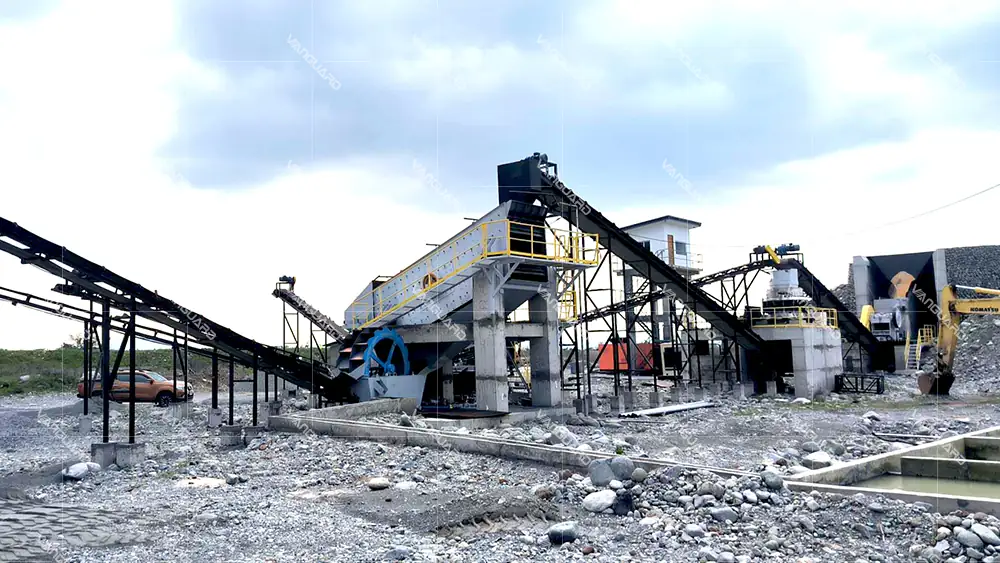
The four core machines run in sequence: ZSW420x110 vibrating feeder -> 6CX106 jaw crusher -> CSV160 Symons cone -> 3YA2160 vibrating screen, with belt conveyors linking them. The feeder's grizzly pulls the fines and mud out before they reach the crushers, which is what keeps the screen from blinding in the wet season.
| Stage | Equipment | Model | Role |
| Feeding | Vibrating feeder | ZSW420x110 | Even feed + grizzly pre-screen to drop mud |
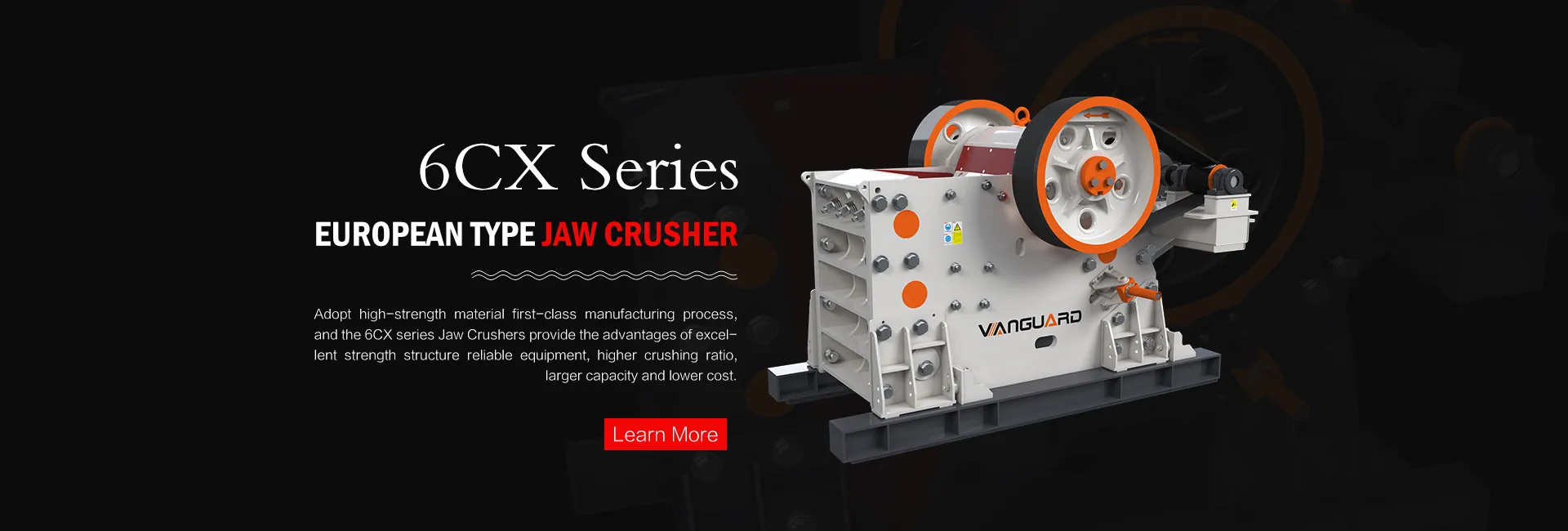
| Primary | Jaw crusher | 6CX106 | Breaks big pebbles to a size the cone can take |
| Secondary | Symons cone crusher | CSV160 | Compression crush, shapes the product |
| Sizing | Vibrating screen | 3YA2160 | Splits 5-10 / 10-20 / 20-30 mm + return |
| Linking | Belt conveyors | several | Carry material between stages |
Production Performance
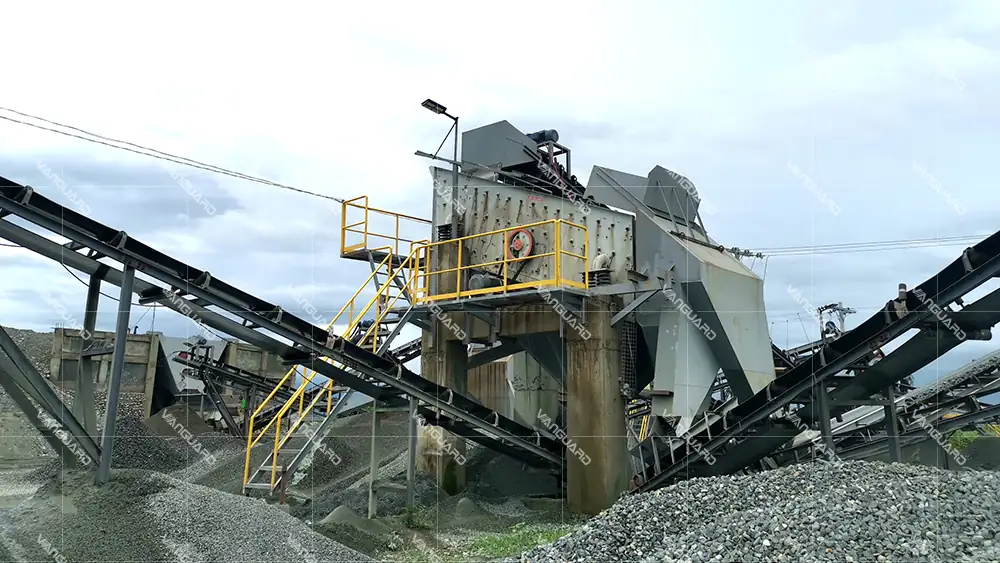
With the return circuit, the top size stays under 30 mm and the three fractions stay continuous. No off-spec oversize in the pile.
On river stone the CSV160's liners last far longer than impact blow bars would. Wear cost per ton drops to a predictable number instead of a surprise.
Pre-screening at the feeder keeps clay and fine material out of the crushing and screening stages, so clogging stays rare even in the wet season.
Lessons Learned
River stone pays back the operator who resists the impact crusher. The cheap-looking impact stage becomes the most expensive line item once silica starts eating the blow bars. A jaw plus a Symons cone, with a screen return, is the combination that actually runs. Two more things: feed it steady - a starved cone makes powder, an overloaded one spills; and pull the mud out up front, so the back end clogs less and the rainy season stays calm.
FAQ
River pebble is hard and high in silica. A cone squeezes slowly and wears predictably; an impact crusher's blow bars burn out in days and the wear bill swamps any saving.
It takes the large pebbles and breaks them down to a size the CSV160 cone can accept, protecting the cone chamber from oversize.
For a line that already jaws the coarse break, a Symons cone in secondary gives a round, well-shaped product and uses a parts ecosystem the crew knows. It fits the 5-30 mm range.
It runs decks set to 10 mm and 20 mm (and a 30 mm top deck for return), splitting the feed into 5-10, 10-20 and 20-30 mm, sending the oversize back.
Oversize above 30 mm goes back to the cone instead of the pile. Without it the top size drifts and the whole batch can be rejected.
The screen's top deck catches everything above 30 mm and the return loop sends it back to the cone until it passes.
The ZSW420x110 feeder's grizzly pre-screens the mud and fines before crushing, so the crushers and screen stay clean and the wet-season clogging stays rare.
It is the line's design capacity, set by the jaw and cone sizes and a steady feed. Size the plant to the real feed rate, not the brochure maximum.
Related Articles
• Vanguard Machinery Showcases Mobile Crushing & Screening Plants at MINEENTRA 202(2026-07-22)
• Why Mobile Crushing Plants Are Becoming Popular in...(2026-07-23)
• 200 t/h Limestone Crushing-and-Sand-Making Plant in Malaysia: Five-Size Mobile L(2026-07-22)
• 6-Grade Granite Aggregate Production Line for Russian Asphalt Plants Put into Op(2026-07-22)
• Hydraulic vs Spring Cone Crusher: What Sets Them Apart and H...(2026-07-22)
• Why Is My Jaw Crusher Wearing Out Too Fast? Causes...(2026-07-09)
• What Is a Crawler Type Mobile Plant? How It Works and How to...(2026-07-20)
• 300 TPH Mobile Crusher: Configuration, Capacity and Selectio...(2026-07-22)




