

Quick Answer
River stone (river pebble) is hard, quartz-rich and abrasive, with a rounded shape that is tough on crusher wear parts. That rules out impact crushers as the workhorse — their blow bars burn through on high-silica rock. The mobile configuration that actually pays off is jaw plus cone, with a sand making machine added only when you also make sand. Pick the chassis by the site: tire-mounted for road-linked moves between jobs, crawler for rough riverbank or in-pit ground, stationary lines for a long fixed campaign. Size capacity to your real feed, not the nameplate.
Key Takeaways
- ✔ River stone's high silica makes it abrasive — cone crushers, not impact, are the right secondary host- ✔ Jaw handles the hard, big feed at primary; cone takes over for the abrasive reduction- ✔ Mobile chassis: tire for highway moves, crawler for no-road sites, stationary for stable long runs- ✔ A vibrating screen with return circuit is what controls top size — never skip it- ✔ Pre-screen the surface clay and mud with the feeder grizzly before the crushers see it
Why river stone behaves the way it does
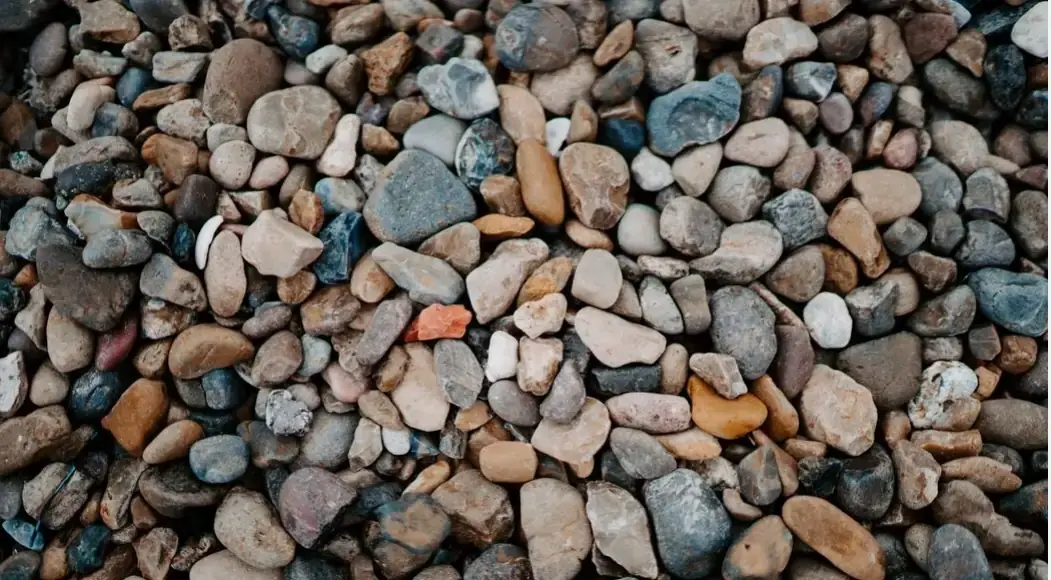
River pebble runs Mohs 7-8 and is mostly quartz. High compressive strength is one thing; the real cost is abrasion. Every tonne scrapes the liners. A cone's slow, compressive crushing laughs at this; an impact rotor does not.
Those rounded pebbles flow like water but are hard for a crusher to grip — they tend to slip and stall in the nip. Jaw and cone bite them far better than a hammer mill would.
Riverbed material arrives caked in clay and fine mud. Feed it straight in and you clog screens and dilute the product. A feeder with a grizzly pre-screen drops the dirt before the crushers, and keeps the saleable aggregate clean.
Your goal decides the setup
Jaw + cone + screen. That is the bread-and-butter river-stone line: 0-5 / 5-10 / 10-20 / 20-40 mm out the screen.
Add a 5X series sand making machine after the cone for the 0-5 mm fraction. The cone does the hard grinding; the 5X shapes the sand and lifts the fines ratio.
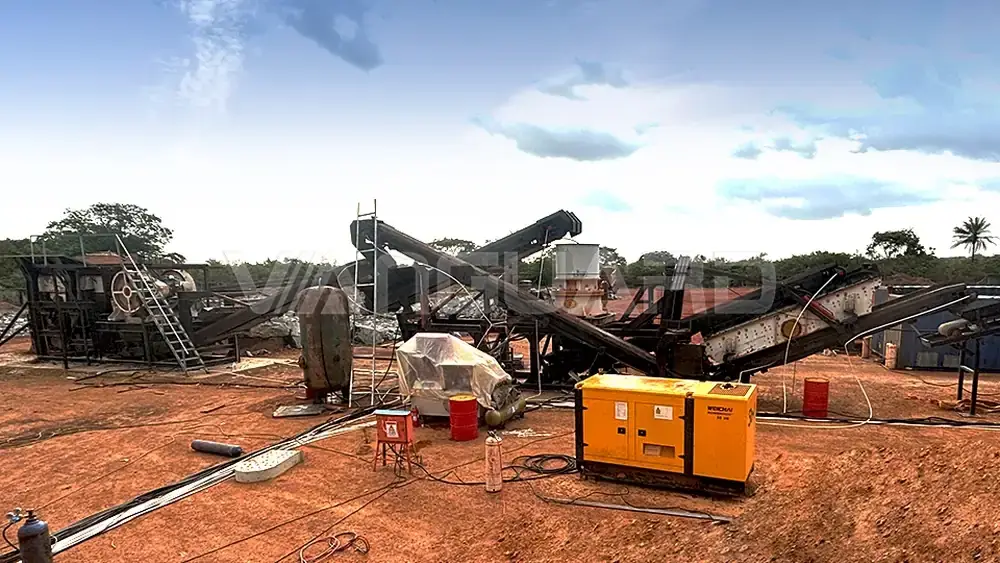
Cone (or jaw, e.g. 6CX) to a coarse feed size, then 5X series sand making machine to sand. Keep the cone doing bulk reduction — do not ask the 5X to do a cone's job.
Best mobile crusher for river stone (by goal)
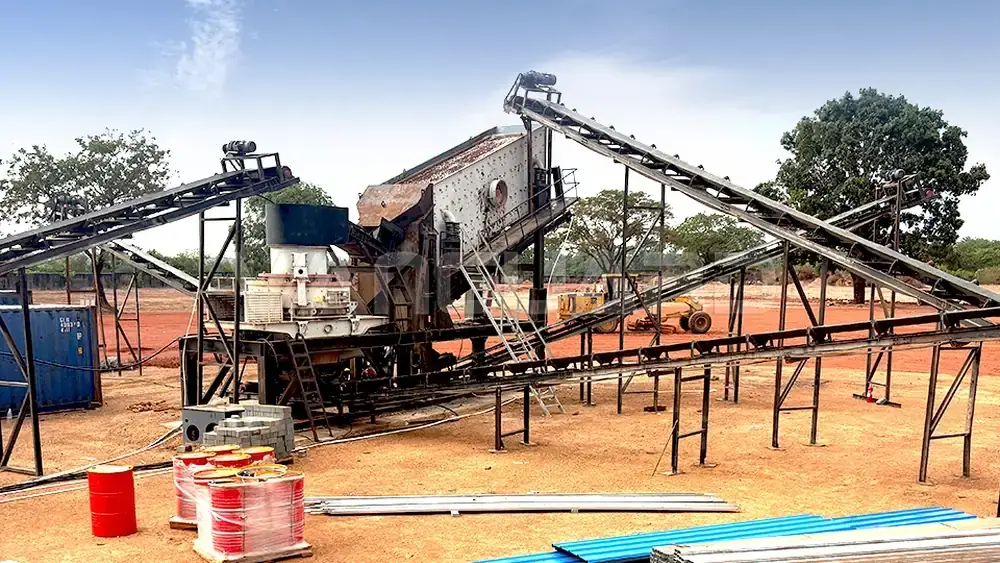
| Processing goal | Recommended mobile setup | Why |
| Aggregate only | Mobile jaw (VPE) + mobile cone (VPC) + screen | Jaw takes hard feed; cone survives the abrasion; screen sets sizes |
| Aggregate + sand | Jaw (e.g. 6CX) + cone + 5X series sand making machine + screen | Cone does bulk; 5X shapes the sand fraction |
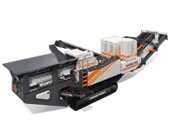
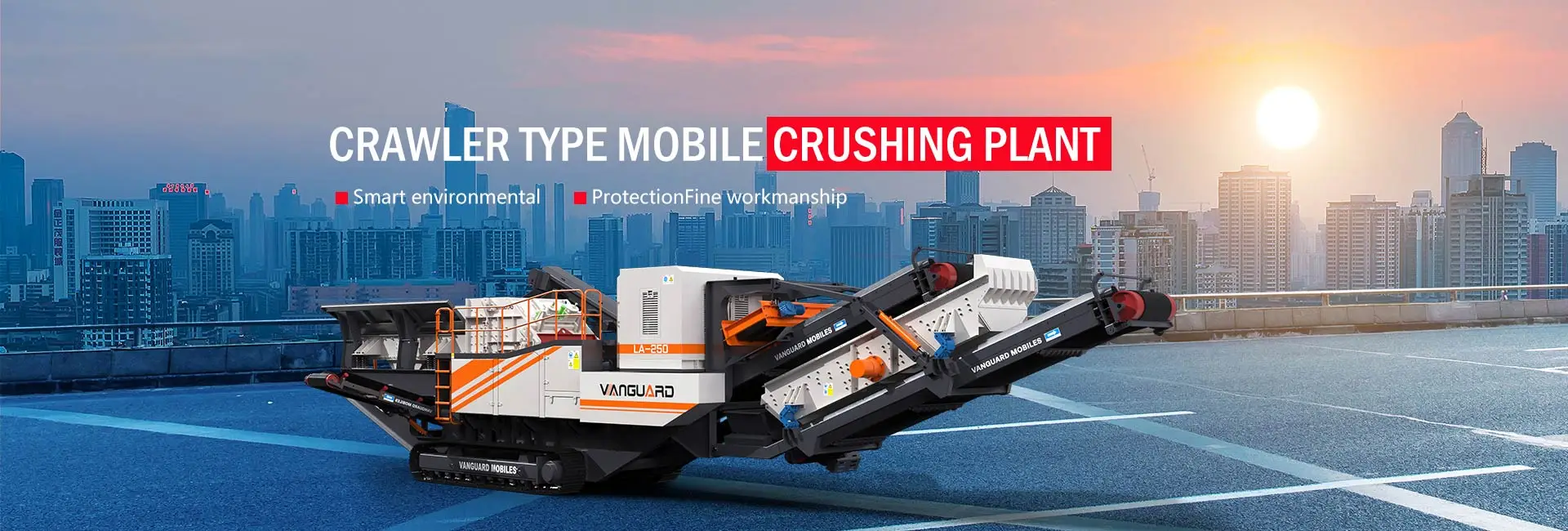
| Rough / remote site | Crawler jaw (C96/C106) + crawler cone (LA) | Self-propelled, no road access needed, powers up on arrival |
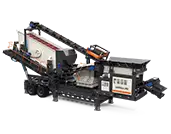
| Road-linked moves | Tire-mounted jaw (VPE) + cone (VPC) | Fast highway transport between jobs |
Crawler, tire, or stationary
The crusher inside can be the same; the chassis sets the economics.
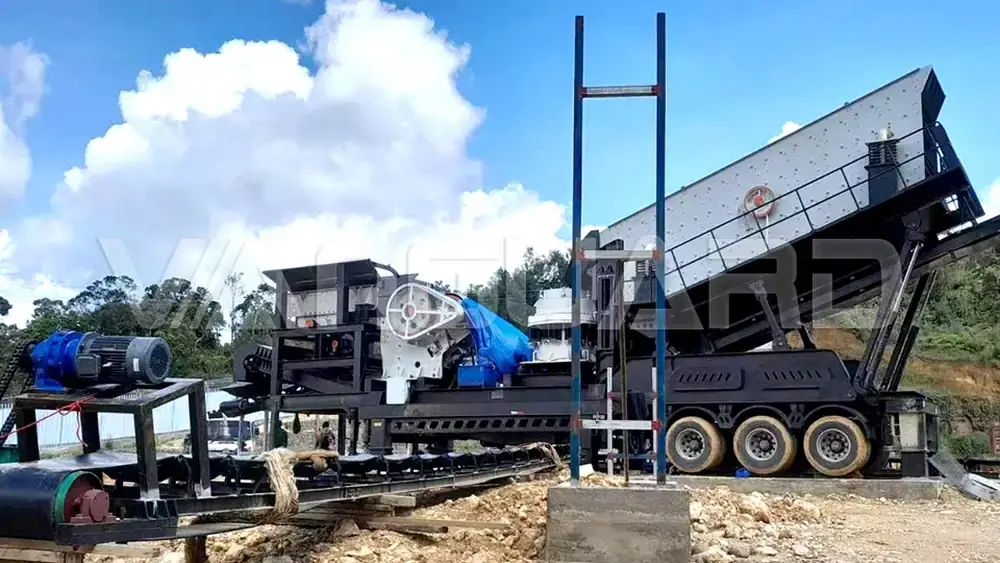
| Factor | Crawler (LA Series) | Tire-mounted (VP Series) | Stationary line |
| Ground | Rough, unpaved, riverbank OK | Needs fairly flat, compacted pad | Foundation required |
| In-pit move | Drives itself, minutes | Towed within site, short setup | Fixed |
| Highway move | Low-bed trailer | Truck tows it, fastest on road | — |
| Time to produce | Powers up on arrival | Short setup on outriggers | Weeks of civils |
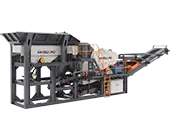
| Best for | No-road sites, frequent moves | Moves between road-linked jobs | One quarry, years of run |
Typical process flow
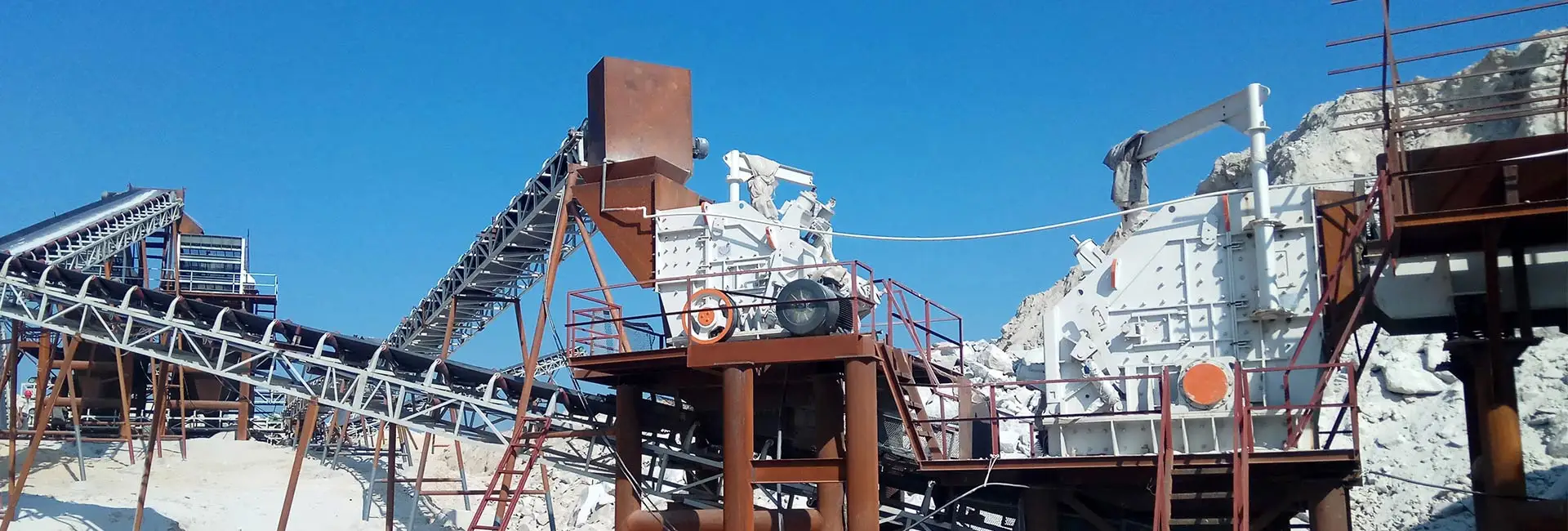
Feed → feeder with grizzly (drops the clay) → jaw (primary, e.g. 6CX series) → cone (secondary, the abrasive work) → vibrating screen splits 0-5 / 5-10 / 10-20 / 20-40 mm → oversize returns to cone → product to stock. Add a 5X series sand making machine after the screen if sand is in the spec.
Feed → pre-screen → jaw → cone → screen → (5X if sand) → product, oversize back to cone.
Selection tips
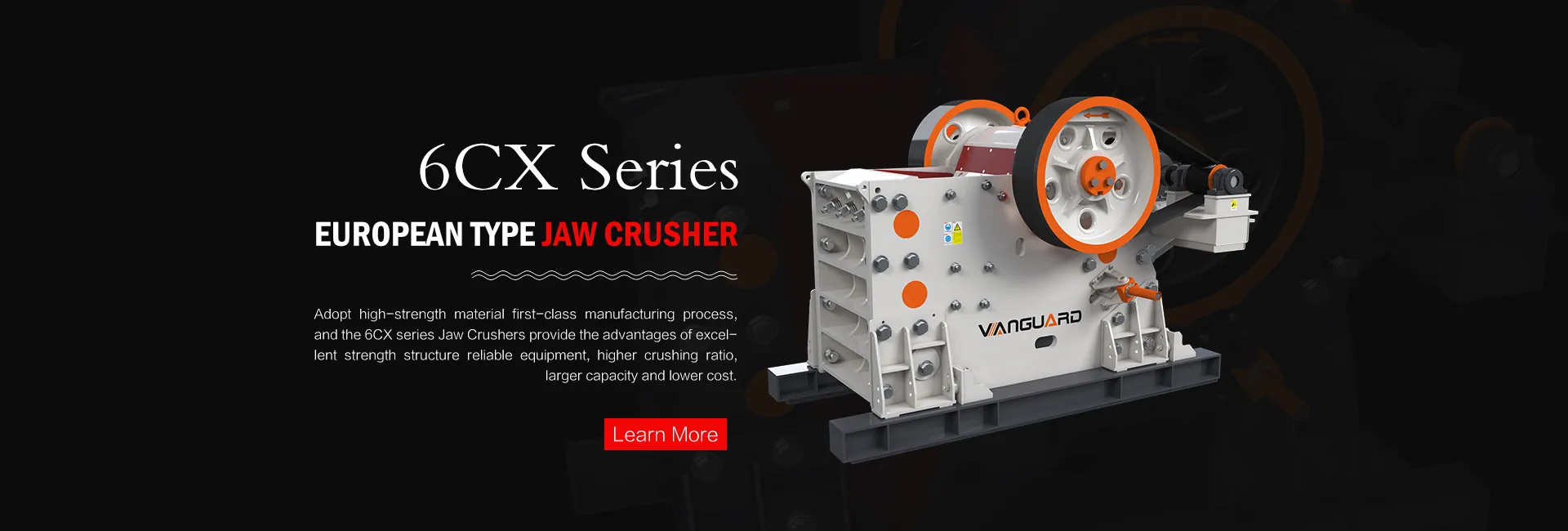
The jaw (e.g. 6CX series) takes the big, hard feed; don't shove oversize past its opening. Cone takes what the jaw delivers and does the abrasive reduction.
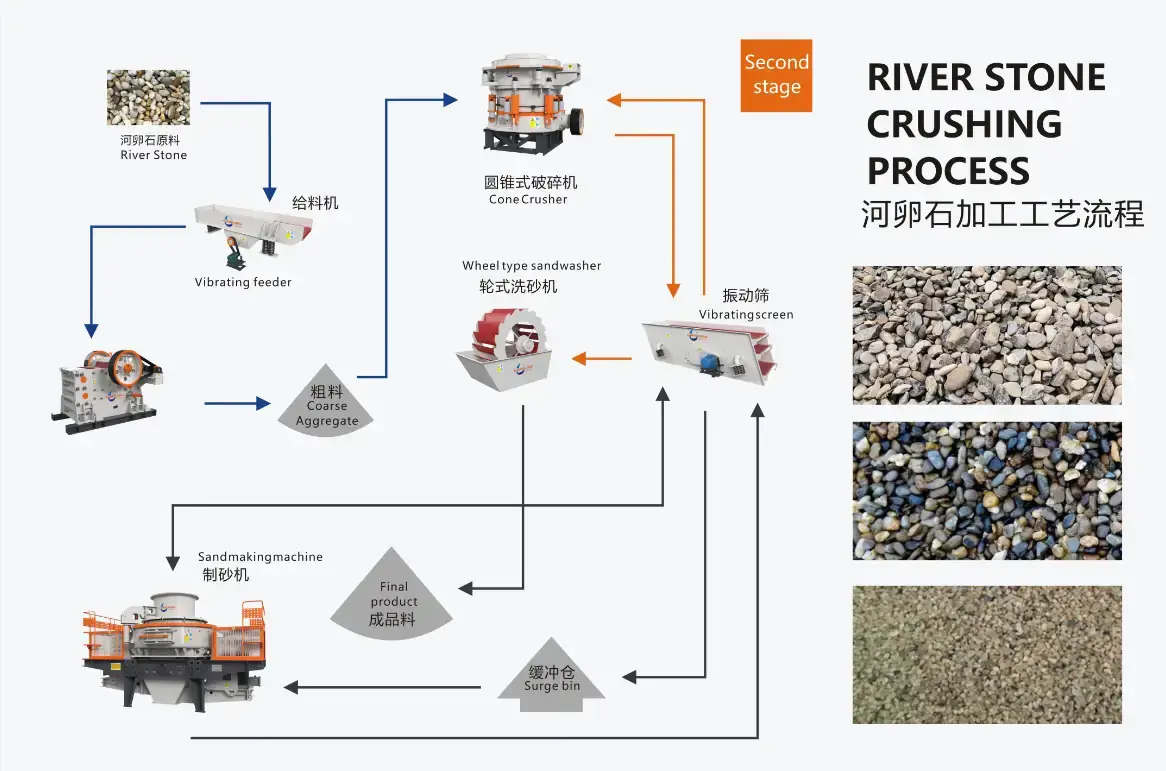
If you must hit cube shape and tight top size, the screen plus return loop is non-negotiable. No return circuit means off-spec product a customer rejects by the truckload.
These river-stone mobile plants commonly run 100-300 t/h depending on models. Size to what your excavator actually feeds per shift — a starved cone makes sand-dust, not saleable aggregate.
Count your moves. Several relocations a month on rough ground → crawler. Mostly highway hops between sites → tire-mounted is cheaper and faster.
Diesel-generator plus electric drive is standard; plug into site grid when available and the energy bill drops. Ask for dual-power when you order if grid is on site.
Check the route: bridge loads, tunnel heights. Equipment you can't legally truck to site helps nobody.
Common mistakes
Mistake 1: running an impact crusher as the secondary on river stone — blow bars become a monthly line item. Mistake 2: chasing nameplate capacity instead of your real feed curve. Mistake 3: skipping the pre-screen, so clay fouls the product. Mistake 4: no return circuit, top size drifts, whole loads rejected. Mistake 5: putting a tire plant on ground it was never meant for.
Lessons from the field
A Southeast Asian river-stone sand line I reviewed started with an impact crusher doing the bulk reduction. On quartz-rich pebble, blow bars were changed every few days; wear cost was several times a limestone job. They swapped the secondary to a cone and let the impact unit handle only shaping — the numbers finally closed.
Be straight about it: a mobile cone plant is not a magic wand. Impact and hammer units belong on limestone and demolition concrete. Cone is the river-stone workhorse because the rock is hard and abrasive. Pick the chassis for the ground, not the brochure.
Selection checklist
1. High silica / abrasive? Yes → cone does the reduction, impact only shapes. 2. Hardened ground or none? None, with slopes → crawler. 3. Frequent highway moves? Yes → tire-mounted. 4. Must hold top size? Yes → keep the screen return. 5. Real tonnes per shift? Size to that, not the max.
FAQ
It can, but on high-silica pebble the blow-bar wear bill is brutal. Cone is the right secondary; reserve impact for low-silica rock like limestone.
Jaw at primary (e.g. 6CX series, hard, big feed); cone at secondary (abrasive reduction). That order is what makes river stone pay.
No road into the site, rough or riverbank ground, frequent in-pit moves → crawler. It drives itself and powers up on arrival.
Mostly highway moves between jobs → tire-mounted tows faster and cheaper. It sets up on outriggers.
One quarry, years of stable run → stationary line has the lowest cost per tonne. Move the rock to the plant, not the plant to the rock.
Yes. The vibrating screen with a return circuit is what holds your top size and gradation. Skip it and you ship off-spec.
Pre-screen it with the feeder grizzly before the crushers. Clean feed means clean product and fewer clogged screens.
Most river-stone mobile jaw-plus-cone plants land around 100-300 t/h by model and feed. Feed steadily — a starved cone makes dust.
Jaw opening is generous but not endless. Oversize boulders ahead of the jaw need a primary or splitting; don't ram them in.
Cone crushes by slow compression — it shrugs off abrasion. Impact throws rock at a rotor; on silica that rotor wears out fast.
Standard diesel-gen plus electric drive; plug to grid when present, energy cost drops. Tip: if grid is on site, order dual-power — it usually pays back within the first year.
Fix ore type, silica, tonnage, target sizes, then the site. Practical tip: send a sample for a free material analysis before you order — one bag of rock beats several "cone or impact" meetings.
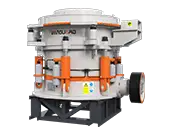
Mobile jaw (VP Series VPE, crawler C96/C106, or 6CX stationary), mobile cone (VPC, crawler LA), mobile 5X series sand making machine (VPV) for sand, plus feeders, screens and the stationary CS-CH cone. Tell us your rock and site; we size the chassis and the crushing chamber together.
Conclusion
For river stone, the mobile crusher that actually earns its keep is a jaw plus cone combo — jaw (e.g. 6CX) for the hard feed, cone for the abrasive reduction — with a 5X series sand making machine only when sand is in the spec. Choose the chassis for the ground: crawler (LA Series) for no-road and riverbank sites, tire-mounted (VP Series) for road-linked moves, stationary for a long fixed campaign. Hold top size with a screened return circuit and pre-screen the mud. Get the rock and the site right and Vanguard Machinery sizes the mobile river-stone plant to your feed — jaw, cone and chassis matched, with a free material analysis to confirm the chamber before you commit.
Related Articles
• Crawler Mobile Crusher Price: What Drives the Cost of a Craw...(2026-07-20)
• What Is a Crawler Type Mobile Plant? How It Works and How to...(2026-07-20)
• Why Choose a Crawler Mobile Crusher?(2026-07-15)
• 200 t/h Limestone Crushing-and-Sand-Making Plant in Malaysia: Five-Size Mobile L(2026-07-22)
• 6-Grade Granite Aggregate Production Line for Russian Asphalt Plants Put into Op(2026-07-22)
• Hydraulic vs Spring Cone Crusher: What Sets Them Apart and H...(2026-07-22)
• 300 TPH Mobile Crusher: Configuration, Capacity and Selectio...(2026-07-22)
• Why Is My Jaw Crusher Wearing Out Too Fast? Causes...(2026-07-09)




