

Executive Summary
Modular-mobile crushing and screening plants occupy the middle ground between a fixed production line and a wheeled or crawler mobile unit. They are delivered as bolt-together, skid- or container-mounted modules that a crew can assemble on a shallow foundation and relocate when the working face moves. This technical article explains how such a plant is structured, how material flows through it, and which components actually do the work - from the feeder and crushing chamber through the eccentric shaft, flywheel, hydraulic setting, drive, lubrication, screen deck and belt transfer. Part names stay generic; one representative modular series is named only as a reference point. Vanguard Machinery builds modular plants on this principle.
Quick Definition: What a Modular-Mobile Plant Is
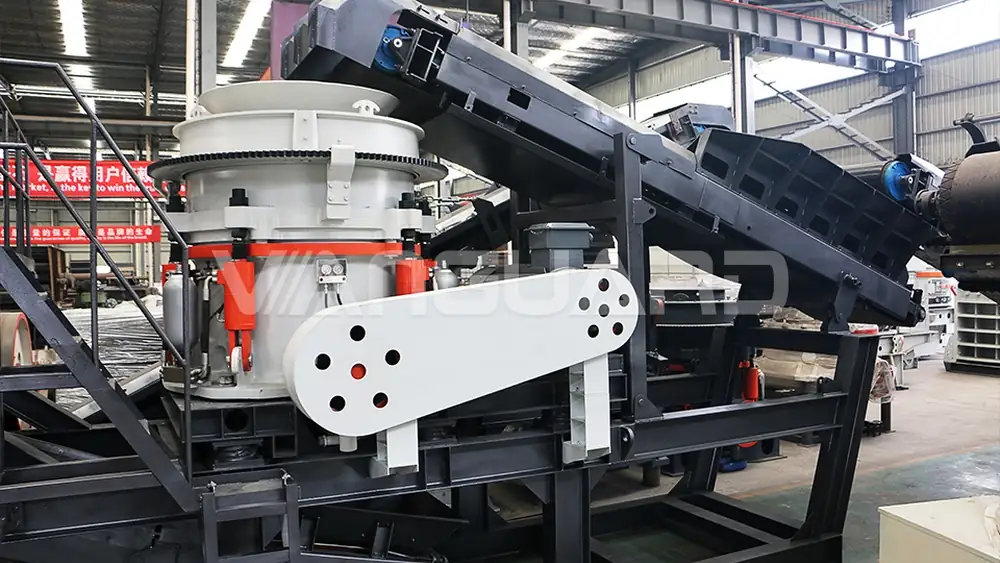
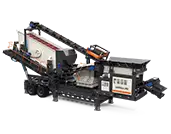
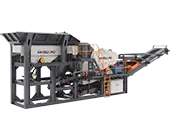
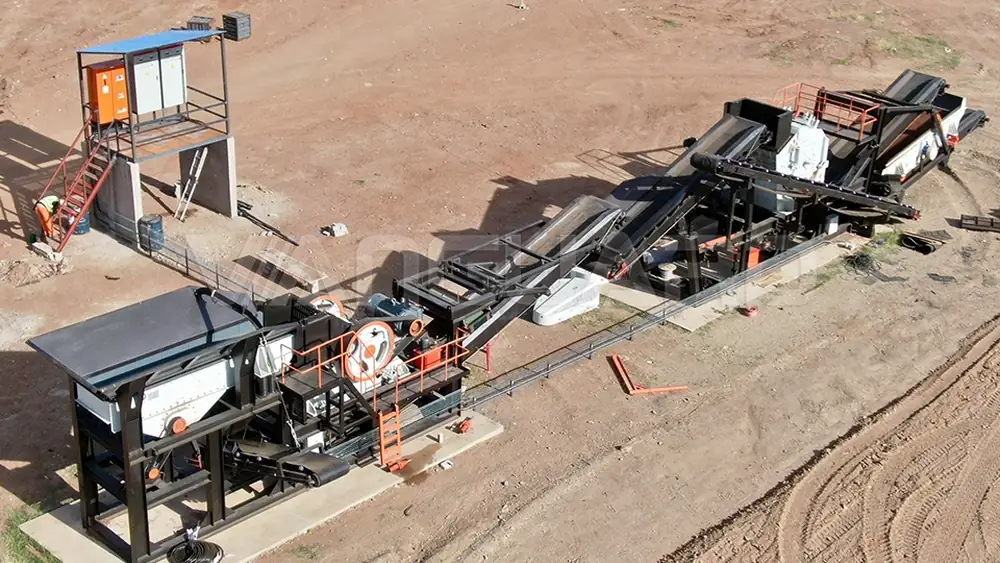
A modular-mobile plant is a crushing and screening line supplied as pre-wired, pre-piped modules, each carried on its own steel skid or container frame. On site the modules are bolted together with minimal concrete, so commissioning takes days rather than months. It is relocatable: when the deposit shifts, the modules are unbolted, transported and re-erected. Against a stationary line it needs far less civil work; against a pure mobile unit it gives a steadier, better-supported structure with easier access for service. The MBP modular series from Vanguard Machinery follows this layout.
How It Works: Flow and Modules
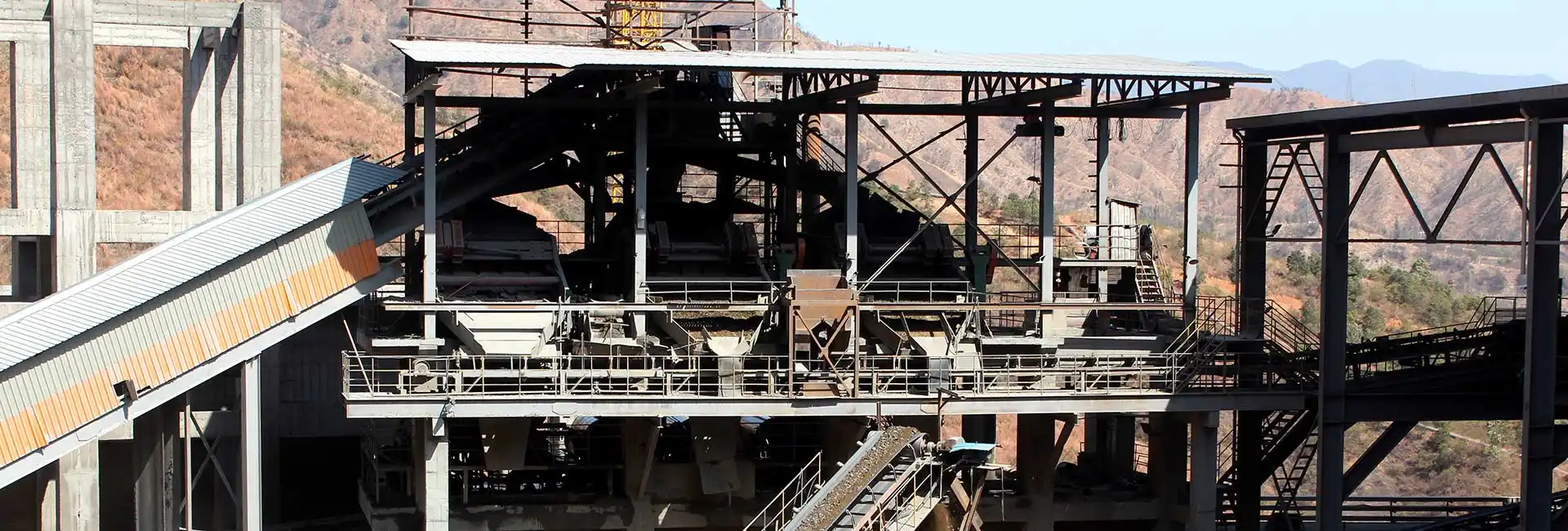
Material moves through five stages: raw feed enters the feeding module, is reduced in the crushing module, is sized on the screening module, and leaves as finished product on the belt-transfer module. In plain terms the path is feed, crush, screen, product. The modular frame holds each machine on its own skid with walkways, guards and a local control box. Power, lubrication and dust-suppression lines are pre-run between modules, so site work is mostly bolting and connection. A central control cabin or PLC coordinates start, stop and interlocks across the line.
Why It Matters: Fast Setup and Low Foundation
Because modules arrive largely pre-assembled, the civil scope shrinks to a levelled pad and a few anchor points. Commissioning is fast and capital is lower than a fixed line, while relocation stays practical when the face advances. For operations that move every few years, this protects the equipment investment and shortens the payback window.
Component Deep-Dive 1: Feeding and Crushing Chamber
Feeding starts at a grizzly or vibrating feeder that meters material into the chamber and scalps the fine fraction. A steady, even feed protects the chamber and lifts throughput. The crushing chamber is the wear-lined cavity where size reduction happens; its profile, closed-side setting and throw decide product shape and capacity. Keeping the chamber full but not choked is the core skill of stable running.
Component Deep-Dive 2: Eccentric Shaft, Flywheel and Toggle or CSS
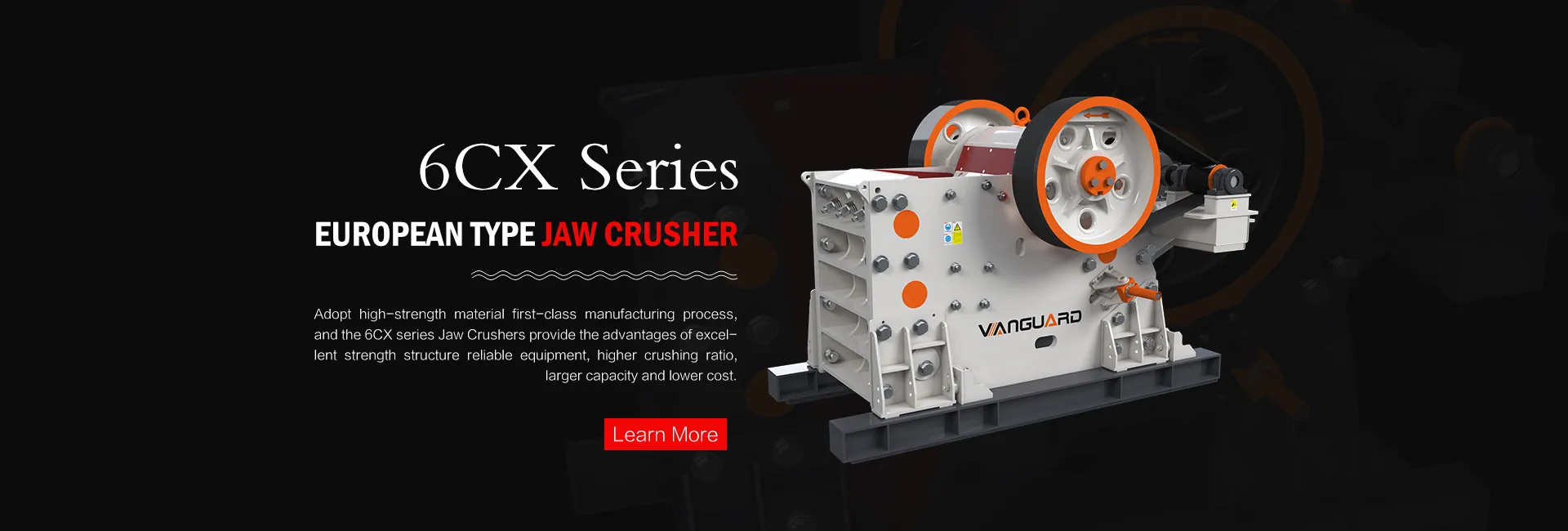
The eccentric shaft on a jaw unit turns rotation into the swing that compresses rock. The flywheel stores energy between strokes so the drive sees a smoother load. The toggle transmits motion and, in many designs, the closed-side setting, also called CSS, sets the smallest discharge opening and therefore the top size of the product. Tightening CSS refines the product but cuts capacity; opening it does the reverse.
Component Deep-Dive 3: Hydraulics, Drive and Lubrication
Hydraulics handle clamping, adjustment and, on some designs, chamber clearing of tramp material. The drive is a motor with a coupling or V-belt set that delivers power to the shaft; correct belt tension and alignment protect the bearings. Lubrication is an oil system that cools and films the bearings and gears, and oil temperature, flow and cleanliness are the earliest signs of trouble. Skid-mounted modules keep the tank, pump and lines within easy reach.
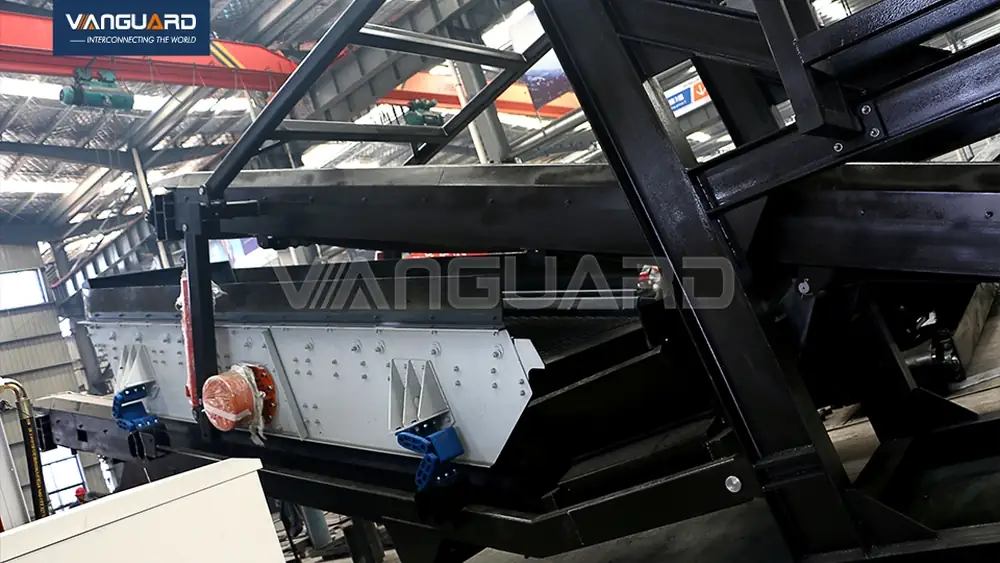
Component Deep-Dive 4: Screen Deck and Belt Transfer
The screen deck is the vibrating surface that splits product into sizes; deck count, aperture and amplitude set the gradation. Belt transfer moves material between modules and to stock; correct speed, loading and tracking stop spillage and carryback. Transfer points need clear access for cleaning and liner change.
| Component | Main job |
| Feeder | Meter feed, scalp fines |
| Crushing chamber | Reduce size, shape product |
| Eccentric shaft | Drive swing motion |
| Flywheel | Smooth drive load |
| Hydraulics and CSS | Adjust setting, clear chamber |
| Drive | Deliver power |
| Lubrication | Cool, film bearings |
| Screen deck | Split product sizes |
| Belt transfer | Move material, load out |
Modular vs Mobile vs Stationary
| Aspect | Modular-Mobile | Mobile (Wheel or Crawler) | Stationary |
| Foundation need | Shallow pad, few anchors | Light or none | Heavy concrete |
| Commissioning time | Days to weeks | Hours to days | Months |
| Relocation | Practical, module by module | Fast, one move | Not practical |
| Structure rigidity | High, skid-mounted | Moderate | Highest |
| Maintenance access | Good walkways, open skids | Compact, tighter | Spacious |
| Best fit | Movable faces, mid tenure | Short jobs, road move | Permanent quarry |
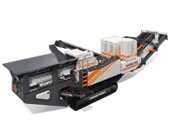
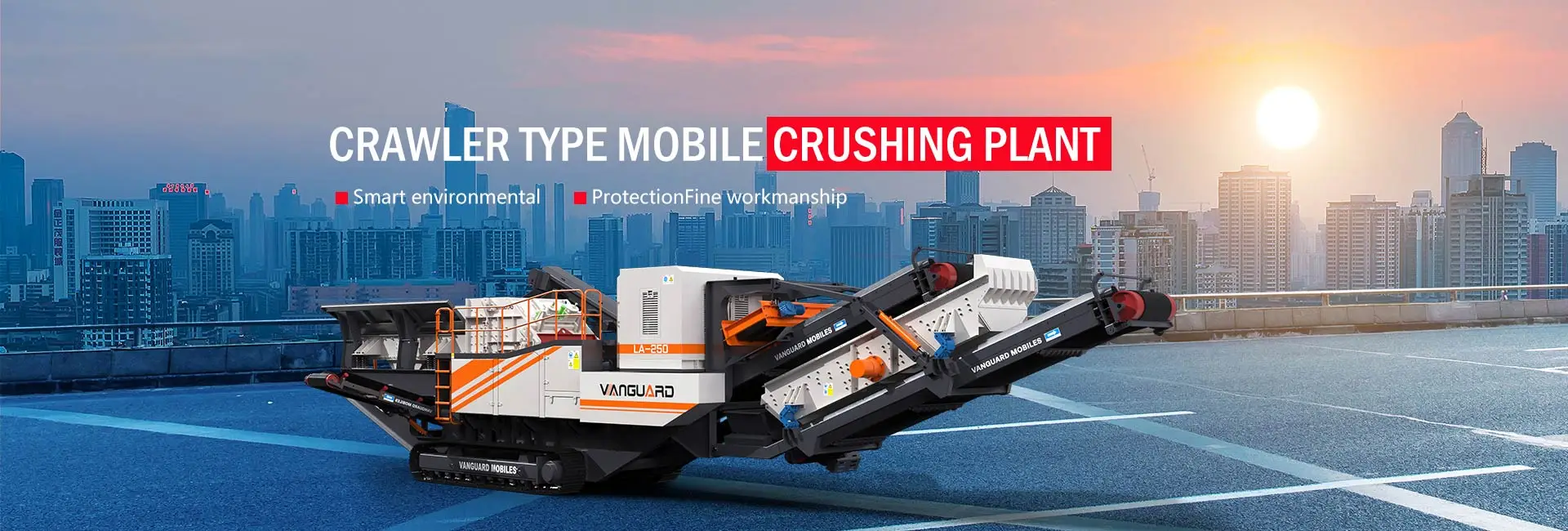
Crawler-mounted units use wide tracks and a low center of gravity, and begin crushing shortly after arriving on site.
Advantages
- Lower civil work than a fixed line. - Fast commissioning and practical relocation. - Steadier structure and better service access than a pure mobile unit. - Pre-piped modules cut site labour and error.
Limitations
- Higher cost and slower move than a pure mobile unit. - Needs a prepared pad, unlike a mobile that drives in. - Module split must be planned, or access suffers.
Common Mistakes
- Wrong module split that strands a machine with no walkway. - Under-skid access blocked by tight bolting and poor layout. - Poor maintenance reach because lines and ladders were not planned.
Lessons From the Field
On relocatable lines that run well, crews pre-plan the module sequence, leave clear space under each skid, and keep lubrication points and screen decks within arm's reach. A common field lesson is that most unplanned stops trace back to uneven feed and skipped oil checks, not to the machines themselves. Treat the feeder and the oil system as the first things to watch on any move.
FAQ
A modular plant bolts together relocatable skid modules on a shallow foundation; a mobile unit is a single chassis that drives in and starts. Modular gives steadier structure and better access.
With pre-piped modules, connection and bolt-up usually finish in days to a few weeks, far shorter than a fixed line that needs heavy civil work.
Yes. Modules are unbolted and moved module by module when the working face advances, which protects the investment over a multi-year pit life.
It converts motor rotation into the swing motion that compresses rock in a jaw chamber, and works with the flywheel to smooth the load on the drive.
Closed-side setting is the smallest gap at the discharge of the chamber; it sets the top size of product. Tighter CSS means finer product but lower capacity.
It stores energy between crushing strokes so the motor sees a smoother load, which protects the drive and improves starting under load.
Hydraulics clamp and adjust the setting and can clear tramp material from the chamber, which reduces downtime during upset conditions.
Liners in the chamber, screen mesh and belt covers wear fastest; their life depends on feed abrasiveness, setting and even feeding.
Track oil temperature, flow and cleanliness daily; most bearing failures start as a slow drift in one of these three before any noise appears.
A module usually carries two or three decks to split product into the needed size bands; more decks mean finer gradation control.
It is the conveyor link between modules and to stockpile; correct speed and tracking stop spillage and carryback at transfer points.
Yes, a modular layout is built to accept another crushing or screening module as capacity or product needs change.
For a fixed, long-life site a stationary line may cost less per tonne, but modular still wins when the pit plan calls for moves or phased build-out.
Summary
A modular-mobile crushing and screening plant is a bolt-together, relocatable line built from skid-mounted modules. Its work happens in the feeder, chamber, eccentric shaft, flywheel, hydraulic setting, drive, lubrication, screen deck and belt transfer. With a shallow foundation, fast commissioning and practical relocation, it fits operations that move on a mid-term horizon. Vanguard Machinery supplies modular crushing solutions designed around these principles.
Related Articles
• Hydraulic vs Spring Cone Crusher: What Sets Them Apart and How to Choose(2026-07-22)
• Why Is My Jaw Crusher Wearing Out Too Fast? Causes and Fixes(2026-07-09)
• Vanguard Machinery Showcases Mobile Crushing and Screening Plants at MINEENTRA 2026 Zimbabwe
• 200 t/h Limestone Crushing-and-Sand-Making Plant in Malaysia: Five-Size Mobile Line
• Why Mobile Crushing Plants Are Becoming Popular in Zimbabwe Mining Projects(2026-07-23)
• 300 TPH Mobile Crusher: Configuration, Capacity and Selection(2026-07-22)
• Crawler Mobile Crusher Price: What Drives the Cost of a Crawler Plant(2026-07-20)
• What Is an Impact Crusher? How It Works, Types and How to Choose(2026-07-17)




