

Key Takeaways
- A fixed line rarely runs at full capacity all year: a sudden breakdown, planned maintenance, or orders above design capacity all stop or throttle the whole line.- A mobile crushing plant driven to site can take over within hours after a power or feed connection—no civil works, no long-lead procurement—making it the cheapest "insurance" for a fixed line.- It plays two roles: as emergency backup that caps losses during downtime, and as a capacity module that runs in parallel to add tonnage, pushing a fixed-line expansion years down the road.- Below we start from the real pain points of fixed lines, then cover emergency and expansion use, how to tie into an existing line, what to equip, the cost math, and the pre-commissioning checklist.
Why a fixed line needs a mobile backup
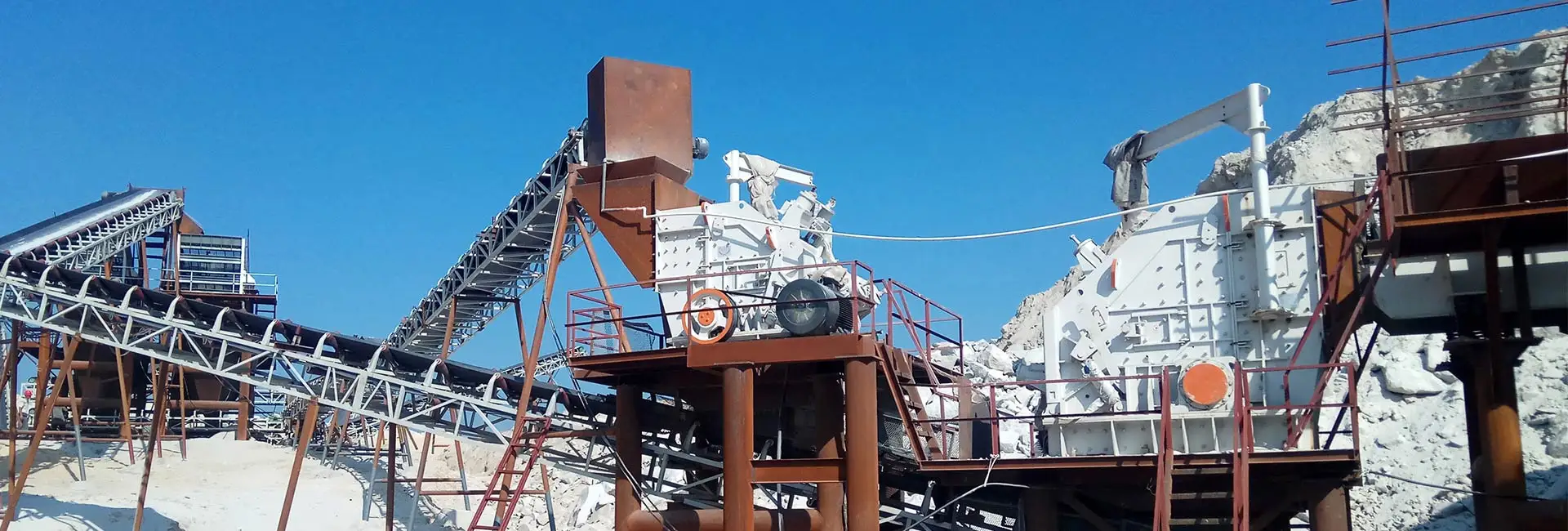
- When the fixed-line host (gyratory, jaw, or cone) fails on a bearing or main shaft, the whole line goes down; waiting on an OEM part by sea and a major overhaul can take weeks, and every day is pure loss.- Planned maintenance also stops the line: a 300 t/h line down for 10 days skips 30,000 tonnes of product, and the price gap widens further in a peak construction season.- Hitting the capacity ceiling is even more common: when a licence expands, a new offtake contract is signed, or aggregate prices spike, the fixed line is already maxed yet more is wanted—building a new line means land, permits, and six-plus months.- The value of a mobile plant is to compress two risks—downtime loss and missed market windows—with one re-deployable machine.
Emergency use: how a mobile plant covers a stopped fixed line
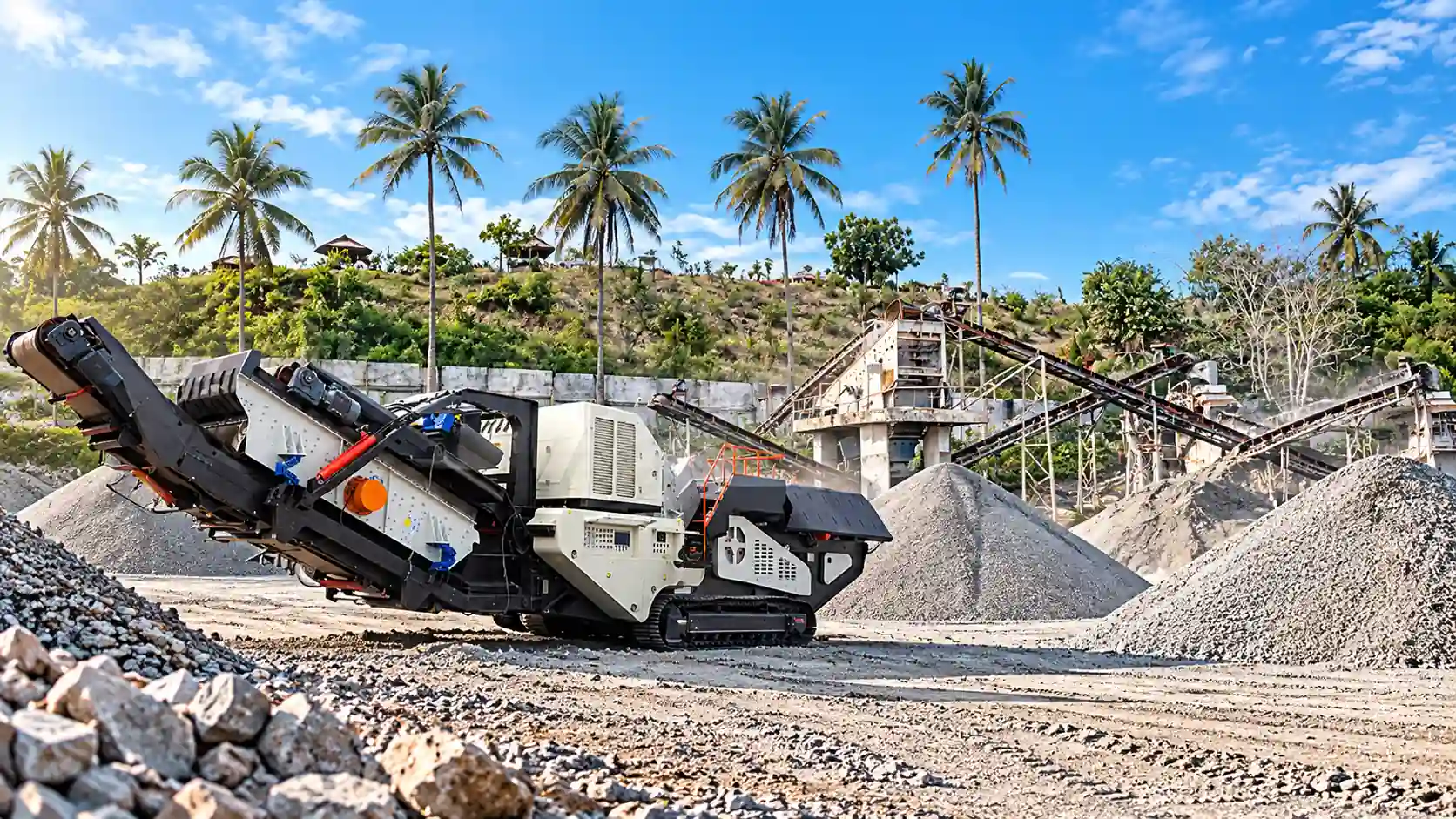
- Typical scene: the fixed-line primary jaw breaks its main shaft and needs three weeks of repair. Roll a mobile jaw plant next to the primary buffer bin, feed it run-of-mine, crush, and send the product back to the fixed-line secondary and screening—as long as secondary and screening run, the line is not fully stopped. - Deployment: the mobile plant ties into the fixed-line buffer bin or transfer belt, no civil works; crawler units drive in and produce with no foundation, while wheeled units finish outriggers and power in half a day. - Cover logic: emergency is not to "replace the fixed line" but to keep shipping while it is "half down," cutting the stoppage loss from 100% down to only the primary gap. - Note: an emergency mobile plant is best staged at the site or under a nearby rental agreement before trouble hits—when it fails, you pay by the hour, and procurement is already too late.
Expansion use: how a mobile plant adds capacity at the ceiling
- Typical scene: a 300 t/h granite aggregate line is at full load and a new 450 t/h contract is signed. A new fixed line means land, permits, and six months; a 150 t/h mobile module in parallel reaches 450 in about two months. - Parallel mode one (add primary plus pre-screen): tie a mobile jaw plant with pre-screen at the fixed-line feed end, split part of the run-of-mine, and let the fixed line run only its back end—the front-end bottleneck is released. - Parallel mode two (add secondary plus screen): when the fixed-line primary is fine but secondary is maxed, add a mobile cone plant with a mobile screen beside it, feed it the fixed-line intermediate, and make finished product independently. - Peak and off-peak: run both in peak season for tonnage, withdraw the mobile for maintenance in the off-season and keep only the fixed line—no stranded assets, more flexible than one maxed fixed line.
Tying into an existing fixed line: layout and takeover
- Feed point: take material from the fixed-line run-of-mine buffer, post-primary belt, or transfer stockpile; the mobile plant carries its own feed and discharge conveyors, so no extra feeder is needed.- Discharge path: send crushed product back to the fixed-line screen by belt, or through a mobile screen for independent sizing—set by site logistics.- Power and footprint: crawler units drive in and produce with no foundation; grid power or a diesel generator set both work, and one unit occupies about a single parking bay.- Control and integration: the mobile plant runs on its own controls and does not modify the fixed-line PLC; only one joint trial run is needed to confirm gradation and flow match.
What to equip: mobile jaw, cone, and screening plants
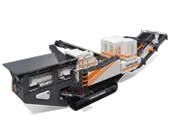
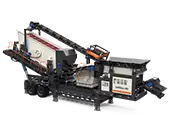
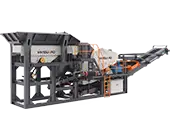
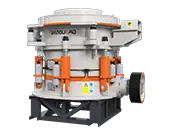
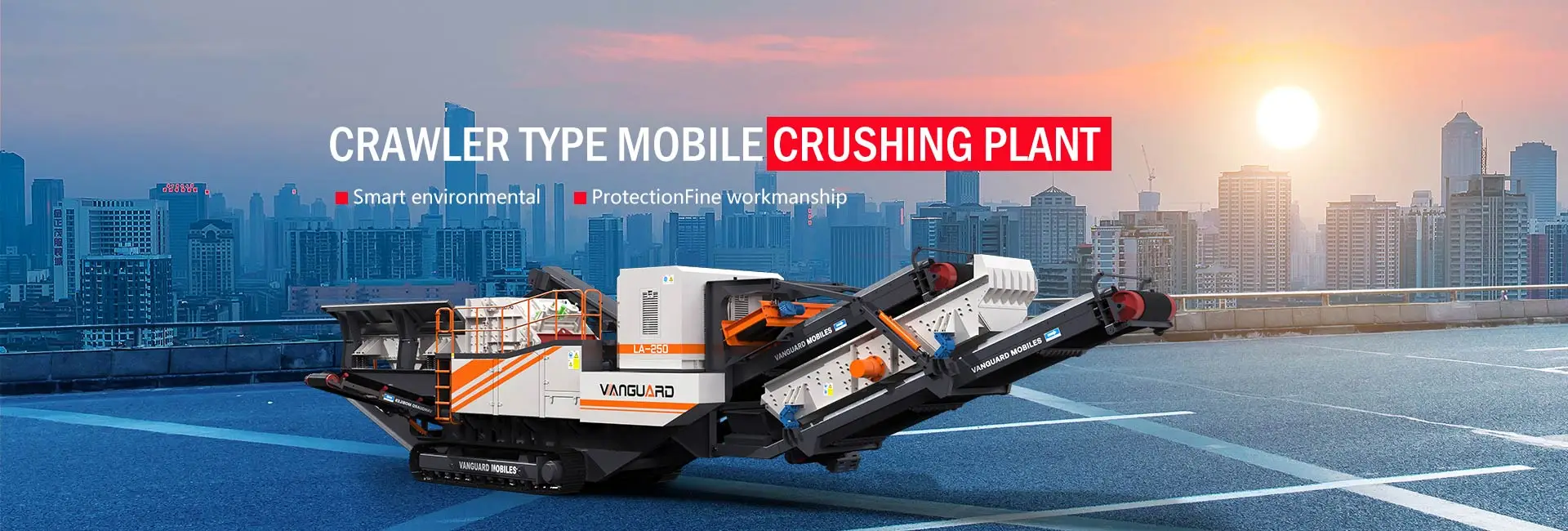
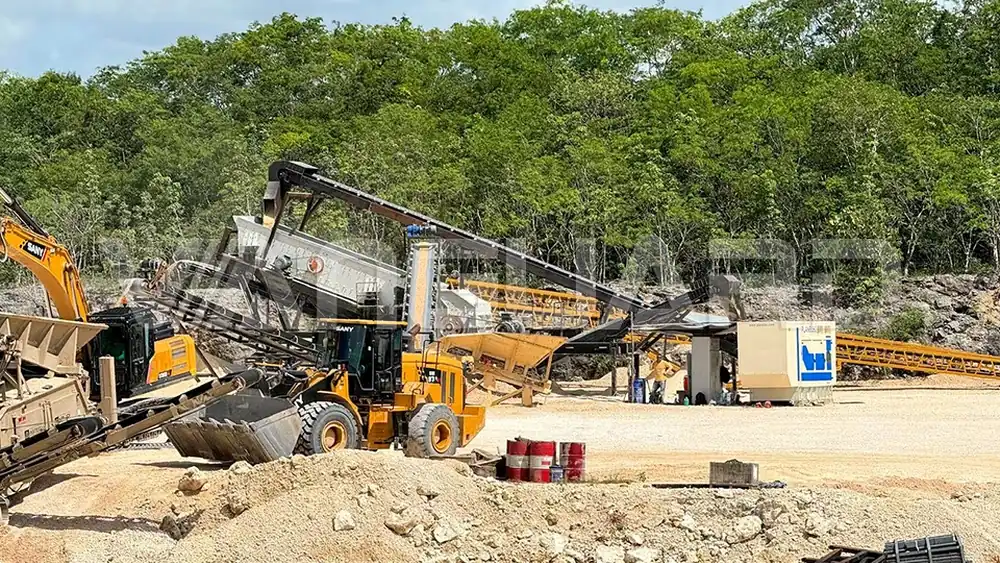
- Cover a primary gap: pick a mobile jaw plant (integrating feed, crushing, and discharge conveyance) that eats run-of-mine and outputs 0-150 mm intermediate to feed the fixed-line secondary.- Cover a secondary gap: pick a mobile cone plant with a closed-circuit mobile screen for multiple grades; use cone for hard rock, mobile impact for softer rock.- Need expansion plus manufactured sand: add a mobile vertical-shaft impact crusher with screen after the mobile cone to supply 0-5 mm fines and hold the sand ratio.- Vanguard Machinery mobile crushing plants span jaw, cone, impact, screen, and vertical-shaft models, and can be combined as modules against the fixed-line gap to build the tonnage you need on site.
| Fixed-line gap | Recommended mobile unit | Feed / product |
| Primary down or maxed | Mobile jaw plant (feed+crush+discharge in one) | Run-of-mine / 0-150 mm intermediate |
| Secondary maxed | Mobile cone plant + mobile screen | Intermediate / multiple grades |
| Expansion + sand | Mobile cone + mobile VSI + screen | Intermediate / 0-5 mm fines |
| Soft-rock expansion | Mobile impact plant + mobile screen | Run-of-mine / multiple grades |
The cost math: emergency and expansion
- Emergency math: a mobile jaw plant costs from a few hundred thousand to just over a million, against tens of thousands per day of stopped-line loss—payback in days; it is "insurance priced by the day." - Expansion math: a new 150 t/h fixed line—land, civil, permits, equipment—often runs several million with a six-month-plus lead; one mobile module in parallel goes live in two months at far lower capex. - Holding cost: a mobile plant carries depreciation and fuel but is re-deployable and can be rented or bought; fixed-line expansion is a one-time sunk cost that sits idle if orders later fall. - Hidden upside: holding the peak-season price, avoiding offtake-contract penalties, and keeping customers from rivals often outweigh the equipment price difference.
| Dimension | Emergency (standby mobile) | Expansion (parallel mobile) | New fixed line |
| Capex | Few hundred k to ~1M | Same, scaled to need | Several million up |
| Lead time | Takeover in hours | About two months | Six months plus |
| Payback logic | Downtime loss by the day, days to pay back | Defer fixed expansion, hold price | One-time sunk |
| Flexibility | Rent or buy, re-deployable | Withdraw after peak | Hard to undo once built |
Pre-commissioning checklist
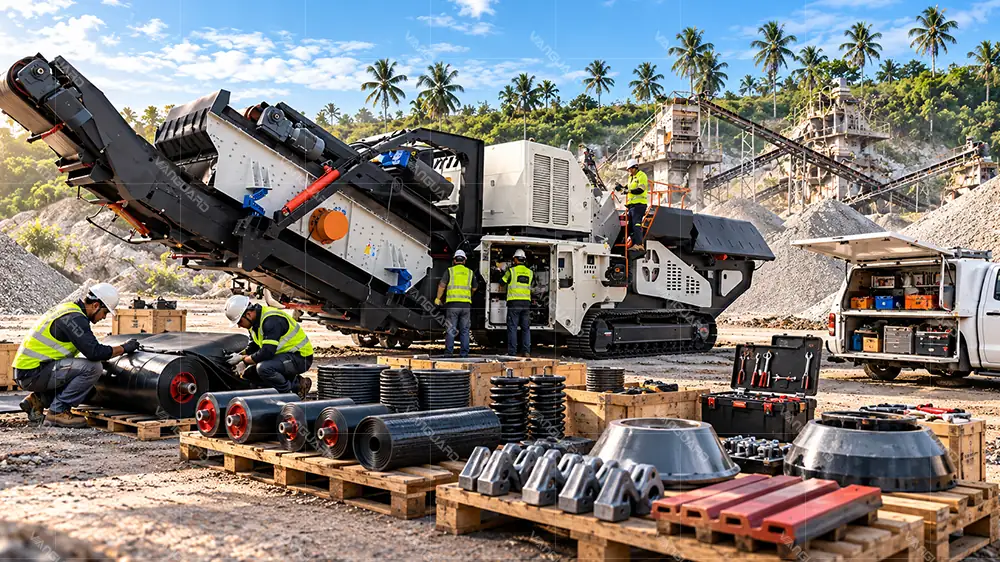
- Standby mechanism: for emergency use, keep at least one callable mobile plant or a signed nearby rental agreement—do not wait for a breakdown to procure. - Interface check: measure the fixed-line buffer bin, belt height, and product size in advance; confirm the mobile discharge connects to existing screening or transfer. - Power plan: confirm the connection capacity and keep a diesel generator set as backup; a single mobile plant commonly draws 200-400 kW class supply. - Spares and training: stock wear parts locally (blow bars, liners, screen mesh) and run one joint trial-run training for operators to avoid a failed start. - Environment and compliance: dust spray and enclosed transfer points in place, meeting local dust and noise limits, to avoid an ordered shutdown.
FAQ
A: Not mandatory, but worth it. The bigger the host, the fuller the order book, the costlier the downtime—the higher the gain from one standby mobile plant; smaller lines can use nearby rental.
A: No, and it should not. Its job is to keep shipping while the line is "half down," covering the primary or secondary gap so the line never fully stops—not to duplicate the whole fixed line.
A: No. The mobile plant runs on its own control; only one joint trial run confirms gradation and flow match. The fixed-line PLC stays untouched.
A: Crawler for rough or frequently shifting sites—drives in and produces with no foundation. Wheeled for paved, stable yards—faster and cheaper if the site is fixed.
A: Size to the gap, not the whole line. If the fixed line runs 300 t/h and the new contract needs 450, a 150 t/h mobile module in parallel reaches 450 in about two months—far faster than a new fixed line.
A: Close enough for most aggregate uses. Mobile cone gives cubic product like the fixed line; set the CSS and screen mesh to the same spec and blend at the screening stage.
A: Yes, if it is a standby unit you already own. In downtime it covers the gap; in peak season it runs in parallel for extra tonnage. Rental works for one-off peaks.
A: Yes. Crawler and wheeled both run in weather; just plan dust suppression, access roads, and cold-start for the diesel generator. Avoid working in flooded pits.
A: Grid power or a diesel generator set. A single mobile unit commonly draws 200-400 kW; confirm the site connection capacity and keep a genset as backup.
A: Either staged at the mine or quarry, or under a nearby rental agreement. The point is to be callable in hours—not procured after the breakdown.
A: Yes. That is its advantage over fixed expansion: when the order peak passes, withdraw it for maintenance or redeploy elsewhere; no stranded civil asset.
A: Downtime loss per day, deferred capex, power and fuel, rental versus purchase, and the hidden upside—holding peak-season price, avoiding contract penalties, keeping customers from rivals.
A: Yes. Hard rock (granite, basalt) goes to mobile cone; softer (limestone) is fine on mobile impact at lower wear; river pebble (Mohs 7-8) uses jaw plus cone, not impact.
A: Yes. Feed the mobile plant's product back to the fixed-line screen, or run a mobile screen in parallel; choose by site logistics and the gradation target.
A: A mobile jaw plant runs from a few hundred thousand to over a million; against tens of thousands per day of stopped-line loss, it pays back in days. Rental lowers upfront further.
Conclusion
A mobile crushing plant is not here to replace the fixed line—it buys the fixed line "re-deployable elasticity": cover losses when stopped, add tonnage in parallel at the capacity ceiling, and push the expansion capex down the road. Understand its two roles, do the emergency and expansion math, and land the interfaces and spares up front, and the fixed line stops fewer days and sells tens of thousands more tonnes. Vanguard Machinery mobile crushing plants span jaw, cone, impact, screen, and vertical-shaft models, and can be combined as modules against the fixed-line gap to put this elasticity plan on your site.
Related Articles
• How to Choose a Mobile Crushing Plant Manufacturer...(2026-08-27)
• Why Mobile Crushing Plants Are Becoming Popular in...(2026-07-23)
• Vanguard Machinery Brings Its Gold-Ore Processing Line to the 140th Canton FairG(2026-08-06)
• From Zhengzhou to Almaty: Vanguard Machinery to Exhibit at the 31st Kazakhstan K(2026-08-06)
• Vanguard Machinery to Exhibit at Construction Indonesia 2026, Deepening Its Sout(2026-08-06)
• Best PFV1315 Impact Crusher for Limestone Crushing in Saudi ...(2026-08-06)
• How to Maintain a Crawler Type Mobile Jaw Crushing Plant(2026-08-05)
• Top 5 Reliable Crusher Alternatives to European Br...(2026-08-04)




