

Key Takeaways
- Choosing a crusher does not take fifty parameters — three hard ones decide it: the material picks the machine type, the maximum feed size picks the primary crusher, and the target capacity picks the number of stages.- Material comes first: rock at and above Mohs 7 with high abrasiveness (granite, river stone, basalt) goes jaw-plus-cone; medium-soft stone like limestone favors the impact crusher; sticky wet feed needs the dirt-control decision before any machine choice.- The largest feed lumps must stay below roughly 80% of the primary's feed opening — miss this rule and chamber jamming, lost tonnage and uneven liner wear all follow.- Capacity is not the nameplate: select 10–20% above real demand for surge margin; oversizing by half is money idling, and each stage needs buffer capacity behind it.- Get the machine type right first — only then do size and stage count mean anything. Reverse the order and you buy a machine with beautiful numbers that does not fit the duty.
Why the Order Is Material, Feed, Capacity
- The material decides "what crushes it": hardness, abrasiveness, moisture and clay content cross a whole class of machines off the list in one stroke — get this step wrong and everything after it is wrong too. - The maximum feed size decides "how big the primary is": whether the largest lumps enter the feed opening is a harder constraint than capacity — no entry, no tonnage. - The target capacity decides "how many stages and machines": once the real throughput is fixed, the stage count and the model of each stage surface on their own. - The three parameters run in series: material screens the type, feed fixes the size, capacity fixes the count. Skip around or run it backwards and the proposal always misses the duty somewhere.
Material Picks the Machine Type
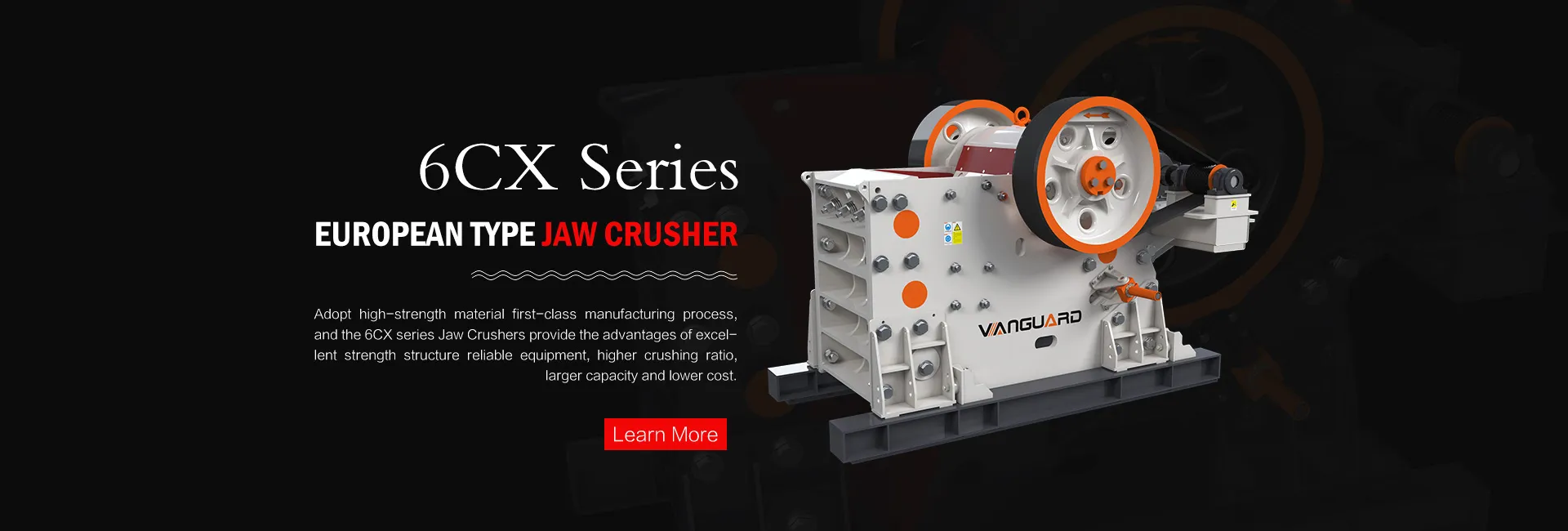
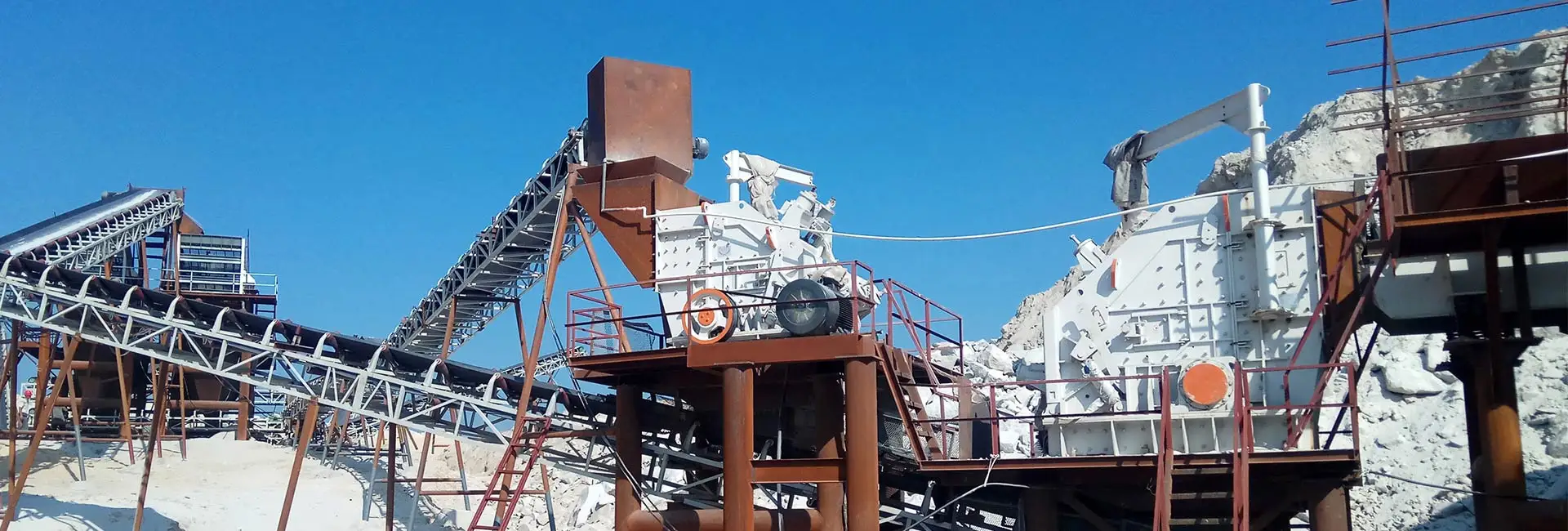
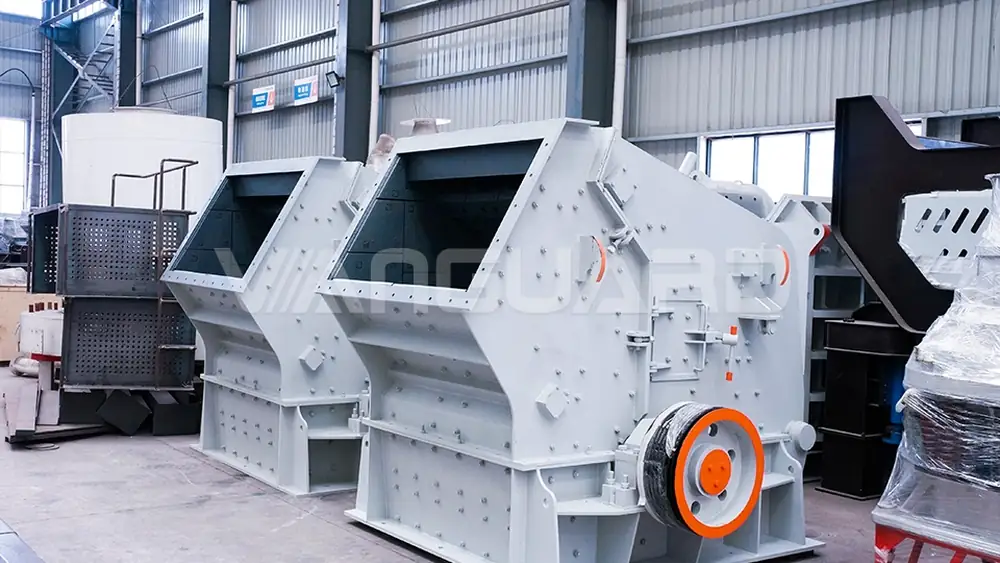
- Hard, abrasive rock — granite, river stone, basalt, quartzite — belongs to compression machines: a jaw crusher for primary and a cone crusher for secondary and tertiary. They break by squeezing; liners wear, but the mechanism never fights the rock.- Medium-soft, low-abrasion stone — limestone, coal gangue, weathered rock — is impact-crusher territory: blow bars break by striking, particle shape is good, fines are low, and the investment sits well below a cone line. When the stone does not grind it, the impact crusher pays.- Brittle feed destined for manufactured sand keeps the same primary logic and adds a sand-making stage after crushing for shaping.- Sticky wet feed is its own conversation: when moisture and clay run high, decide the dirt control at the feed end before choosing any machine — a chamber that packs is a bad buy at any price.
The Hard-Rock Rule: Jaw Plus Cone
- Mohs 7 is the line. On river stone and granite, impact-crusher blow bars wear so fast that the consumable cost per ton runs away — that is the breaking mechanism talking, not any brand. - The jaw takes the primary impacts, the cone grinds the hard mass by lamination, and together they hold liner life, particle shape and cost per ton steady. - The rule reads backwards too: dropping a cone into a limestone line doubles the investment without buying proportional life — the stone does not wear it, so the extra money never comes back.
Maximum Feed Size Fixes the Primary
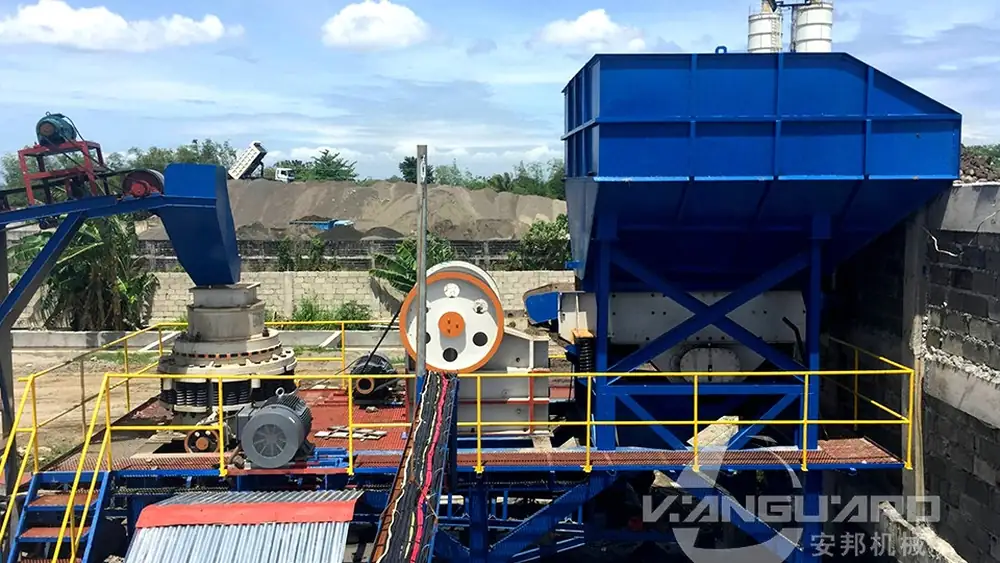
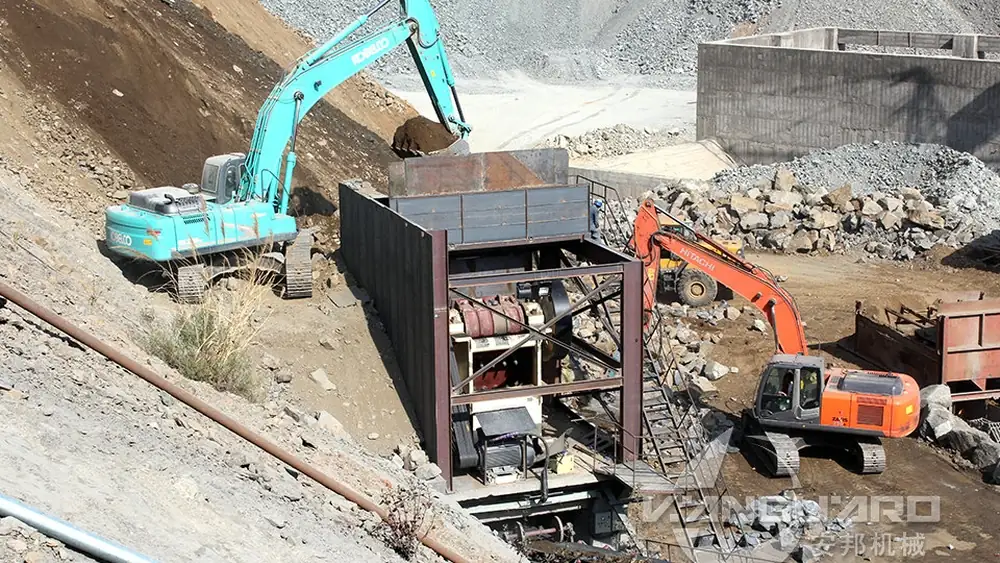
- The rule is simple: largest feed lumps stay at or below roughly 80% of the primary's feed opening. Loader-fed small lines with lumps around 300–500 mm get a mid-size jaw; mine blasting feeding 800 mm and up needs a large-jaw primary standing in front. - Measure the feed, do not guess it: the biggest lump off the excavator bucket, the biggest lump off the truck, the oversize rate after blasting — real numbers decide. - Pick the opening too small and the chamber jams daily; pick it absurdly large and the price and the foundation grow for nothing — the 80% rule lands you on the right size, one step. - The secondary's feed follows the primary's discharge: how big the primary's product runs decides whether the secondary needs pre-screening and what size it should be.
Feed Size and Primary Lookup
| Max feed | Recommended primary | Typical feeding method |
| Up to 300 mm | Small-to-mid jaw crusher | Loader-fed small aggregate lines |
| 300–500 mm | Mid-to-large jaw crusher | Direct dumping from excavators and trucks |
| 500–800 mm | Large jaw crusher | Blasted rock, bench feed |
| 800 mm and up | Large jaw with blast-fragmentation control | Large-mine primary crushing |
- The table is a shortcut, not scripture: with good blast fragmentation the same line drops one primary size — every step down is real money saved.
Capacity Fixes Stages and Count
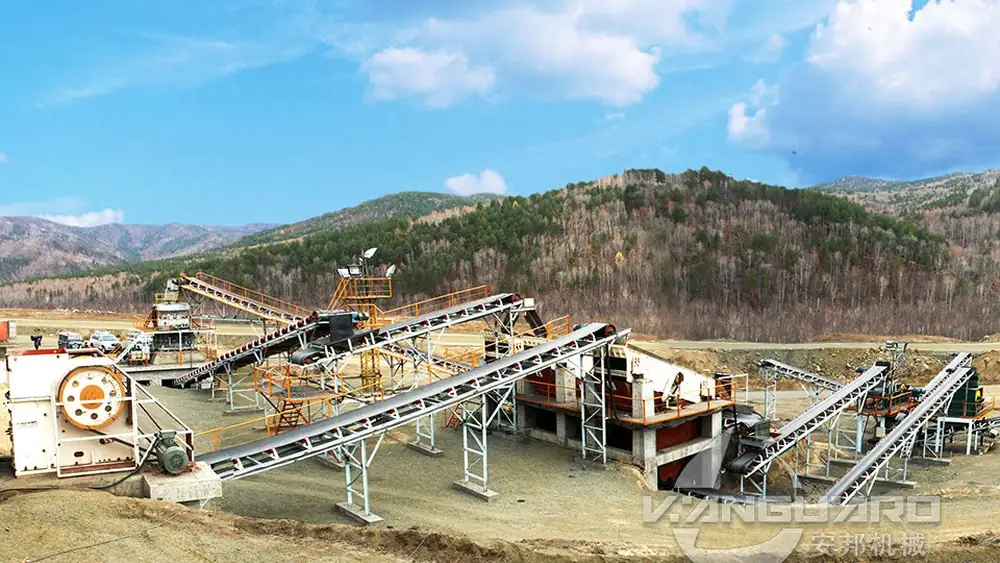
- A single stage has a limited reduction ratio — typically 4–6 to one — so crushing 500 mm down to 50 mm needs stages, whether you like them or not. - A 50–100 TPH small line manages on one or two stages: jaw plus screen, and a single stage in closed circuit does the job when product requirements are relaxed. - A 100–300 TPH workhorse runs two or three stages: jaw primary, cone or impact secondary, screens in a loop. - From 300–500 TPH up, plan three stages and think in parallel: screens saturate before crushers — never let the machines wait on the screens.
| Target capacity | Stages | Typical configuration |
| 50–100 TPH | One or two | Jaw + screen; single-stage closed circuit suffices |
| 100–300 TPH | Two or three | Jaw + cone/impact + screening loop |
| 300–500 TPH | Three | Jaw + cone + cone, multi-stage screening |
| Higher or mobile duty | As required | Units in parallel, or fixed-mobile hybrid |
Classic Selection Failures
- Putting an impact crusher on granite: it looks cheap and shapes well — until three months of blow-bar bills eat the price gap. The hard-rock rule does not bend. - Selecting on nameplate capacity: nameplate is the maximum under a specific duty; harder, wetter feed routinely shaves 20% off. Select 10–20% above real demand. - Mismatched stage capacities: the primary's discharge caps the secondary, which then runs pinned at full load — the bottleneck sits between stages, not inside any machine. - Ignoring moisture and clay: the first rainy season packs chamber and screen; the machine was never wrong — the feed-end dirt control was missing from day one.
A Short Checklist: Six Data Points Before You Select
- Three on the material: rock type, Mohs hardness or compressive strength, and abrasiveness (silica content is a good proxy). Vanguard Machinery's selection sheet lists these three first — the machine type is decided right here. - Two on the feed: measured maximum lump size and the feeding method (excavator, truck, or direct blast feed). Vanguard Machinery sizes the primary from these two and holds the 80% rule without exceptions. - One on capacity: target throughput and annual working hours. Vanguard Machinery proposes 10–20% above real demand — and will tell you to your face when an upsized suggestion is unnecessary. - Before sending the data, fix the product requirement: sizing range and particle-shape demands decide whether shaping follows — leave this out and every proposal runs one piece short. - Attach site photos and a feed video with the numbers; they remove half the misunderstanding of text alone. One look at your feed video and a Vanguard Machinery engineer can lock the size range.
FAQ
Broadly yes: Mohs 7 roughly separates compression machines from impact machines. Granite and river stone sit on or above it and go jaw-plus-cone; limestone sits below, where the impact crusher pays.
Rule of thumb: largest lumps at or below 80% of the opening. Selecting right at the limit only delays the jamming and uneven wear.
Blow bars break by striking, and abrasive hard rock eats them — the per-ton consumable cost runs away. It is the mechanism, not the brand.
10–20% above real demand, covering feed variation and wear drift. Oversizing by half is money spent on idling.
On small lines with loose product specs, yes: a single jaw stage in closed circuit with a return screen. Shape and grading requirements push you to add stages.
Each stage takes 4–6 to one; work backwards from the total ratio and leave slack at every stage so none runs pinned.
Rock type and hardness, abrasiveness, measured max lump size, feeding method, target capacity and annual hours. Vanguard Machinery's selection sheet collects exactly these six — the proposal only comes once they are in.
Yes. Dirt control and pre-screening at the feed end come before any machine choice; skip that and every type packs up.
Different bases: some size on nameplate, some on real measured output — and some downsize to win the bid. Ask each supplier to state the selection basis and it becomes obvious.
By material: abrasive hard rock takes the cone, medium-soft stone chasing shape takes the impact. Vanguard Machinery builds both series and selects by the feed alone, never by stock on hand.
Jams and manual clearing at best, stall-outs and trips at worst; chronic oversize lumps bring uneven liner wear and drifting capacity.
The three parameters stand, but relocation and space join in: highly integrated units with per-machine capacity limits, topped up by parallel units. Vanguard Machinery configures mobile combinations from the same duty data.
Keep buffer: the primary's discharge plus the recirculating load all press on the secondary — if it is smaller than the incoming flow, the bottleneck appears instantly.
Sizing range sets the screening, shape demands set shaping and lamination — the product end rewrites the machine type in front of it.
Ask for producing references on the same material with measured tonnage — better still, visit. Vanguard Machinery attaches same-duty references to every proposal, and the numbers can be checked line by line.
Conclusion
How to choose a crusher comes down to three steps: let the material pick the machine type, let the maximum feed size pick the primary, and let the target capacity pick the stages and the count — run the three in series and the proposal stays on the duty. Hard rock takes jaw plus cone, medium-soft stone lets the impact crusher work, the 80% feed rule holds, and capacity keeps a 10–20% margin. Get the selection steady, and installation, operating costs and payback all become talkable numbers — Vanguard Machinery runs its selection sheet from material to capacity, six data points to a proposal, and every machine on it traces back to your feed.
Related Articles
• Hydraulic vs Spring Cone Crusher: What Sets Them Apart and H...(2026-07-22)
• Why Is My Jaw Crusher Wearing Out Too Fast? Causes...(2026-07-09)
• Vanguard Machinery Brings Its Gold-Ore Processing Line to the 140th Canton FairG(2026-08-06)
• From Zhengzhou to Almaty: Vanguard Machinery to Exhibit at the 31st Kazakhstan K(2026-08-06)
• Vanguard Machinery to Exhibit at Construction Indonesia 2026, Deepening Its Sout(2026-08-06)
• How to Choose a Mobile Crushing Plant Manufacturer...(2026-08-27)
• Best PFV1315 Impact Crusher for Limestone Crushing in Saudi ...(2026-08-06)
• How to Maintain a Crawler Type Mobile Jaw Crushing Plant(2026-08-05)




