

Key Takeaways
- Vietnam's infrastructure is at peak: the North-South expressway, Long Thanh airport and port expansions at Haiphong and Ho Chi Minh keep limestone-aggregate demand high across the north (Ninh Binh, Ha Nam, Thanh Hoa) and centre.- A 150 TPH line is the sweet spot for small-to-mid quarries running in phases: one crawler mobile jaw crusher for primary, one crawler mobile impact crusher in closed circuit for secondary, one mobile screen — plug in power and it runs, no foundation.- Limestone is medium-hard; "jaw + impact" beats "jaw + cone" on cost and particle shape. Add a mobile VSI for manufactured sand.- Don't price the plant on the equipment tag alone: sea freight to Haiphong, import duty, power tariff and rainy-season downtime often matter more to payback than the crusher price gap.- Below: site conditions, the selection logic, process, bill of equipment, the cost math, and a commissioning checklist for Vietnam.
Why Vietnamese quarries favour mobile plants
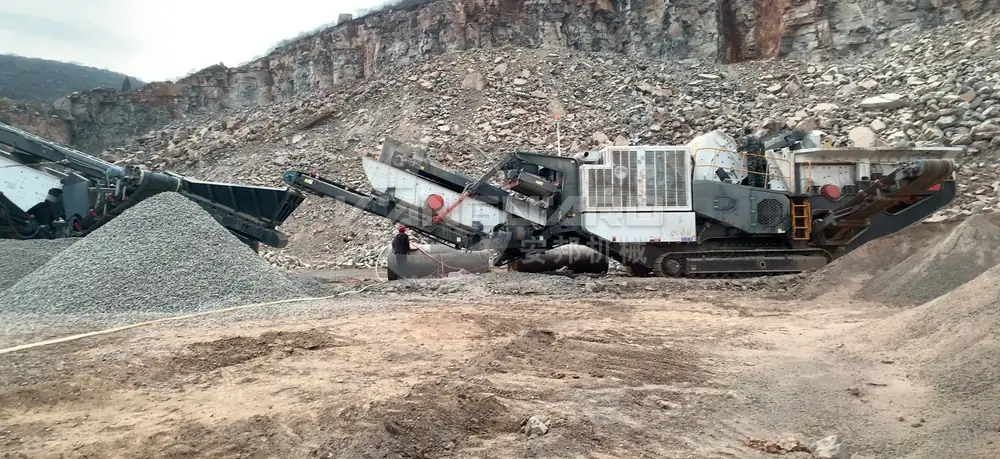
- Infrastructure pull: multiple North-South expressway packages, Long Thanh International Airport, the Long Thanh–Ben Luc corridor — concrete aggregate stays short, and quarries along the route want to expand. - Resource spread: limestone sits at the southern edge of the Red River delta (Ninh Binh, Ha Nam, Thanh Hoa) and in the centre; deposits sit off the main road, so a mobile plant advances along the road network instead of hauling everything to a fixed plant. - Climate and terrain: tropical monsoon, long rainy season, constrained mountain roads in the north — a fixed line means long civil works and hard relocation; a crawler plant has a wide footprint and low centre of gravity, runs on grid power on arrival, no foundation. - Contractor mix: Japanese and Korean EPCs are present, Chinese equipment is price-competitive with predictable spares lead time, and mobile plants have become a common choice for projects here. - Permitting and land: a mobile plant is small-footprint and can move with the mining licence in phases, so approval and land-rent pressure are lighter than a fixed line.
Locking in your 150 TPH configuration
- Start with material and hardness: limestone at Mohs 3–4 runs jaw + impact; if it carries quartz or siliceous nodules and runs harder, move secondary to cone for stability. - Then fix the product sizes: 0-5, 5-10, 10-20, 20-40mm in multiple grades, with strong demand for manufactured sand replacing river sand; closed-circuit screening holds the gradation, and a mobile VSI adds manufactured sand. - Finally the duty: a long fixed licence → a tyred mobile plant is enough and cheaper; a deposit that moves in phases over rough terrain → crawler for fast relocation. Don't pay for mobility you won't use.
Recommended process for medium-hard limestone
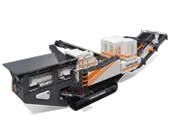
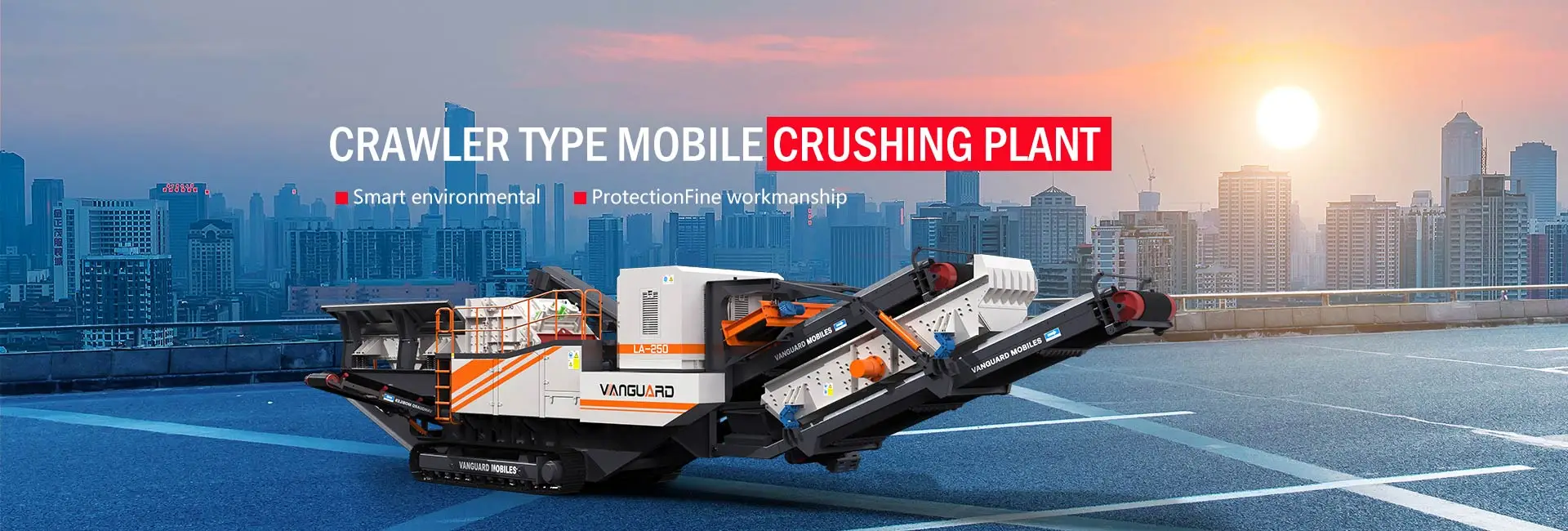
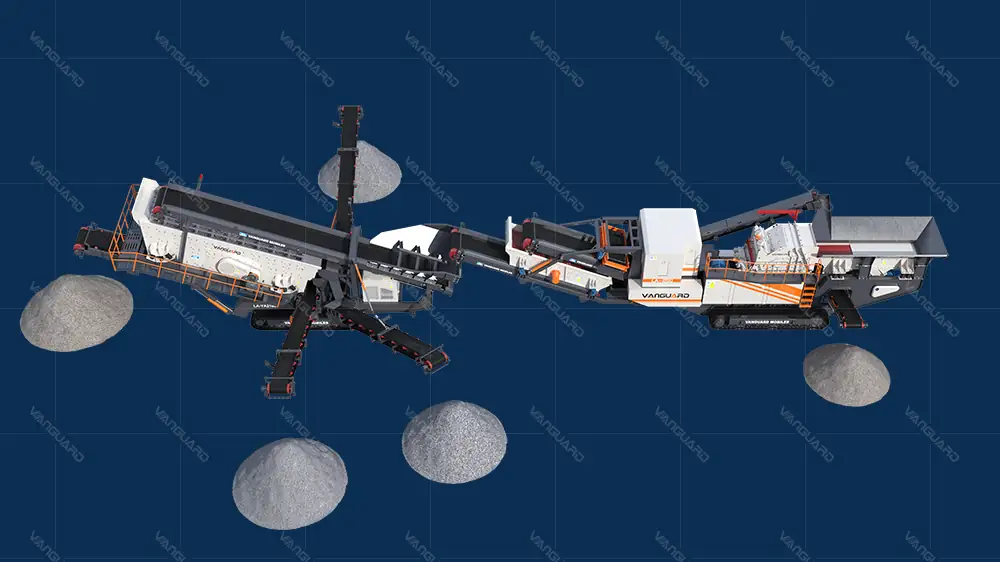
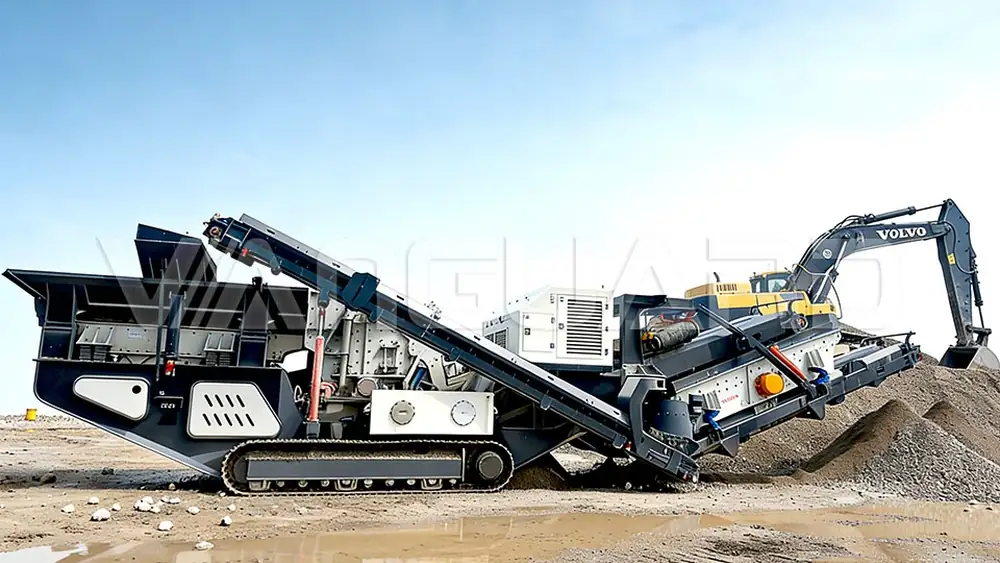
- Primary: crawler mobile jaw crushing plant (feed, crush, discharge conveyors integrated) takes blasted feed ≤500mm down to ≤120mm.- Secondary: crawler mobile impact crushing plant in closed circuit, with return screen taking sub-120mm to product range; impact shapes limestone better than cone.- Screening: mobile screening plant in closed circuit splits 0-5 / 5-10 / 10-20 / 20-40mm; oversize returns to secondary.- Manufactured sand (optional): add a mobile VSI, turning 5-10mm return into manufactured sand to replace river sand.- Keep it integrated: do not list the feeder, screen and belt as separate machines — they are already mounted on each mobile unit's chassis.
150 TPH mobile plant equipment list
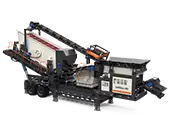
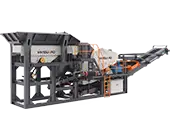
- Primary: 1× crawler mobile jaw crushing plant (jaw crusher host, feed opening sized for ≤500mm). - Secondary + screen: 1× crawler mobile impact crushing plant in closed circuit (impact crusher + return screen in one unit). - Product screen: 1× mobile screening plant (multi-deck, four product grades). - Manufactured sand (optional): 1× mobile VSI. - Auxiliaries: diesel or grid power, centralised lubrication, dust suppression spray; no fixed-belt gallery needed.
| Unit | Role | Capacity | Note |
| Mobile jaw plant | Primary | 150–180 t/h | Feed ≤500mm |
| Mobile impact closed-circuit | Secondary + return screen | 130–160 t/h | Good shape for limestone |
| Mobile screen | Product grading | 150–200 t/h | Four outlets |
| Mobile VSI (opt.) | Manufactured sand | 60–90 t/h | Parallel line |
Key parameters and capacity
- Feed size: blasted run-of-mine ≤500mm, pre-screened to remove soil before primary. - Products: 0-5, 5-10, 10-20, 20-40mm; manufactured sand 0-5mm (optional). - Closed circuit: return ratio about 20%–35% for continuous gradation. - Host power: jaw plant about 75–110 kW, impact closed-circuit about 132–200 kW, whole line about 350–500 kW. - Footprint: single unit about 30–50 m²; whole line with surge piles about 600–900 m².
| Parameter | Typical | Note |
| Feed F80 | ≤400–500 mm | Pre-screen soil |
| Product grades | 0-5/5-10/10-20/20-40 mm | Sand separate |
| Closed-circuit return | 20%–35% | Hold gradation |
| Total power | 350–500 kW | With screen |
| Whole-line footprint | 600–900 m² | With surge piles |
The cost math in Vietnam: capex, freight, power, duty
- Landed equipment: hosts mostly come by road from Guangxi/Yunnan or by sea from Fangchenggang to Haiphong; LCL by sea is cheaper than full container, but budget clearance time. - Duty and VAT: crushing and screening equipment is taxed by Vietnam HS code; the landed price adds ocean freight, insurance, duty and VAT on top of FOB — don't compare only the equipment list price. - Power: Vietnam industrial tariff is time-of-use; peak is expensive. Run primary on mid-rate, avoid peak, and the annual power bill shows a real gap. - Rainy-season downtime: the northern rainy season (May–October) brings long rains; size payback on 240–260 effective days a year, not an optimistic 300, for a steadier result. - Versus fixed line: a mobile plant drops civil works, foundation and relocation cost — lower upfront, faster payback, fits phased licences; only go fixed when volume is large and long-term.
Pre-commissioning checklist: clearance, Vietnamese manual, rainy season, spares
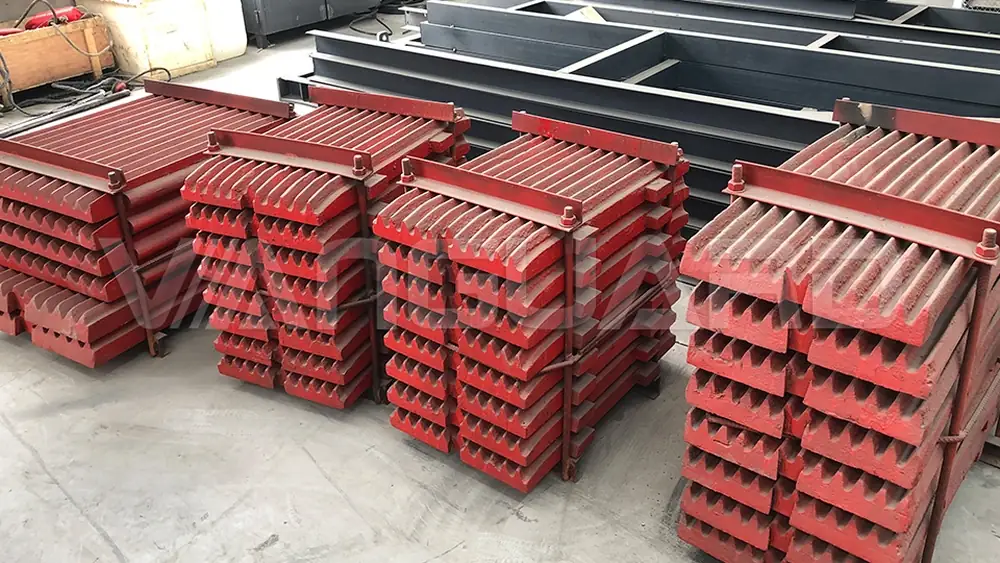
- Clearance docs: commercial invoice, packing list, bill of lading, certificate of origin (China–ASEAN FTA can cut duty); confirm HS code with the broker early. - Manuals: supply operation and maintenance manuals in Vietnamese or English, train local operators on site to avoid misuse that wears jaw plates and impact plates early. - Rainy-season plan: harden and drain the stockyard, roof the intermediate product, place crawler units on high ground to cut downtime. - Spares lead time: stock jaw plates, impact plates, screen mesh and belts locally, confirm supply cycle; wear parts in weeks beat waiting on imports. - Environment: dust spray plus enclosed transfer points to meet local dust and noise rules and avoid being ordered to stop.
Ramp-up and three common pitfalls
- Pitfall 1 — no soil pre-screen: feed with clay enters primary, blocks and fouls liners; add pre-screen or wash ahead and capacity returns at once. - Pitfall 2 — open circuit only: running without return screen leaves oversize and gaps in gradation; close the return screen to lift the yield of saleable product. - Pitfall 3 — single unit at full load: pushing the jaw plant to 200 t/h to save one unit heats bearings and changes liners every two weeks; leave 15%–20% margin for steadier running. - Ramp-up: start single shift to set gaps, then two shifts once stable; check product gradation weekly and fine-tune screen mesh and discharge setting from feedback.
FAQ
A: Phased licence, broken terrain, fast payback → mobile. Large and long-term (10+ years), stable feed → fixed is cheaper per tonne. Most small-to-mid quarries pick mobile.
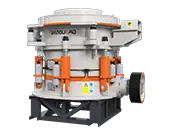
A: Limestone at Mohs 3–4 is soft; impact shapes better and costs less. Cone suits hard rock. Only move secondary to cone when quartz makes it harder.
A: Primary crawler jaw plant + closed-circuit impact plant + screen plant = three units; add a mobile VSI for manufactured sand.
A: Blasted feed ≤500mm, pre-screened to remove soil before primary; too large blocks, too small only adds pre-crush cost.
A: Standard 0-5, 5-10, 10-20, 20-40mm; with a VSI, 0-5mm manufactured sand replacing river sand.
A: Depends on local river-sand ban and price. Where Vietnam limits river sand and the price gap is wide, a mobile VSI pays back well.
A: Fixed licence on good roads → tyred is cheaper. Phased deposit, mountain mud roads → crawler relocates faster and sits steadier.
A: About 20%–35% for limestone closed circuit; too low breaks gradation, too high over-burdens circulation. Close the return screen and yield rises.
A: Whole line about 350–500 kW; run primary on mid-rate and avoid peak, and the annual bill drops noticeably.
A: The northern rainy season (May–October) brings long rains; size payback on 240–260 effective days a year, not an optimistic 300.
A: Invoice, packing list, bill of lading, certificate of origin (China–ASEAN FTA can cut duty); confirm HS code with the broker early.
A: Jaw plates, impact plates, screen mesh and belts stocked locally, in weeks; faster than waiting on imports, shorter downtime.
A: It blocks and fouls liners, dropping capacity; add pre-screen or wash ahead and capacity returns at once.
A: Impact crusher does secondary shaping; VSI makes manufactured sand, turning 5-10mm return into 0-5mm fine sand.
A: Vanguard Machinery, a Chinese-made crushing and screening equipment brand, can run a free material analysis and a 150 TPH mobile line design from your ore sample and capacity — jaw, impact, screen and VSI delivered as one package, with locally stocked wear parts and predictable lead time.
Conclusion
A 150 TPH mobile crushing plant in Vietnam is a line sized for limestone aggregate, phased roll-out and fast payback: one crawler mobile jaw crusher for primary, one crawler mobile impact crusher in closed circuit for secondary, one mobile screen — plug in power, no foundation. When you do the math, don't stare at the equipment price tag — sea freight to Haiphong, Vietnam duty and VAT, time-of-use power tariff and rainy-season downtime are the real variables in payback. Vanguard Machinery can run a free material analysis and a 150 TPH mobile line design from your ore sample and capacity, balancing primary, secondary, screening and manufactured sand (if needed) as one package, with locally stocked wear parts and predictable lead time so you can steadily catch the aggregate demand from the North-South expressway and Long Thanh airport window.
Related Articles
• Vanguard Machinery Brings Its Gold-Ore Processing Line to the 140th Canton FairG(2026-08-06)
• From Zhengzhou to Almaty: Vanguard Machinery to Exhibit at the 31st Kazakhstan K(2026-08-06)
• Vanguard Machinery to Exhibit at Construction Indonesia 2026, Deepening Its Sout(2026-08-06)
• How to Choose a Mobile Crushing Plant Manufacturer...(2026-08-27)
• Best PFV1315 Impact Crusher for Limestone Crushing in Saudi ...(2026-08-06)
• How to Maintain a Crawler Type Mobile Jaw Crushing Plant(2026-08-05)
• Top 5 Reliable Crusher Alternatives to European Br...(2026-08-04)
• What Crushing Equipment Works Reliably at -40°C Without Brea...(2026-08-03)
- Prev: What Is the Best Mobile Crushing Plant for Limestone?
- Next:No more




