

Key Takeaways
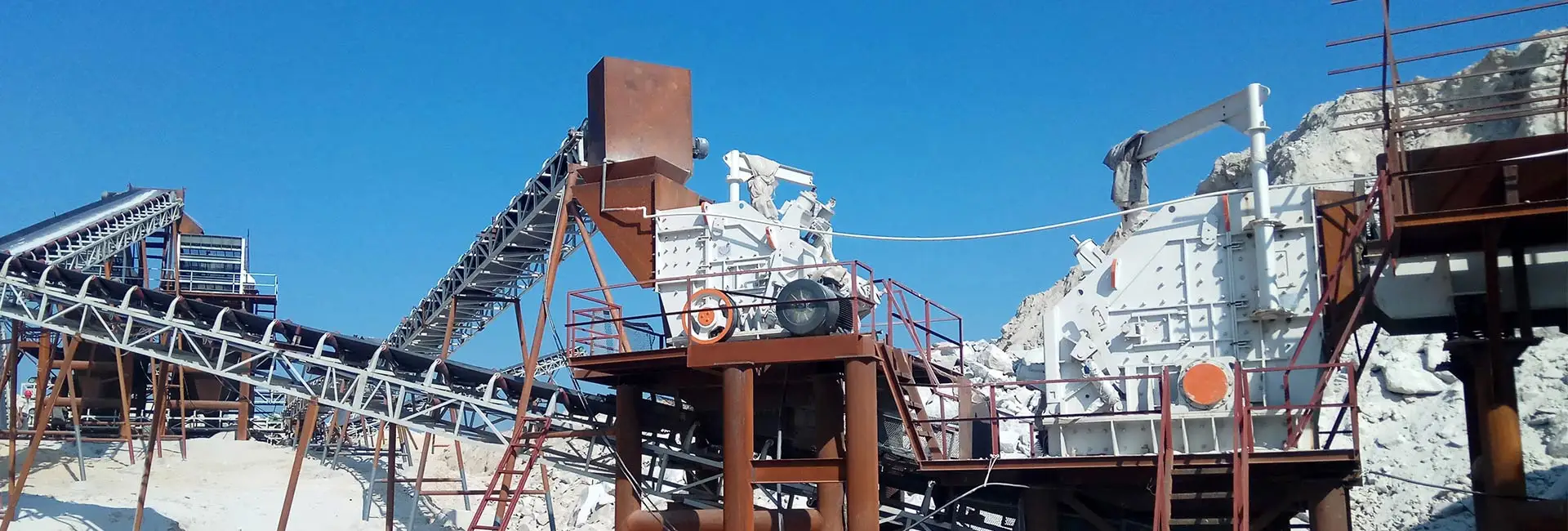
- Limestone is Mohs 3-4 with low abrasion and compressive strength around 80-150 MPa - a classic soft rock where impact crushing pays off over compression. - One mobile plant packs feeding, crushing and discharge conveying onto a single chassis, so you move it fast and skip heavy civil works at the quarry face. - The workhorse for limestone is a mobile impact crusher: one-pass shaping, low fines, good cubical product, and blow bars that wear far slower than on hard rock. - Pick the chassis first: wheel-mounted is cheaper and fits a site moved a few times a year; crawler is self-propelled, needs no foundation, climbs grades, and suits hills, wetlands and frequent moves. - High-silica limestone wears faster - factor blow-bar material and spare-part lead time into the budget from day one.
Vanguard Machinery sizes a limestone mobile line by looking at your feed size and silica first, then decides whether one impact plant is enough or you need a jaw open-circuit ahead of it - never a copy-paste generic list.
Limestone's Nature: Why Impact Crushing Fits Best
Limestone is among the easiest rocks to crush. Mohs 3-4, compressive strength usually 80-150 MPa, brittle with well-developed cleavage, so it breaks along joints when struck.
That dictates two things. First, impact crushing (impact crusher) flings material against blow bars and anvils, forming product in one pass with good cubical shape and controlled fines. Second, compression crushing (cone) actually struggles on limestone - slow squeeze on a brittle soft rock tends to over-crush without improving shape, while burning motor and wear-part budget for nothing.
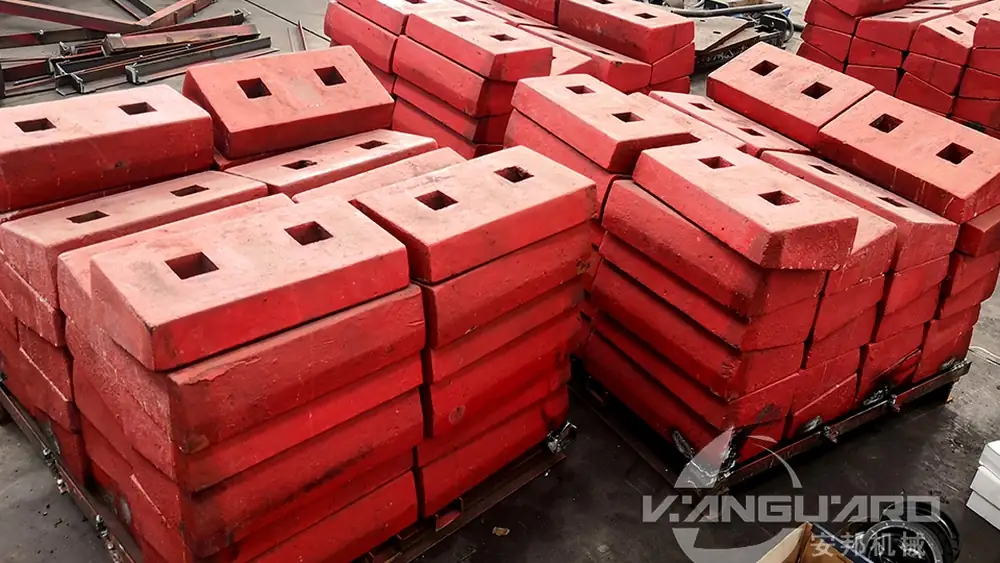
The real variable is silica. Pure limestone is very low abrasion and blow bars last long; but siliceous bands or quartz-bearing limestone jump the abrasion up a notch, and then blow-bar material (high-chrome, composite) and change interval become the cost driver. Send a representative sample for an abrasion index test before you size - steadier than guessing. Vanguard Machinery, on high-silica limestone, asks you to send a sample for an abrasion test before fixing blow-bar material.
Pick the Chassis First: Wheel or Crawler
Decide the chassis before the crusher, because it sets your move cost and whether the site can even take the plant.
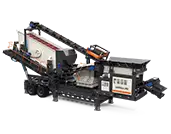
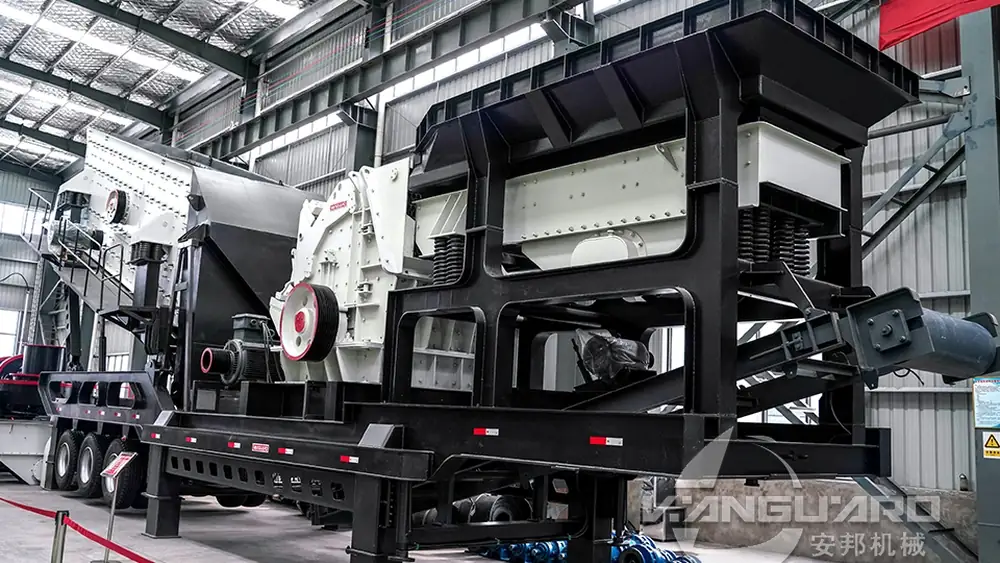
Wheel-mounted plants (like the VPE wheel-mounted mobile jaw crusher and VPF wheel-mounted mobile impact crusher ) are towed by a tractor unit, run fast on roads, and land on hydraulic outriggers at the pit - lower capex, faster payback. They fit smaller pits moved a few times a year, with buildable access roads and fairly level ground, which is what most limestone quarries start with.
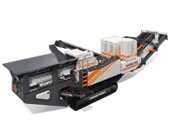
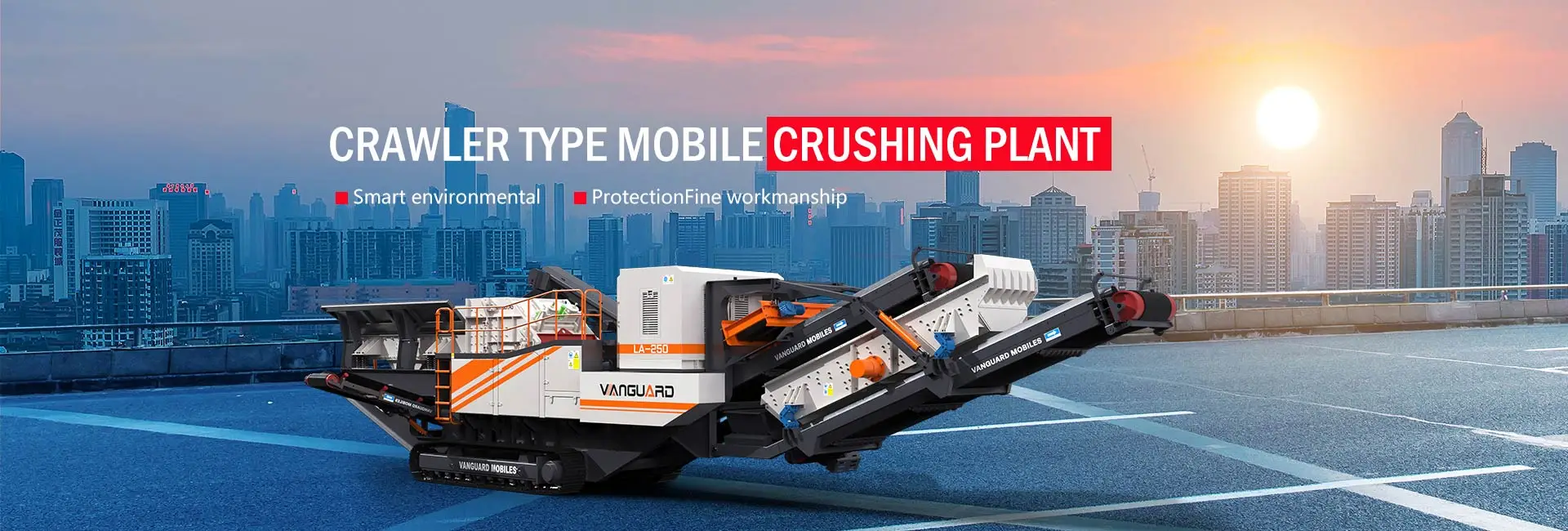
Crawler plants drive on their own tracked chassis, need no foundation on site, and reposition by remote control - they climb grades and cross soft ground with near-zero setup. The trade-off is higher purchase and freight cost, justified by mountain pits, riverbanks, wetlands, or a line that must follow the advancing face.
Rule of thumb: low move frequency and level ground, wheel-mounted is enough and cheapest; broken ground and frequent moves, crawler earns its price. Vanguard Machinery sizes both its wheel and crawler lines to this logic - no pushing the pricey one.
Picking the Crusher: What Goes on Limestone
Once into models, limestone logic is simple: open-circuit primary, impact for secondary and shaping.
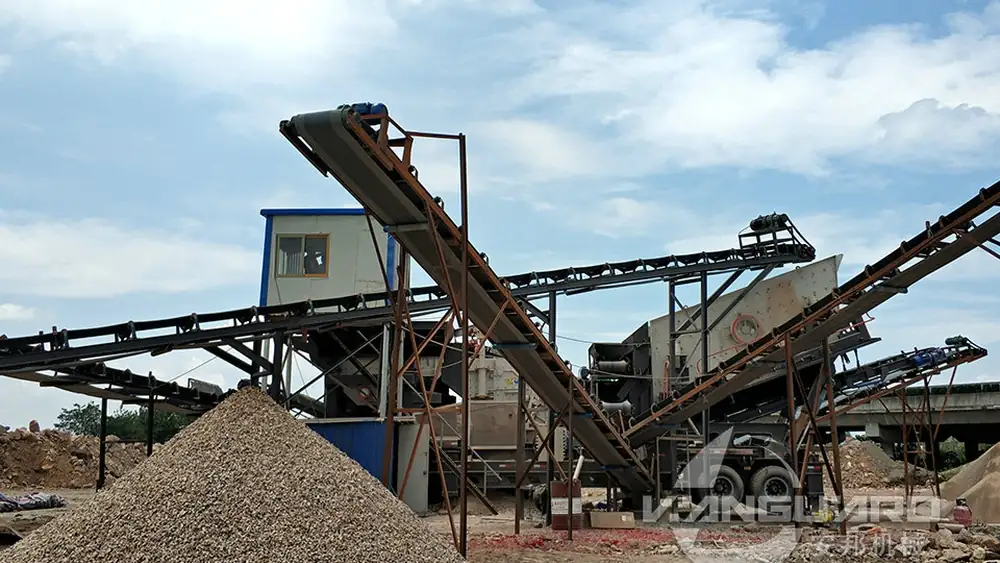
If the feed is large (over 500 mm), run a mobile jaw plant VPE wheel-mounted mobile jaw crusher open-circuit to take the big lumps, then impact; if the feed is already small or pre-sized, a mobile impact plant VPF wheel-mounted mobile impact crusher takes it straight through and saves a stage and a move.
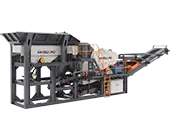
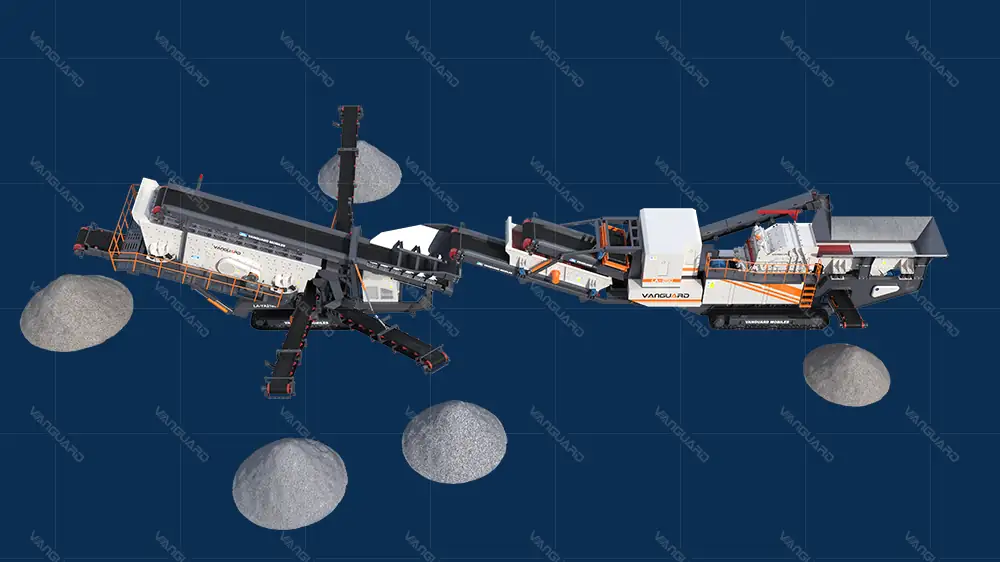
For secondary and shaping, the first pick on limestone is the mobile impact plant. It integrates feeding, crushing and discharge on one chassis; blow bars form product in one hit, holding 0-5, 5-10, 10-20 and 20-31.5 mm grades steadily with fines under control.
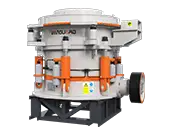
A cone plant VPC wheel-mounted mobile cone crusher is usually skipped on limestone - unless you need top-spec aggregate (tight shape like rail ballast) or silica runs high and you want compression to slow wear. Forcing a cone onto most limestone lines wastes capex and power.
When you need frequent moves and still want impact crushing, go straight to a crawler mobile crushing plant: tracked chassis, no foundation, crushing on arrival - ideal for limestone faces that keep advancing. Vanguard Machinery's crawler sets follow the same idea: crushing on arrival, no repeated teardown.
Match the Configuration to the Tonnage
Lay the common tonnages out and the setup follows the number:
- 50 t/h: one VPF wheel-mounted mobile impact crusher (feeding + crushing + discharge integrated) stands alone and drops several aggregate grades. Small footprint, light investment - best for a starter pit or a toll-crushing point.- 100 t/h: one higher-capacity impact plant, or an impact plant plus a mobile screen plant to grade the product instead of dumping mixed sizes.- 200 t/h: mobile jaw plant VPE wheel-mounted mobile jaw crusher + mobile impact plant VPF wheel-mounted mobile impact crusher + mobile screen plant in three lines - open-circuit primary, impact shaping, closed-circuit screen, oversize back to impact.- 300 t/h: two VPF wheel-mounted mobile impact crusher in parallel, or a crawler set from a crawler mobile crushing plant (jaw + impact + screen) that follows the face on tracks, sparing repeated teardown.
Remember rated capacity assumes ideal feed. Limestone crushes easy, but high clay or moisture blinds the screen and drops throughput, so leave 15%-20% headroom per stage on max pass rate. Vanguard Machinery leaves that headroom on every stage when it sizes your class - not 'rated, so buy rated'.
How to Read the Key Specs
Do not just stare at "tons per hour" - read these:
- Feed size: impact plants usually take <=500-700 mm; larger, open with jaw first. - Product size and CSS/rotor gap: limestone product often splits 0-5, 5-10, 10-20, 20-31.5 mm; tighten the gap for finer shape but lower output. - Installed power and specific energy: same output, lower specific energy saves long term; soft-rock impact usually beats cone on energy. - Blow-bar life: pure limestone lasts long; high silica, ask material and unit price.
Vanguard Machinery puts these, with your sample test results, on the selection sheet, so you can spot inflated numbers when comparing proposals.
Do Not Skip Dust and Environmental Control
Limestone powder is very fine; crushing and screening kick up the most dust, and both visibility and compliance matter.
Dry lines fit bag filters at the impact and screen interfaces, plus sprinklers if needed, to catch the 0-5 mm fines; if the product has a fines ceiling (ready-mix, dry-mix mortar), add an air classifier to hold powder in range.
Wet lines wash after screening to strip clay and fines, then recover the lost sand from the water - otherwise the 0.075-0.6 mm band rides off in tailings, losing yield and adding water treatment. Limestone wash water is cleaner than hard rock, so wet processing is common on this material. Vanguard Machinery fits its dry dust collection and wet wash interfaces to this logic, complete.
Three Questions to Pick the Right One
- Question 1: how many times a year do you move? Few moves and level ground, wheel; broken ground and frequent moves, crawler. - Question 2: how big is the feed and how high is silica? Big or high-silica, open with jaw; ordinary limestone, one impact plant. - Question 3: how many product grades and who uses them? Coarse aggregate only, one impact plant; grading and fines control, add mobile screen plus dust or wash.
Answer those three and the model is locked; what remains is tonnage class and spares.
Eight Configuration Steps
1. Pin down your required t/h and product spec (grades, size range, fines ceiling). 2. Send a representative feed sample; test hardness, clay, max size and silica. 3. Pick the chassis by move frequency: wheel or crawler. 4. Pick the crusher by material: impact-led for ordinary limestone, jaw open-circuit for big or high-silica feed. 5. Set screening and wash/dust: grade or not, dry or wet. 6. Sum installed power and specific energy; check site transformer and access road. 7. Put blow-bar material and spare lead time into the budget, not just the plant price. 8. Ask for a site trial or a same-material reference before signing.
Mistakes We See Over and Over
- Reading rated capacity without reading feed size and clay: blind the screen on site and the rating halves. - Forcing a cone onto limestone: soft rock compression gives no shape and wastes power. - Crawler where crawler is not needed: moved twice a year, the premium takes years to pay back. - Ignoring fines and environment: product fails the fines limit or the site gets fined - worse than the equipment gap. - Skipping spare lead time: blow bars out of stock for two weeks, the whole line stops.
Vanguard Machinery engineers walk you through these one by one, especially spare lead time and the trial, so you do not find the gap after purchase.
FAQ
Impact for ordinary limestone - one-pass shaping, good cubical product, low fines, low specific energy. Cone fits top-spec aggregate or high silica to slow wear; on most limestone lines a cone is wasted money.
Wheel has lower purchase and freight and faster payback; crawler pays for self-propelled, foundation-free, grade-climbing mobility, only worth it with very frequent moves. A few moves a year, wheel wins.
Around 50 t/h, coarse grades only, one mobile impact plant is enough. For grading or above 100 t/h, add a mobile screen plant; above 200 t/h run jaw + impact + screen in three lines.
Yes. The impact crusher already drops some fine material; add a closed sand-making loop behind it for volume. Low-silica limestone makes good-shaped manufactured sand - a prime feed for it.
Test the abrasion index first. High silica, prefer jaw open-circuit to cut impact load, take cone in secondary to slow wear, switch blow bars to high-chrome or composite, and cost in the spare cycle.
Wheel plants land on hydraulic outriggers on a simple leveled pad; crawler plants are self-propelled and need no foundation on site - the reason they cost more but move faster.
Rated assumes ideal feed. Limestone with clay or moisture loses throughput, so leave 15%-20% headroom per stage and ask the supplier for a value tied to your sample.
Pure limestone, blow bars last long, often counted in months; high silica shortens it to weeks or days. Exact life depends on material, gap and silica - ask the supplier for a same-material case change interval before buying.
Conclusion
Limestone is a textbook soft rock, and the best mobile crushing plant for it follows a clear logic: pick the chassis by move frequency first - wheel for ordinary duty, crawler for frequent moves - then build around a mobile impact crusher as the core, one-pass shaping, good shape, low wear, with jaw open-circuit only for big or high-silica feed.
Vanguard Machinery never force-fits a generic list on a limestone mobile line. We test your feed size and silica first, then set how jaw, impact and screen parallel up at 50/100/200/300 t/h, and cost in blow-bar life and spares. If you are unsure whether to go wheel or crawler, one plant or three stages, send your duty and sample and we will return a configuration that lands - steadier than guessing from a spec sheet.
Related Articles
• From Zhengzhou to Almaty: Vanguard Machinery to Exhibit at the 31st Kazakhstan K(2026-08-06)
• Vanguard Machinery to Exhibit at Construction Indonesia 2026, Deepening Its Sout(2026-08-06)
• The First Stage That Sets the Tone: Vanguard Machinery Brings the Tracked Mobile(2026-08-06)
• How to Choose a Mobile Crushing Plant Manufacturer...(2026-08-27)
• Best PFV1315 Impact Crusher for Limestone Crushing in Saudi ...(2026-08-06)
• How to Maintain a Crawler Type Mobile Jaw Crushing Plant(2026-08-05)
• Top 5 Reliable Crusher Alternatives to European Br...(2026-08-04)
• What Crushing Equipment Works Reliably at -40°C Without Brea...(2026-08-03)




