

Key Takeaways
In 2026 a grinding mill can cost anywhere from under USD 10,000 to over USD 400,000. The gap comes from capacity, fineness, configuration and brand. Fix the material, fineness and output first, then use the "Three Questions to Pick the Right One" to lock the model. Below are price ranges, cost drivers, budget-based selection and a TCO reminder.
2026 Grinding Mill Price Ranges
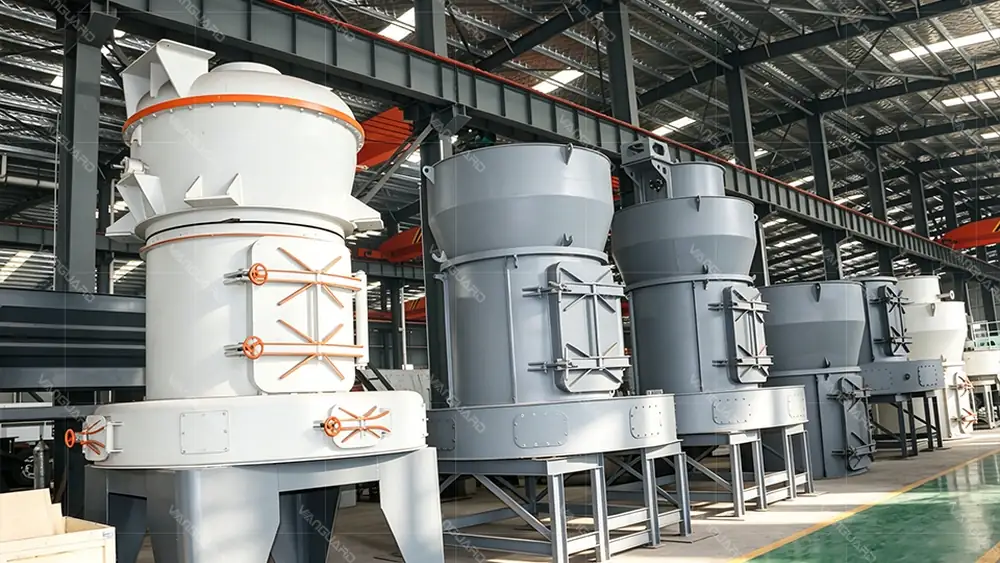
Indicative 2026 ex-works price ranges for the main Chinese-made grinding mills (USD, excluding ocean freight, installation and taxes; vary by model and configuration).
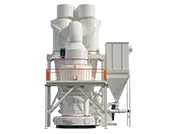
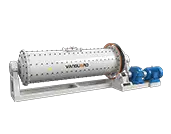
Main models covered: YGM High Pressure Grinding Mill, LM Vertical Roller Mill, HGM Three-ring Grinding Mill, LUM Ultrafine Vertical Mill, Dry Ball Mill.
| Equipment | Fineness | Capacity | Indicative 2026 ex-works price (USD) |
| YGM High Pressure Grinding Mill | 80–425 mesh | 0.5–55 t/h | $8,000–$55,000 |
| LM Vertical Roller Mill | 80–425 mesh | 3–340 t/h | $60,000–$400,000 |
| HGM Three-ring Grinding Mill | 325–2500 mesh | 0.5–25 t/h | $20,000–$180,000 |
| LUM Ultrafine Vertical Mill | 400–2500 mesh | 5–18 t/h | $90,000–$450,000 |
| Dry Ball Mill | process-dependent | 0.25–100 t/h | $15,000–$400,000 |
These are range references; a firm quote needs your material, fineness, output and site conditions.
Six Factors That Really Drive the Price
1. Capacity and model: larger models in a series cost more, and motor power pushes the price up directly. 2. Product fineness: ultrafine output (above 1250 mesh) needs a more precise classifier and higher configuration, raising the price noticeably. 3. System configuration: feeder, classifier, dust collection (pulse or bag), conveying and electric control all count into the total. 4. Wear-part material: rollers, rings and liners in high-chrome or alloy last longer but cost more. 5. Automation: PLC central control and online particle monitoring add cost but save labor. 6. Shipping and customs: ocean freight, insurance, destination clearance and on-site foundation are easily underestimated hidden costs.
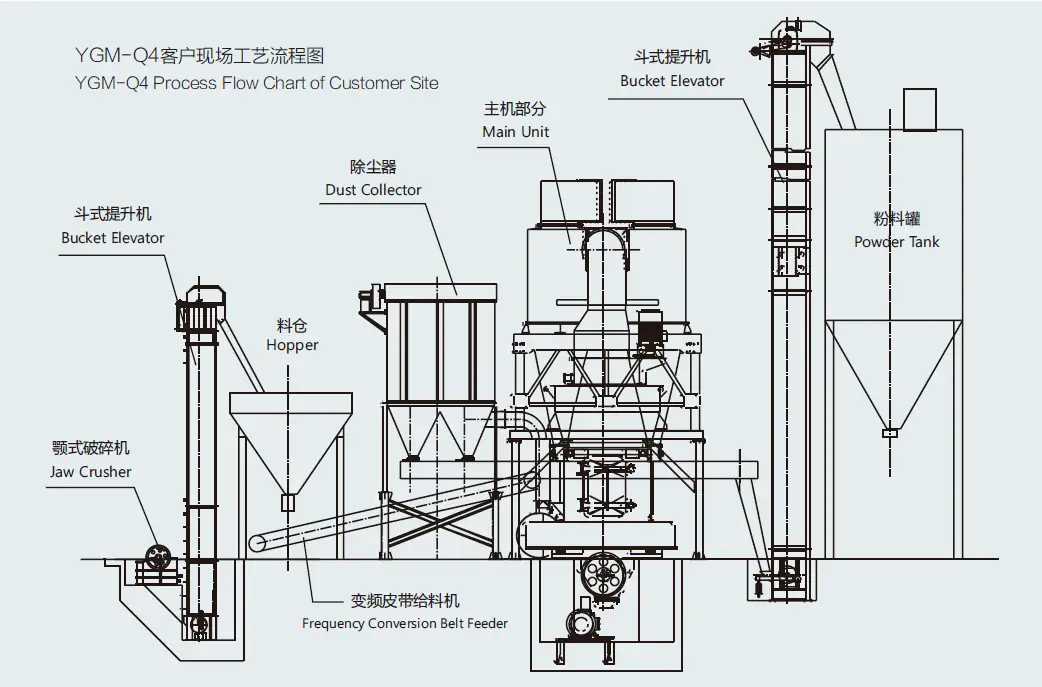
Three Questions to Pick the Right One
Ask three questions and you can basically circle the model: - Q1: What material and how fine? Coarse powder (up to 325 mesh) points to YGM or LM; ultrafine (above 1250 mesh) points to HGM or LUM. - Q2: How much per day or per year? Small output (a few t/h) takes a small YGM or HGM; large output (tens of t/h and up) takes LM. - Q3: What about budget and site? Tight space and budget start with YGM; continuous high output with low unit power favors LUM or LM; for ore grinding choose a dry ball mill.
How to Choose by Budget: Four Tiers
| Budget tier | Recommended models | Note |
| Under USD 30,000 | Small YGM, small HGM | Low output, fast start, fast payback |
| USD 30,000–100,000 | Large YGM, mid HGM | Medium output, ultrafine via HGM |
| USD 100,000–300,000 | Mid LM, small LUM, mid dry ball mill | Continuous running, scaled-up output |
| Above USD 300,000 | Large LM, large LUM, large dry ball mill | Large lines, low unit cost |
Total Cost of Ownership and Pitfalls
The equipment quote is only part of it. What really counts is TCO: power (the largest share), wear parts (rollers, rings, liners), foundation and dust collection, spare-parts stock, and labor. Do not chase the lowest bare-machine price — an incomplete configuration or short wear-part life will cost more later. Ask the supplier to list classifier, dust collection and feeder in the configuration, and confirm wear-part prices and lead times.
Selection Step Checklist
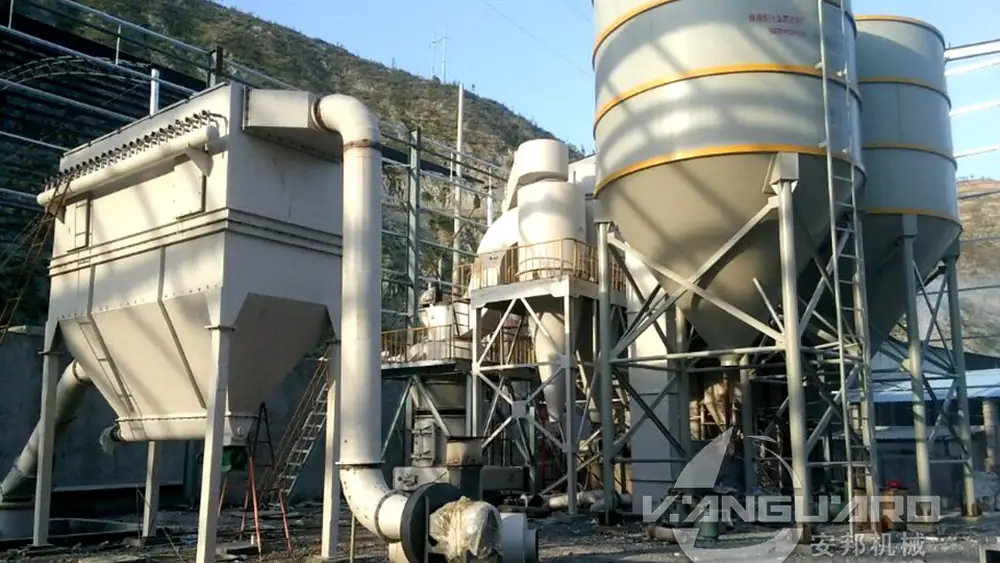
1. Define material type, hardness, moisture and feed size. 2. Set target fineness (mesh or micron) and hourly or annual capacity. 3. Use the Three Questions to pre-select the equipment type. 4. List the system: feeder, classifier, dust collection, conveying, electric control. 5. Give the supplier your site conditions and get an itemized quote, not just a bare-machine price. 6. Compare TCO, not just unit price; confirm lead time, installation guidance, training and spares.
Frequently Asked Questions
A small YGM starts around USD 10,000, an ultrafine HGM from about USD 20,000, and large-capacity LM or LUM from USD 60,000 to USD 450,000. Exact figures depend on model and configuration.
They differ in motor brand, wear-part material, classifier and dust-collection configuration, whether automation is included, and the spare-parts package. Low prices often cut exactly there.
Prefer a small HGM three-ring grinding mill: high cost-performance and stable output above 1250 mesh.
Choose the LM vertical roller mill: high single-line capacity and low unit power, ideal for large non-metallic powder lines.
Ocean freight and insurance, destination clearance, civil foundation, dust collection, electrical installation, spares and commissioning training — usually reserve 20% to 40% of the equipment price.
Provide a material sample or ore parameters, target fineness, capacity, site voltage and plant dimensions so the supplier can give a workable plan and price.
Lower price but higher risk: worn wear parts, no original warranty, hard-to-source spares. Tight budget can consider it, but always test-run on site and verify wear-part condition.
Yes. Pulse or bag dust collection is now almost standard — it meets emission rules and protects the workshop, so include it in configuration and budget from the start.
Related Articles
• Vanguard Machinery Showcases Mobile Crushing and Screening Plants at MINEENTRA 2026 Zimbabwe
• 300 TPH Mobile Crusher: Configuration, Capacity and Selection(2026-07-22)
• Crawler Mobile Crusher Price: What Drives the Cost of a Crawler Plant(2026-07-20)
• Hydraulic vs Spring Cone Crusher: What Sets Them Apart and How to Choose(2026-07-22)
• Why Is My Jaw Crusher Wearing Out Too Fast? Causes and Fixes(2026-07-09)
• 200 t/h Limestone Crushing-and-Sand-Making Plant in Malaysia: Five-Size Mobile Line
• Why Mobile Crushing Plants Are Becoming Popular in Zimbabwe Mining Projects(2026-07-23)
• What Is an Impact Crusher? How It Works, Types and How to Choose(2026-07-17)




