

Expert Opinion
1250 mesh is about 10 microns (0.01 mm), which puts it in the ultrafine range. A standard mill will not get you there: the YGM high-pressure grinding mill tops out at 325 mesh, and the LM vertical roller mill sits around 400 mesh, so neither reaches 1250 mesh. The two lines that hold 1250 mesh steadily are the HGM three-ring micro powder mill and the LUM ultrafine vertical mill. Quick answer up front: pick HGM for smaller output, mixed materials and flexibility; pick LUM for high output, continuous running and lower unit power. The tables below lay it out.
Key Differences
| Comparison | HGM three-ring micro powder mill | LUM ultrafine vertical mill | YGM high-pressure grinding mill | LM vertical roller mill |
| Fineness range | 325-3000 mesh | 400-3250 mesh | 80-325 mesh | 80-400 mesh |
| Reaches 1250 mesh | Yes | Yes | No | No |
| Feed size | <=20 mm | <=20 mm | <=30 mm | <=30 mm |
| Typical capacity | 0.5-25 t/h | 3-18 t/h (ultrafine) | 1-30 t/h | 5-50 t/h |
| Specific energy | Medium | Lower | Low (but too coarse) | Low (but too coarse) |
| Best scale | Small-mid, flexible | Mid-large, continuous | Coarse, high output | Coarse, high output |
Spec Snapshot
| Parameter | HGM three-ring micro powder mill (1250 mesh) | LUM ultrafine vertical mill (1250 mesh) |
| Feed F80 | <=15 mm | <=15 mm |
| Product P80 | about 10 µm (1250 mesh) | about 10 µm (1250 mesh) |
| Typical capacity | 2-10 t/h | 5-15 t/h |
| Specific energy | 35-70 kWh/t (high at ultrafine) | 30-55 kWh/t |
| Classification | Parallel impeller classifiers | Built-in vertical classifier |
| Main motor | 90-200 kW by model | 200-400 kW by model |
| Investment | Medium | Higher |
Product Overview
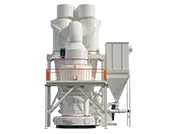
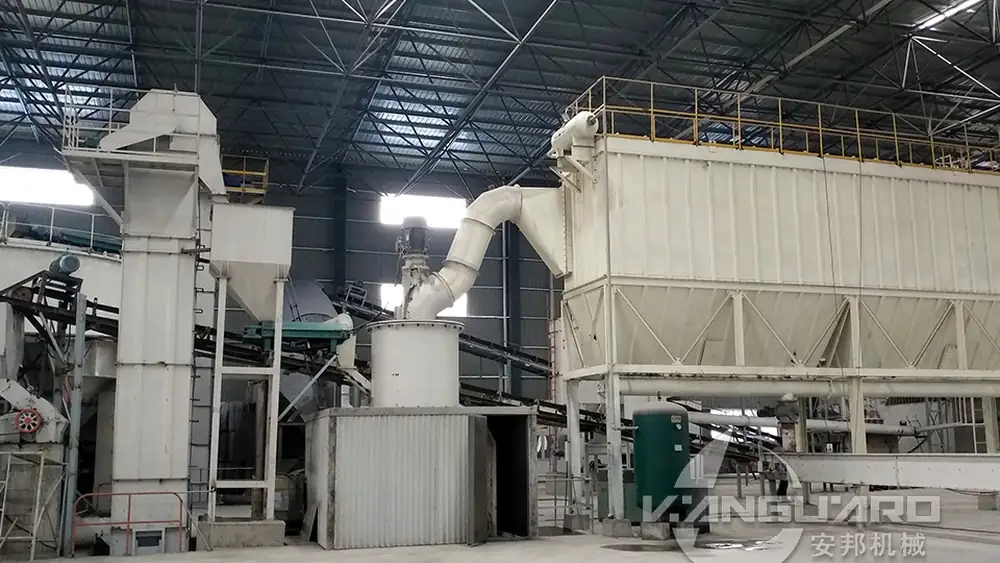
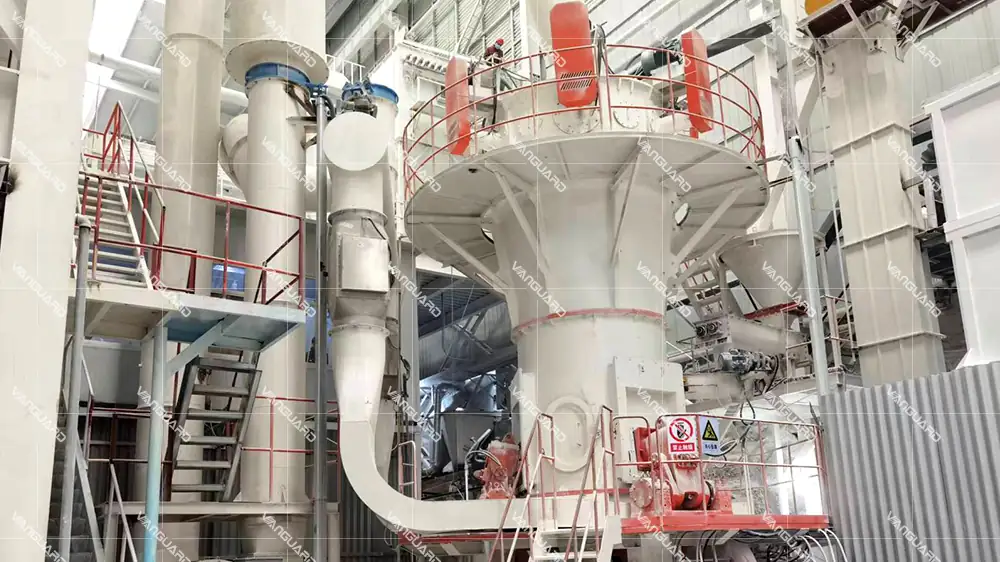
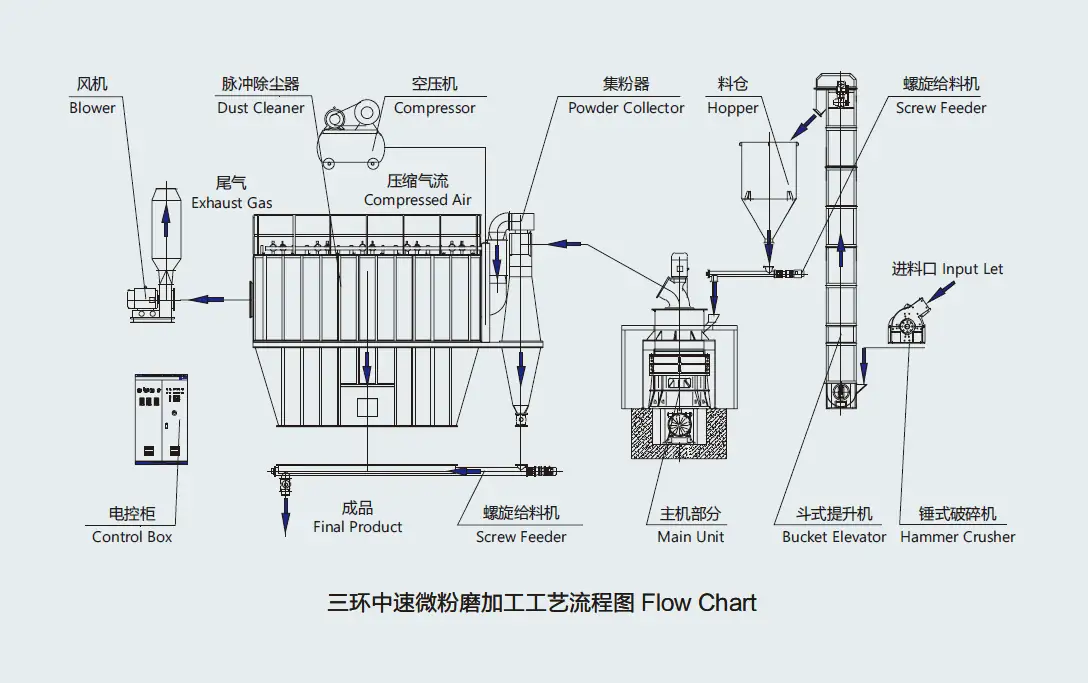
- HGM three-ring micro powder mill: rollers press material against a ring, and several parallel impeller classifiers pull out the fine fraction. Fineness is set by classifier speed, so you shift from 325 to 3000 mesh just by changing rings, not the machine. It suits non-metallic minerals like calcium carbonate, calcite, barite and talc, and is the workhorse for ultrafine powder in small and mid plants. - LUM ultrafine vertical mill: a vertical design where rollers grind on a table with a built-in classifier, combining grinding and classifying in one unit. It runs steadily in continuous duty and draws less power per ton than a ring-roller mill at the same fineness, which fits high-output lines. - YGM high-pressure grinding mill and LM vertical roller mill: their fineness ceiling is 325-400 mesh, so 1250 mesh is out of reach; keep them for coarse and medium-fine powder.
Performance Comparison
- Capacity: at 1250 mesh, the larger LUM models reach 15 t/h while HGM stays under 10 t/h, but HGM starts at lower volume and lines up easier. - Energy: ultrafine power draw is never low; at 1250 mesh expect 30-70 kWh/t. LUM usually runs 10-20 percent below HGM thanks to its vertical build and built-in classifier. - Particle shape: HGM gives a flake-leaning powder with moderate bulk density; LUM trends toward spherical, better-flowing powder that blends more easily downstream. - Wear: both wear rollers and rings, and ultrafine duty wears faster than coarse grinding, so roller change interval tracks feed hardness and even feeding. - Moisture: keep feed moisture at or below 6 percent; dry wet material first or the classifier clogs.
Best Applications
- Heavy and light calcium carbonate, calcite, marble: filler-grade 1250 mesh is in steady demand, and both HGM and LUM handle it well. - Barite, talc, mica, kaolin: coatings, plastics and paper fillers that need fine and bright powder; HGM is the more flexible pick. - High-volume industrial mineral powder: large calcium-carbonate lines where LUM continuous running pays off.
Advantages and Limitations
- HGM: pros are wide fineness band, fast material change, easy low-volume start and medium investment; cons are higher power per ton at ultrafine and a few more maintenance points from the parallel classifiers. - LUM: pros are steady continuous run, lower unit power, high integration and less labor at high output; cons are higher investment, poor payback at low volume and strict demand for even feed. - YGM and LM: only fit coarse to medium-fine; 1250 mesh sits outside their capability.
Which One Should You Choose?
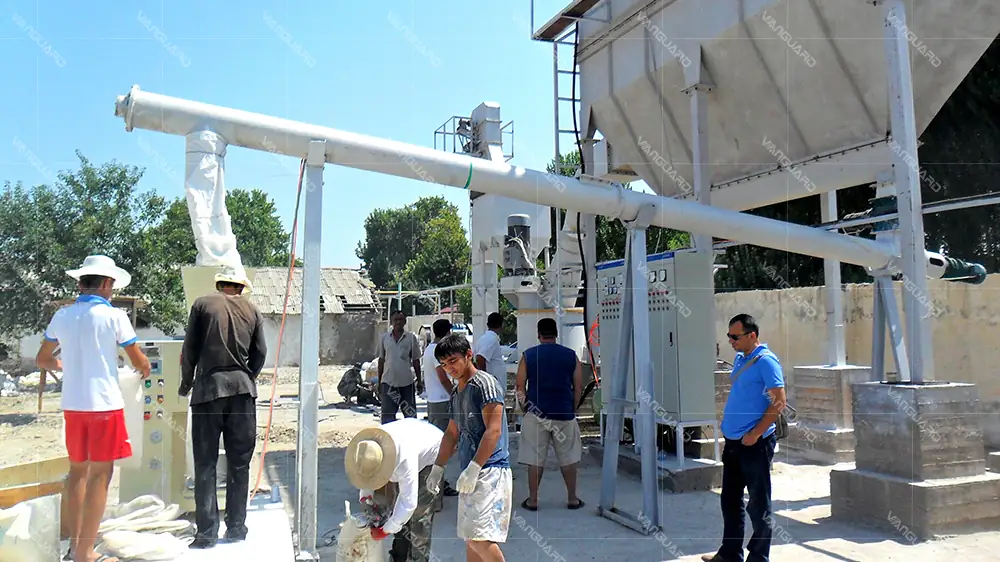
Ask three things: first, what output do you need and must it run continuously? Small batch and varied material points to HGM; high output and continuous duty points to LUM. Second, how hard is the material and how wet? Hard or wet feed needs pre-treatment. Third, what is the budget and site condition? LUM costs more up front but saves power long term; HGM gets you started faster. If unsure, send your material traits and target fineness; Vanguard Machinery runs a free sample test and a plan.
FAQ
No. YGM stops at 325 mesh (about 44 microns), a different league from 1250 mesh (about 10 microns); for ultrafine you move to HGM or LUM.
At the same fineness LUM usually draws 10-20 percent less per ton, but HGM smaller models cost less up front and start at lower volume, so the total bill depends on output and run hours.
Keep it at or below 20 mm and moisture at or below 6 percent. Crush large lumps with a jaw or hammer crusher first, and dry wet material, or the classifier clogs.
A wet ball mill with a classifier can in theory, but dry ultrafine powder rarely goes through a ball mill because of high power and long flow; for mineral filler ultrafine, ring-roller or vertical ultrafine mills like HGM and LUM are the common choice.
Yes. Coating and plastic fillers prefer near-spherical powder with good flow; LUM leans spherical, HGM flake-like, so pick by downstream use.
Measure D97 or P80 with a laser particle size analyzer and hold it at or below 10 microns; use online sizing or regular sampling rather than trusting a mesh chart.
Both reach 1250 mesh, but particle shape, bulk density and brightness differ slightly by machine, so a trial run comparison is the surest check.
Yes. HGM adjusts classifier speed and roller pressure; LUM adjusts table speed and air volume, all set by material and output.
Related Articles
• Hydraulic vs Spring Cone Crusher: What Sets Them Apart and How to Choose(2026-07-22)
• Why Is My Jaw Crusher Wearing Out Too Fast? Causes and Fixes(2026-07-09)
• Vanguard Machinery Showcases Mobile Crushing and Screening Plants at MINEENTRA 2026 Zimbabwe
• 200 t/h Limestone Crushing-and-Sand-Making Plant in Malaysia: Five-Size Mobile Line
• Why Mobile Crushing Plants Are Becoming Popular in Zimbabwe Mining Projects(2026-07-23)
• 300 TPH Mobile Crusher: Configuration, Capacity and Selection(2026-07-22)
• Crawler Mobile Crusher Price: What Drives the Cost of a Crawler Plant(2026-07-20)
• What Is an Impact Crusher? How It Works, Types and How to Choose(2026-07-17)
- Prev: No more
- Next:How Much Does a Grinding Mill Cost in 2026? Price and Selection Guide




