

Project Overview
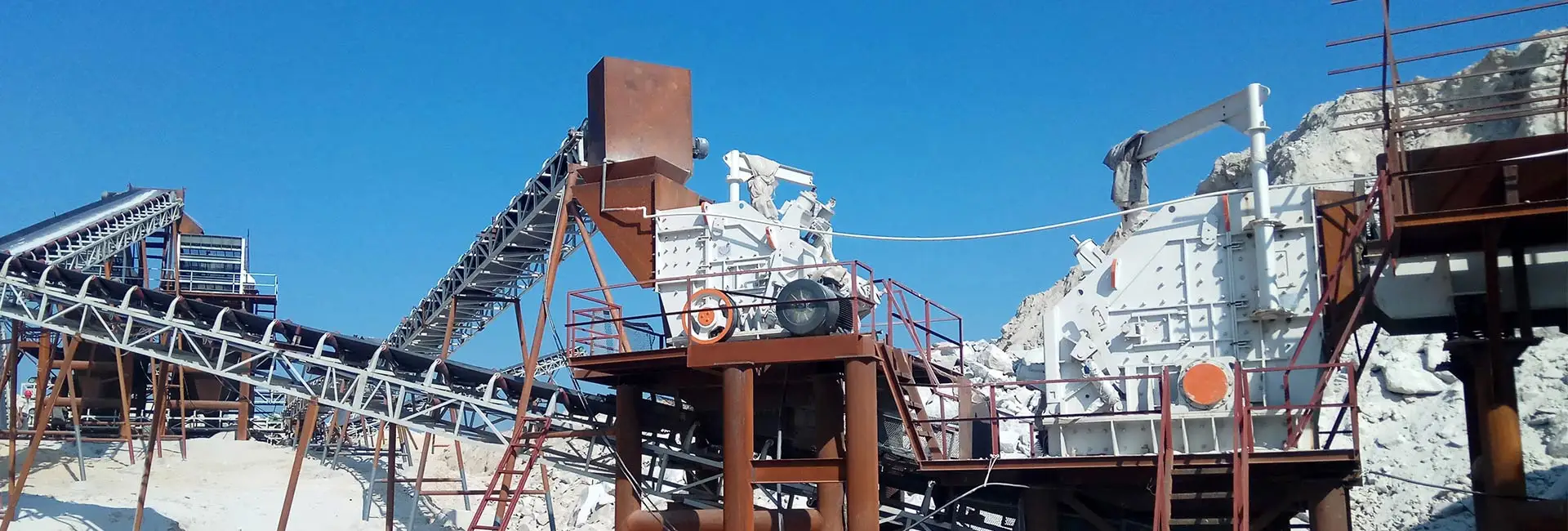
A 120 t/d iron ore mine in Mongolia, on a water-scarce plateau with long cold seasons and little water access. The owner ran only an old dry separator - low concentrate grade, poor recovery. In 2025 they awarded us the full dry beneficiation line, with the core aim of balancing crush and dry grind so the iron minerals liberate well without over-grinding, using no water at all. This is a typical dry-grinding case for a water-short mine; we give re-computable design parameters below.
Customer Requirements
- Throughput: 120 t/d (about 5 t/h, two shifts). - Ore: low-grade iron ore (mostly magnetite with some hematite), Protodyakonov hardness f=8-10, medium-hard, low moisture. - Target: grind to -200 mesh over 65% (equivalent P80 ≈ 105-115 µm), then dry magnetic separation to lift iron and output dry concentrate powder. - Constraint: water-short site, zero-discharge environmental rule - the whole flow must be dry; equipment tough, spares fast.
Material Analysis
Run-of-mine 0-300 mm, head TFe about 30%. Iron minerals are finely disseminated, so crush-then-grind pays off. We took a representative sample and ran a Bond ball-mill Work Index test, measuring Wi ≈ 16 kWh/t; from Bond's Third Theory the specific energy E = 10·Wi·(1/√P80 − 1/√F80) ≈ 14 kWh/t (F80=12 mm, P80=110 µm). Dry grinding has no pulp lubrication and conveys powder by air, so its unit energy runs a bit above wet grinding, but it saves the dewatering and water-return systems. Grind too coarse and iron loses to tail, too fine and it slimes and wastes power - grind fineness is the lifeline.
Process Design
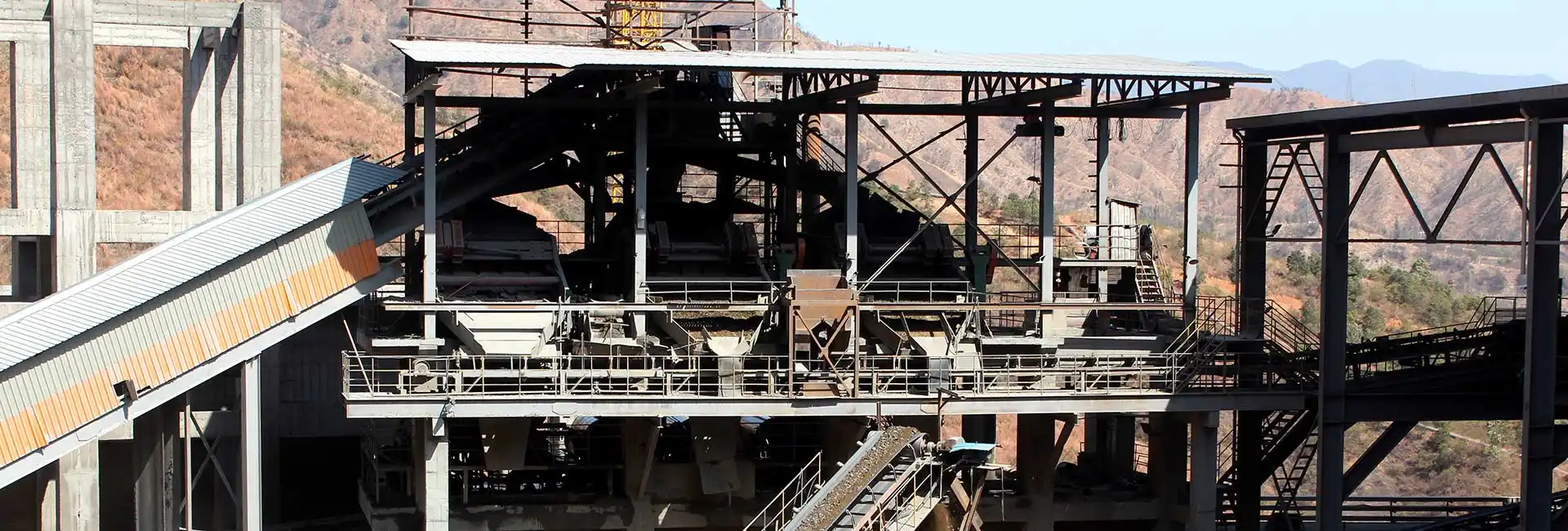
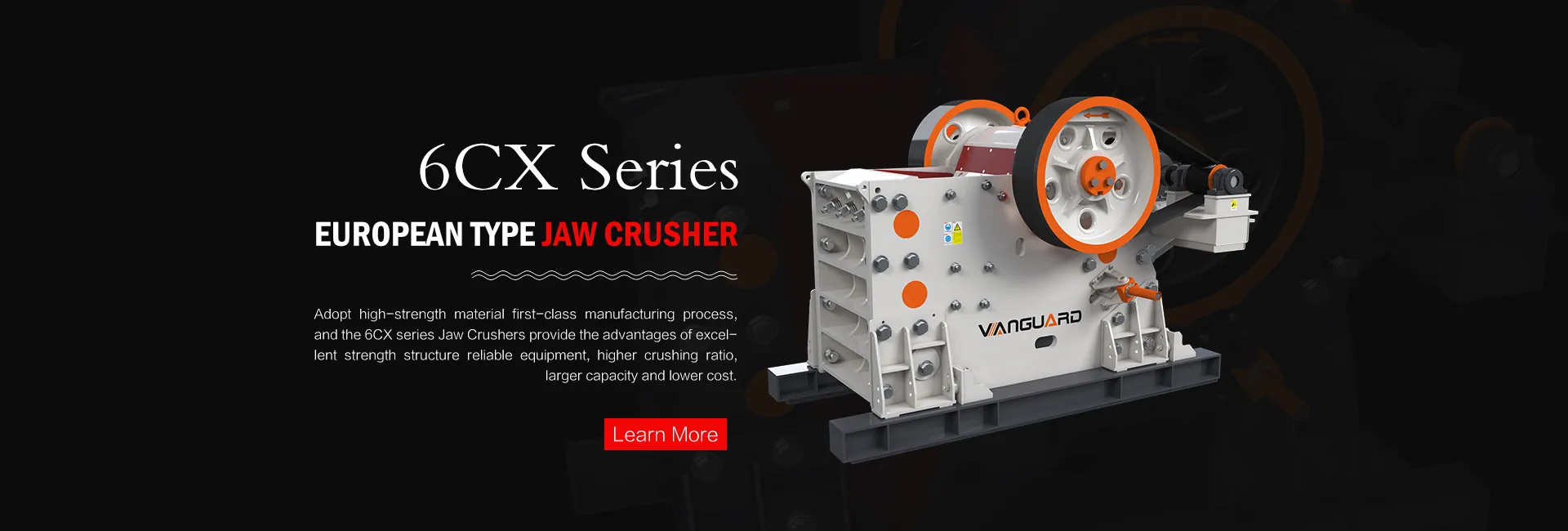
ROM -> feeder -> 6CX jaw crusher (primary to <=25 mm) -> CP cone crusher (secondary closed circuit to <=12 mm) -> fine ore bin -> dry ball mill (phi2100x4500, air-conveyed dry powder, closed circuit) -> air classifier (circulating load R≈200%) -> dry magnetic separator -> iron concentrate (dry powder). The mill and classifier share cyclone plus bag-house dust collection for compliant emission.
Equipment Configuration
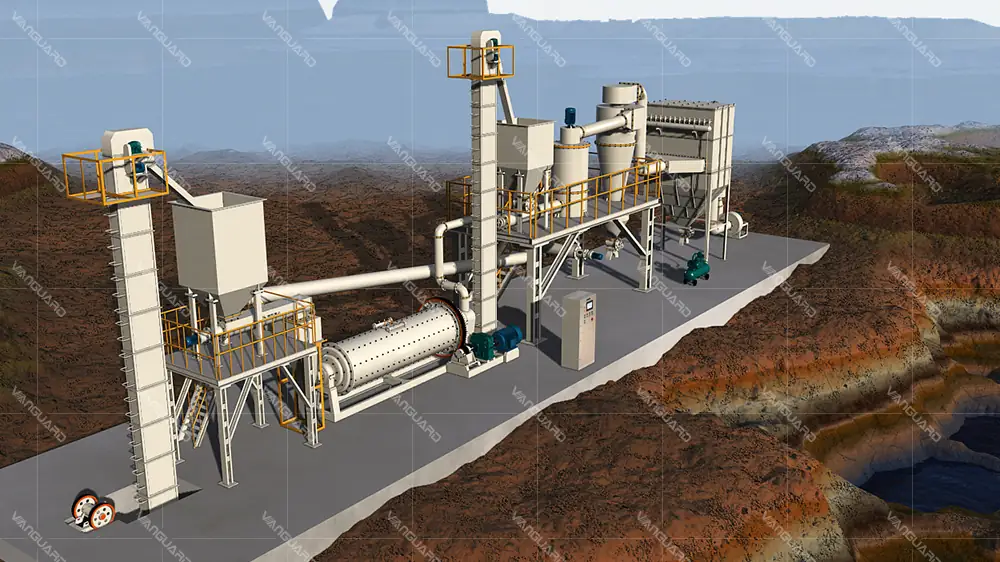
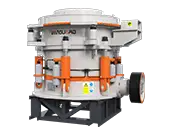
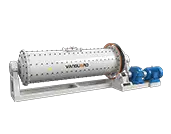
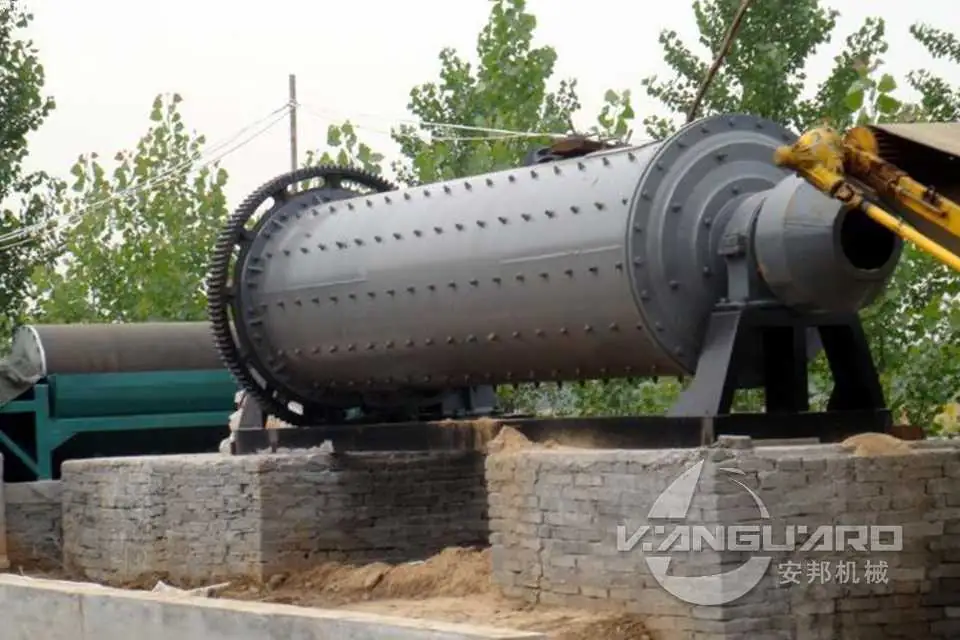
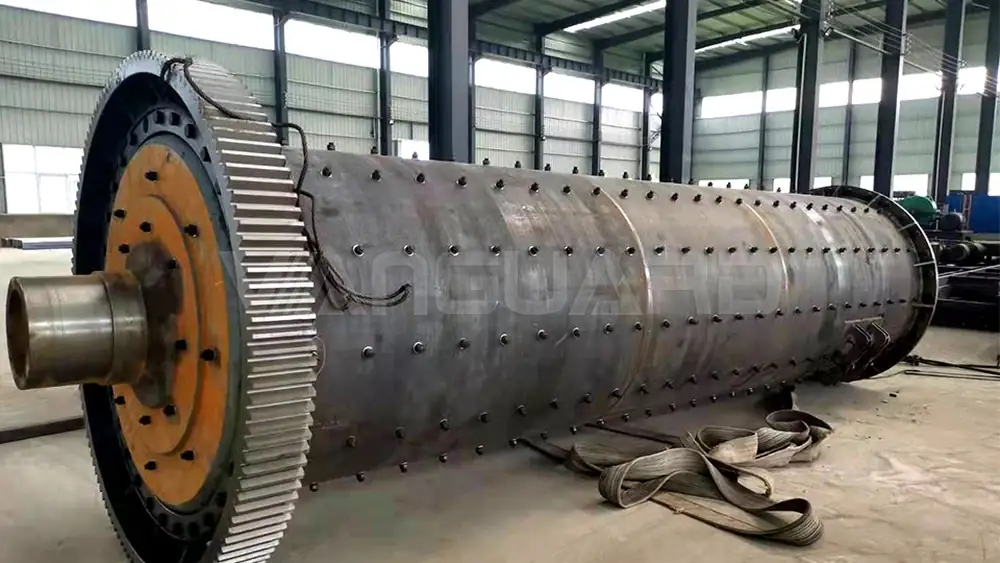
- Primary: one 6CX jaw crusher, drops lumps to <=25 mm. - Secondary: one CP multi-cylinder cone, closed circuit to <=12 mm feed to mill (F80≈12 mm). - Grinding: one phi2100x4500 dry ball mill, air-conveyed dry powder; length-to-diameter L/D≈2.14, critical speed Nc≈30 rpm, operating at 74% Nc≈22 rpm. - Classification: one air classifier, in closed circuit with the mill, circulating load about 200%; fine powder leaves with the air, coarse returns. - Main drive: 245 kW installed, design load factor about 55%-60%. - Dust collection: cyclone plus bag-house, handling about 18000 m3/h, securing dry powder recovery and compliant emission. - Support: dry magnetic separator, feeders and conveyors as needed.
Production Performance
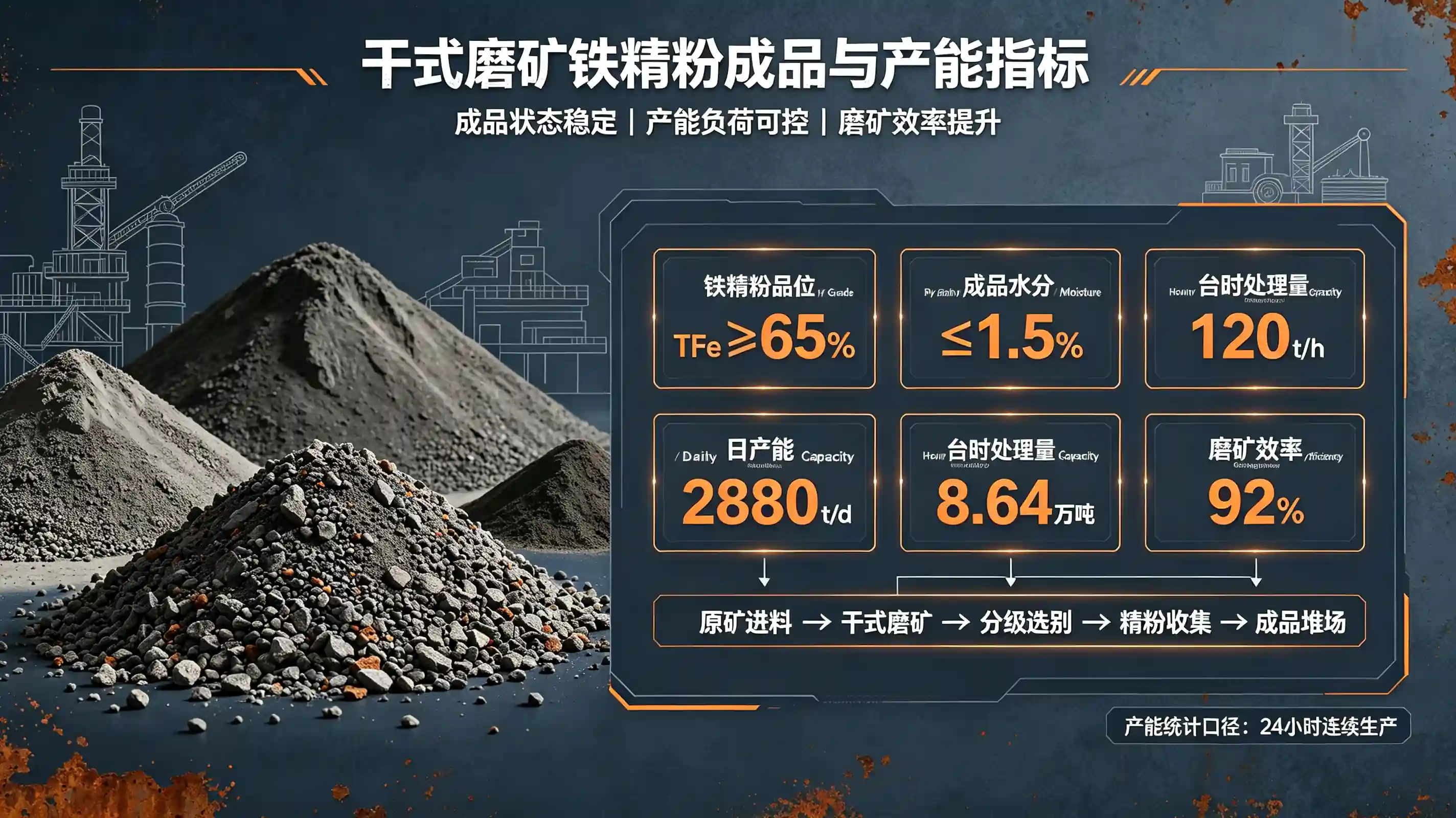
After start-up the mill held about 5.2 t/h at specific energy near 14 kWh/t; -200 mesh rose from 50% to 68%, iron recovery up about 9 points, and concentrate TFe from 30% to 64%. The dry powder needs no dewatering and ships straight from storage, with zero wastewater plant-wide. Power per tonne of ore ran about 22% below the old line, and at local tariffs two years of saved power roughly covered the mill upgrade. Liner life stretched from 4 to 7 months.
Lessons Learned
- Do not skip the closed circuit: at first they wanted open circuit to save trouble, but fineness swung and over-grind was bad; adding the air classifier with ~200% circulating load fixed it - steady size, no over-grind. - Ball mix and make-up: for three months they loaded the maker's mix, then failed to top up as balls wore; output dropped 15% until a tonnage-based make-up routine steadied it. Top ball size ran 80-100 mm by feed and Wi. - Liner choice: first high-manganese, short life on hard ore; a thicker wave liner stretched change-out from 4 to 7 months and lifted balls higher for better impact efficiency. - Dust collection and explosion control: the dry-powder duty runs high dust load, so the collection system must meet standard; the mill and classifier need regular cleaning to avoid packed dust and fire/explosion risk.
FAQ
A phi2100x4500 dry ball mill fits, L/D about 2.14, with 20% margin for swings.
The air classifier returns coarse to the mill; with ~200% circulating load fineness stays steady, no over-grind, no loss to tail.
By iron grain size; here -200 mesh over 65% (P80≈110 µm). Too fine slimes and lowers recovery.
Bond's Third Theory E = 10·Wi·(1/√P80 − 1/√F80); here Wi=16, F80=12 mm, P80=110 µm gives about 14 kWh/t; dry runs a bit above wet due to air convey and dust collection.
Critical speed Nc=42.3/√(D−d)≈30 rpm; we run 74% Nc≈22 rpm for lift without centrifuging.
245 kW installed, design load factor about 55%-60%, leaving drive and swing margin.
Saved power, higher recovery and the water cost avoided by skipping dewatering paid back in about two years.
Dry grind-and-separate flows for iron, manganese and silica sand in water-short regions adapt with minor tuning of Wi and ball mix.
Related Articles
• Hydraulic vs Spring Cone Crusher: What Sets Them Apart and How to Choose(2026-07-22)
• Why Is My Jaw Crusher Wearing Out Too Fast? Causes and Fixes(2026-07-09)
• Vanguard Machinery Showcases Mobile Crushing and Screening Plants at MINEENTRA 2026 Zimbabwe
• 200 t/h Limestone Crushing-and-Sand-Making Plant in Malaysia: Five-Size Mobile Line
• Why Mobile Crushing Plants Are Becoming Popular in Zimbabwe Mining Projects(2026-07-23)
• 300 TPH Mobile Crusher: Configuration, Capacity and Selection(2026-07-22)
• Crawler Mobile Crusher Price: What Drives the Cost of a Crawler Plant(2026-07-20)
• What Is an Impact Crusher? How It Works, Types and How to Choose(2026-07-17)




