

Executive Summary
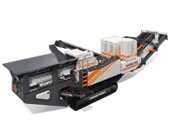
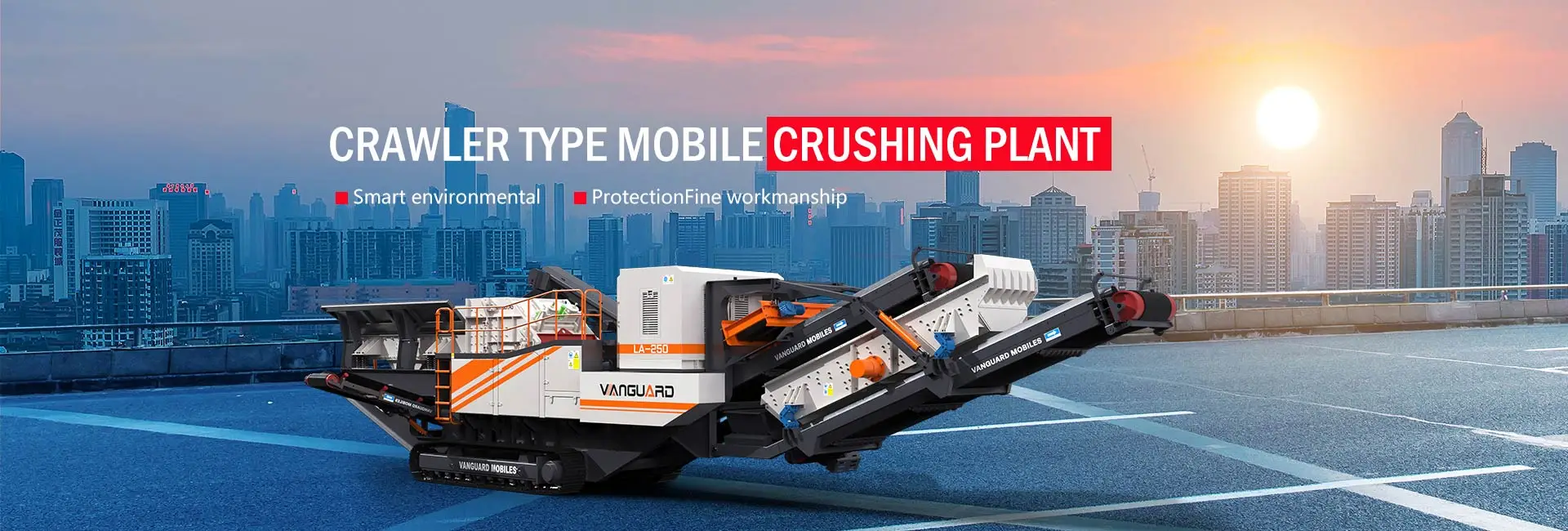
A Crawler Type Mobile Impact Crushing Plant breaks concrete by "striking," not "squeezing": the rotor carries blow bars at high speed and slams the concrete block against the impact apron, shattering it along its own cracks and at the rebar interface. This is especially friendly to rebar-laden demolition — the rebar is not jammed, it flips out with the rotor and a magnet collects it; the product stays cubical with few flats, fit for recycled aggregate. The crawler chassis only handles mobility, so "mobile" changes relocation, "impact" changes the breakage. Below, straight into mechanism and components.
1. One-line definition
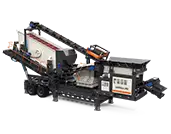
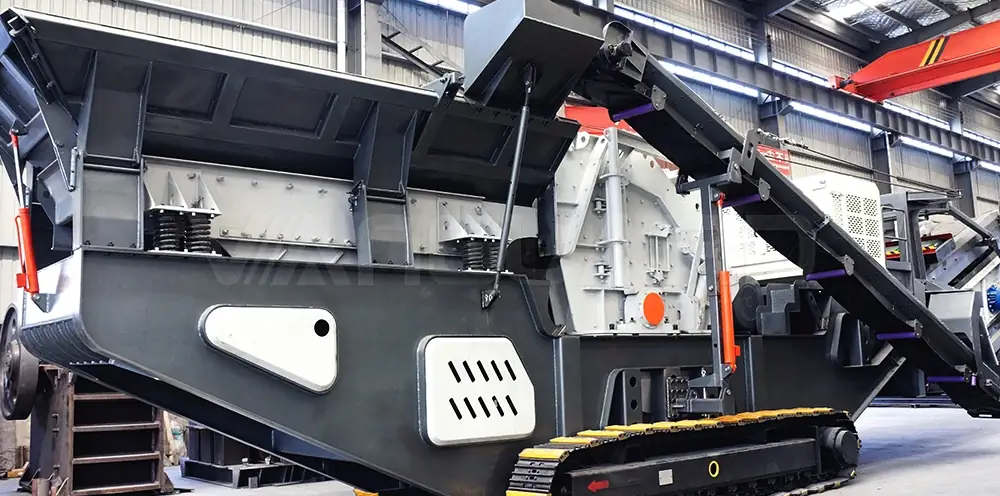
Mobile impact crusher = impact crusher + crawler chassis + integrated feeder + power pack. Its job is to smash big rebar concrete into post-primary size; the difference is the whole machine drives itself, no poured foundation.
2. Working principle: the core mechanism
The rotor spins fast on the central shaft; blow bars (strike bars) sit on its circumference. Feed drops onto the fast blow bars and takes a head-on hit — that strike is the "heart" of the machine; speed and blow-bar tip velocity set the impact energy and output.
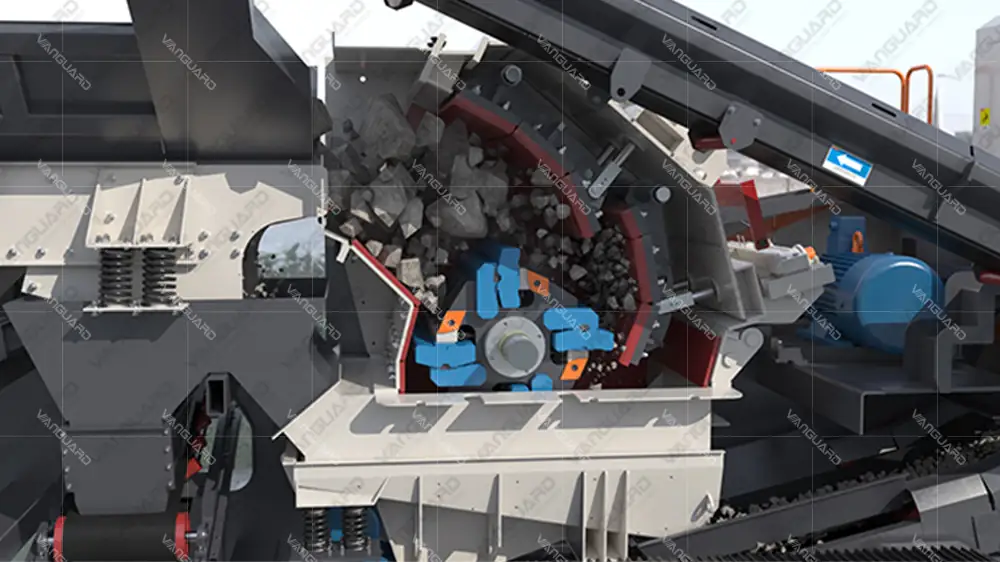
The concrete is flung by the blow bars toward the fixed impact aprons, bouncing back and forth between bar and apron, scaling off layer by layer. The chamber is a curved, wider-at-top shape; material is struck repeatedly rather than squeezed, so product shape is good and flats are few.
Some units add a short grinding channel at the bottom so fines get a second pass — gradation gets more continuous, stone dust a bit higher. Trade-off depends on whether you make aggregate or fill.
When an oversize or unbreakable jams the chamber, hydraulics push the apron open, the chamber widens to clear, then closes. Product size is set by the gap between apron and blow bars: small gap = fine, large gap = coarse.
| Component | Role |
| Rotor | drives blow bars at speed (heart) |
| Blow bar | head-on strike on concrete |
| Impact apron | rebounds, scales off layer by layer |
| Grinding path | re-grinds fines, more continuous grading |
| Hydraulics | chamber clearing, gap setting |
3. Component deep-dive
Blow bars are the costliest wear part. Concrete mixed with rebar and grit wears the bar ends fast; many units let you flip and rotate bars to even out one-sided wear, doubling life. Abrasive, iron-rich feed → inspect often.
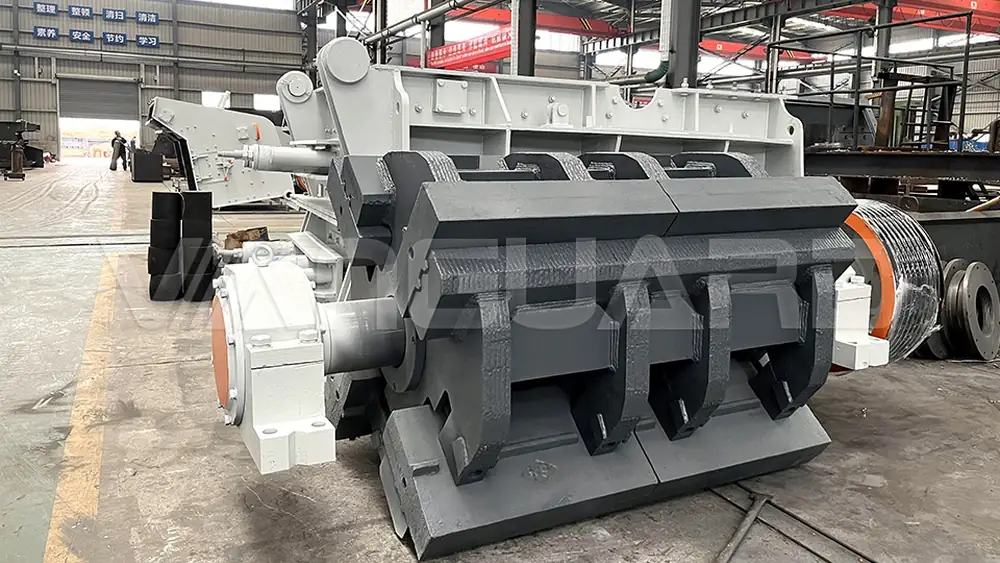
The aprons and chamber liners set the breakage path and shape. Run liners through and they eat the housing and damage the rotor seat. Replace on actual wear, do not wait for breakage.
Rotor bearing is the heavy-load point, grease lubricated; belt or direct coupling sends power to the rotor. Belt cushions shock and tunes ratio by pulley; direct is rigid but passes every jolt to the motor.
Hydraulics do two jobs: chamber clearing + gap setting. Lube points are rotor bearing and bearing housings, all grease, added by run-hours; a leak burns the bearing fastest.
4. Why recycling concrete picks impact
For rebar demolition, jaw chambers jam and crack liners on rebar; impact lets rebar flip out with the rotor, the magnet takes it, one machine yields clean recycled aggregate. Impact on medium-hard, brittle concrete gives better shape than compression, fewer flats.
5. Advantages (technical)
Takes rebar material, good cubical shape, friendly to medium-hard brittle feed, fast chamber clearing, stable gradation with closed-circuit screen.
6. Limitations (technical)
Blow bars wear faster than jaw plates (especially iron-rich, abrasive feed), budget higher wear cost; feed must not exceed size or it stalls and hurts the rotor; a bit more dust than compression routes.
7. Impact vs jaw (comparison)
| Dimension | Mobile impact | Mobile jaw |
| Breakage | impact strike | compression |
| Feed | rebar concrete, medium-hard brittle | big hard blocks |
| Product shape | cubical, few flats | more flats |
| On rebar | flips out, magnet collects | jams chamber, cracks liners |
| Wear cost | blow bars fast | jaw plates durable, calm |
8. Common mistakes
Mistake 1: Impact crushes by compression. Wrong — it is impact.
Mistake 2: Rebar feed into a jaw. Rebar jams and cracks liners; pick impact.
Mistake 3: Run worn blow bars. One-sided wear-through hurts the rotor seat; flip and replace on time.
Mistake 4: Force oversize feed. Huge boulders stall and damage the rotor; pre-screen ahead.
Mistake 5: Mobile plants must be anchored. Crawler wide-track, low-center, self-driving, no dedicated foundation.
9. Frequently asked questions
Yes, same crushing mechanism; the mobile version adds crawler chassis, integrated feeder and power pack.
Rotor spins them fast, head-on strike on feed, shattering concrete along cracks.
Flips out of the chamber with the rotor, belt magnet collects it, no harm to the host.
Adjust apron-to-blow-bar gap: small gap fine, large gap coarse.
No, wide tracks and low center keep it stable; self-driving, no dedicated foundation.
Impact gives good shape on medium-hard brittle feed, and rebar does not jam the chamber — recycled aggregate looks better.
Depends on feed and output. Iron-rich abrasive feed wears fast; flip-rotate models double life.
Pre-screen or grizzly the oversize boulders ahead; do not force them in.
Grid power cheapest; off-grid uses diesel-electric dual.
Yes. Vanguard Machinery builds Crawler Type Mobile Impact Crushing Plants, configures the line to your feed and product, and can run a free sample analysis before you order.
Summary
A Crawler Type Mobile Impact Crushing Plant breaks concrete by impact: the rotor drives blow bars to strike, concrete shatters along cracks, rebar flips out and a magnet collects it, product stays cubical with few flats — ideal for rebar demolition into recycled aggregate. Key parts are rotor, blow bars, impact aprons and hydraulic chamber opening; blow bars are the costliest wear item, flipping and rotating doubles life. The crawler only drives it onto the site, no poured foundation.
Related Articles
• Vanguard Machinery Showcases Crawler-Type Mobile Crushing & Screening Plants at(2026-08-06)
• Vanguard Machinery Showcases Mobile Crushing & Screening Plants at MINEENTRA 202(2026-08-06)
• 200 t/h Limestone Crushing-and-Sand-Making Plant in Malaysia: Five-Size Mobile L(2026-08-06)
• Best PFV1315 Impact Crusher for Limestone Crushing in Saudi ...(2026-08-06)
• How to Maintain a Crawler Type Mobile Jaw Crushing Plant(2026-08-05)
• Top 5 Reliable Crusher Alternatives to European Br...(2026-08-04)
• What Crushing Equipment Works Reliably at -40°C Without Brea...(2026-08-03)
• How to Choose the Right Crawler Type Mobile Impact Crushing ...(2026-07-27)




