

Quick Answer
Malaysian granite is typically hard and abrasive, and the tropics bring heavy rain - so choosing a granite crushing plant comes down to three things: match the machines to "jaw primary + cone secondary (+ VSI shaping/sand)", watch feed clay and moisture plus product grading, and decide early whether to build stationary or go mobile. For large, long-life, steady quarries, a stationary crushing line (jaw + cone + screen + VSI) is cheapest per ton. For scattered faces, follow-the-ore work or multi-site rotation, mobile plants win - crawler (LA series, wide track, low center, powers up on arrival) for rough/no roads, wheel (VP series) for fast road relocation. Vanguard Machinery builds both. Need a recommendation? Contact Vanguard Machinery for a free material analysis and tailored proposal.
Key Takeaways
- ✔ Granite is hard and abrasive, and the tropics are wet; run "jaw + cone", add VSI (5X/VSI) for shape or manufactured sand - ✔ Large, steady, long-life quarry -> stationary crushing line is cheaper; scattered / multi-site / follow-the-ore -> mobile - ✔ Crawler (LA series, wide track, low center, powers up on arrival, no external supports) suits no-road sites; wheel (VP series) moves fast on roads - ✔ Clay and moisture are the #1 local headache - give the ZSW scalping deck room, add washing (XSD/LSX) for concrete sand - ✔ Selection order: tonnage and product spec first, then stationary vs mobile, then model and chamber
Malaysia's granite conditions
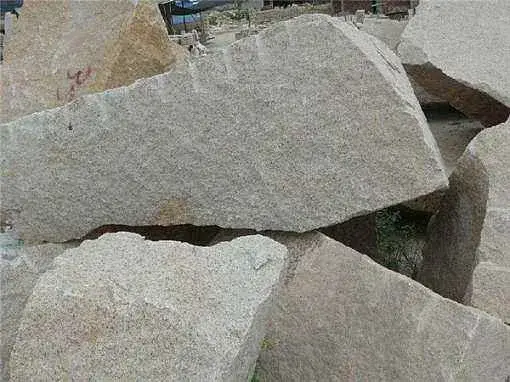
Most Malaysian granite is dense, hard and abrasive, Mohs 6-7. Run impact on it and blow bars wear out fast; a cone's laminated chamber wears better and shapes more steadily, so it carries the secondary close.
Year-round rain keeps feed clay-laden and moist. Skip scalping and the screen and chamber clog, killing output. Give the feeder's scalping deck room; for concrete sand, plan washing (XSD/LSX).
How to configure a granite crushing plant
Typical: "jaw primary -> cone secondary -> vibrating screen -> VSI shaping/sand". The jaw takes the big feed, the cone closes the secondary, the screen splits 0-5 / 5-10 / 10-20 mm, oversize returns to the cone in closed circuit; for cubic shape or manufactured sand, a VSI (5X/VSI) closes the line.
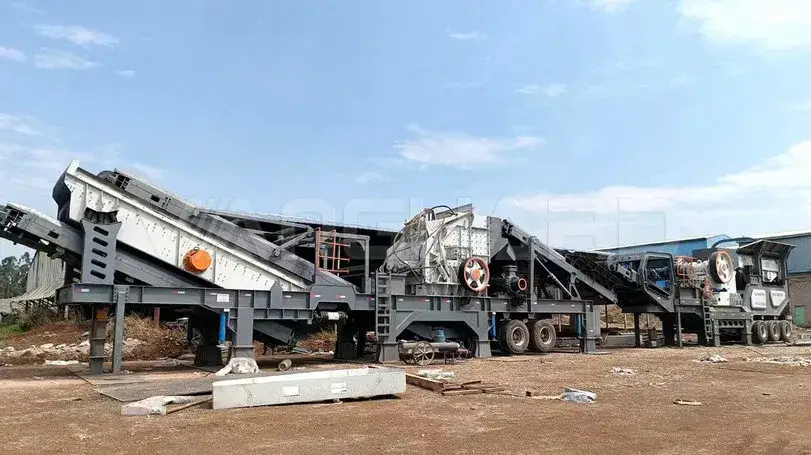
This is the first branch. Big body, long mine life, steady tonnage - a stationary line spreads cost best. Scattered faces, follow-the-ore, or multi-site rotation - a mobile plant relocates as one unit.
Mobile choice: crawler vs wheel
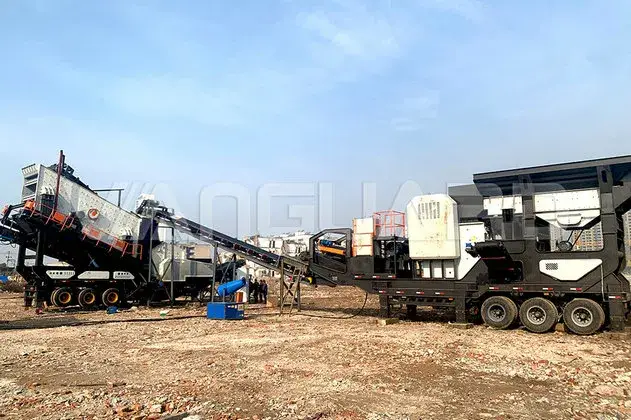
One table to see the trade-off.
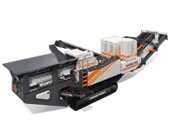
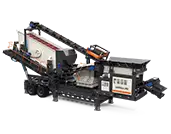
| Aspect | Crawler mobile plant (LA series) | Wheel mobile plant (VP series) |
| Travel | Self-propelled on tracks, reaches rough/no roads | Moved by low-bed, needs roads |
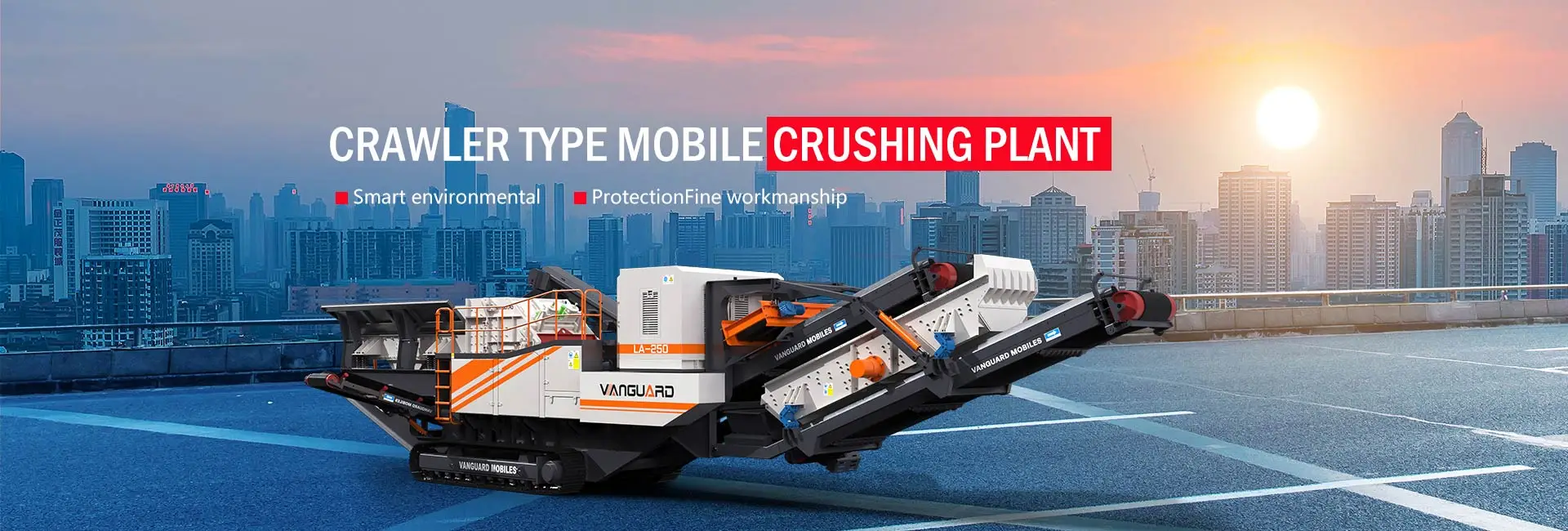
| Set-up | Wide track, low center, powers up on arrival, no external supports | Needs outriggers to level, then produces |
| Relocation speed | Self-drives short hops; long haul needs a low-bed | Fast on highways, hook and go |
| Power | Diesel, electric, or dual-fuel | Mostly electric, generator optional |
| Best for | Remote hard rock, no-road sites | Road-reachable, multi-site rotation |
| Models | LA series (e.g. C96/C106 jaw, LA cone/impact/screen) | VP series (VPE jaw, VPC cone and others) |
Stationary crushing line: the workhorse for big quarries
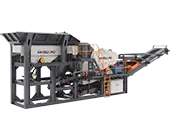
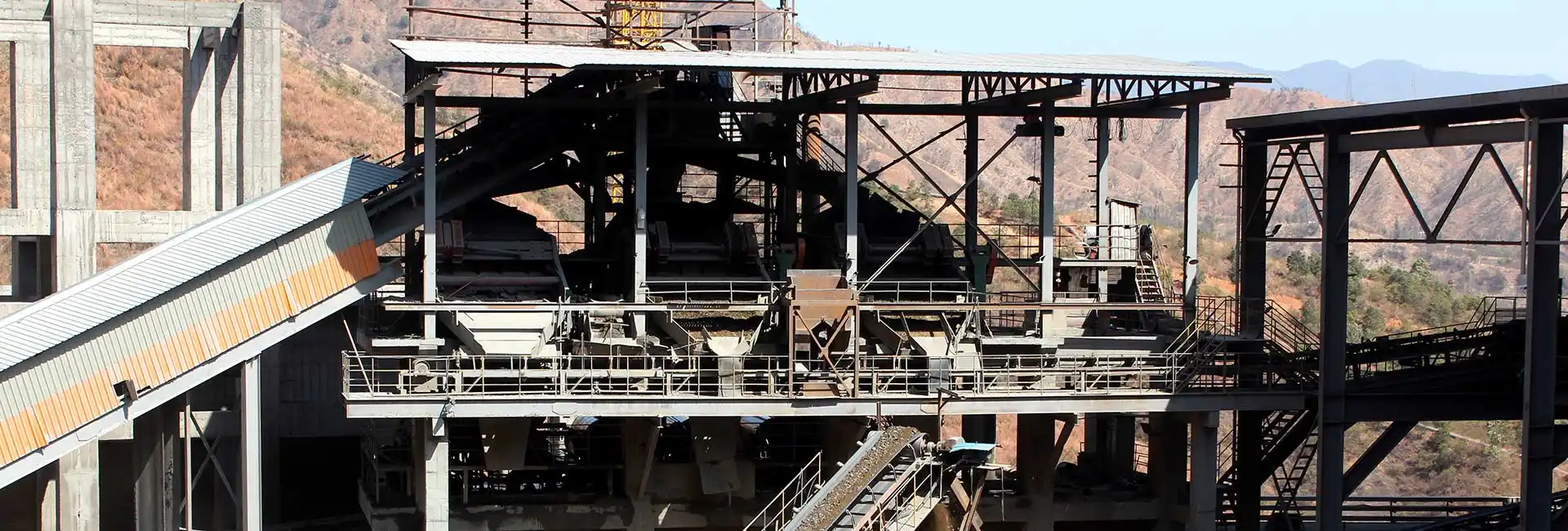
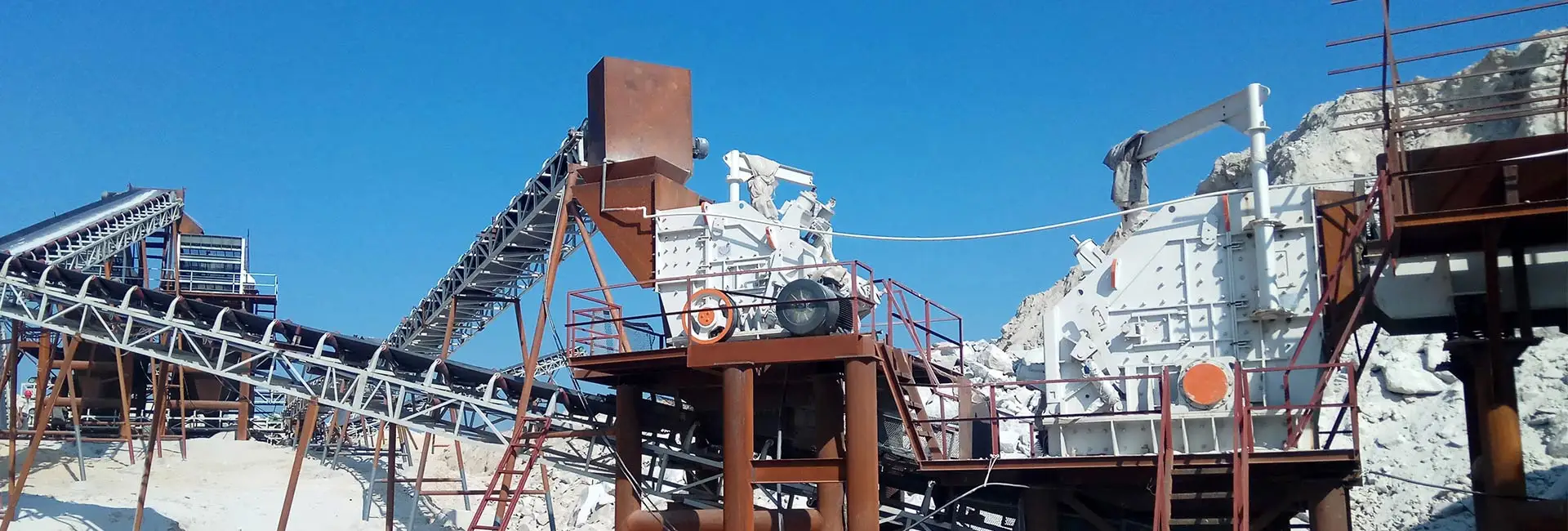
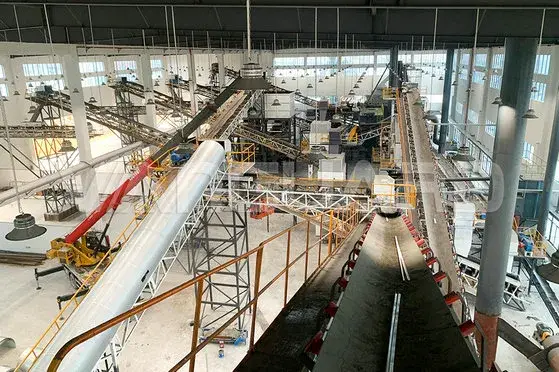
High tonnage, long mine life, fixed product spec (e.g. steady supply to local infrastructure) - a stationary crushing line bakes feeder, crusher, screen and shaping into one hard-based line with the lowest unit cost and steadiest run.
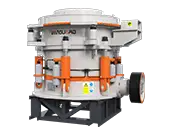
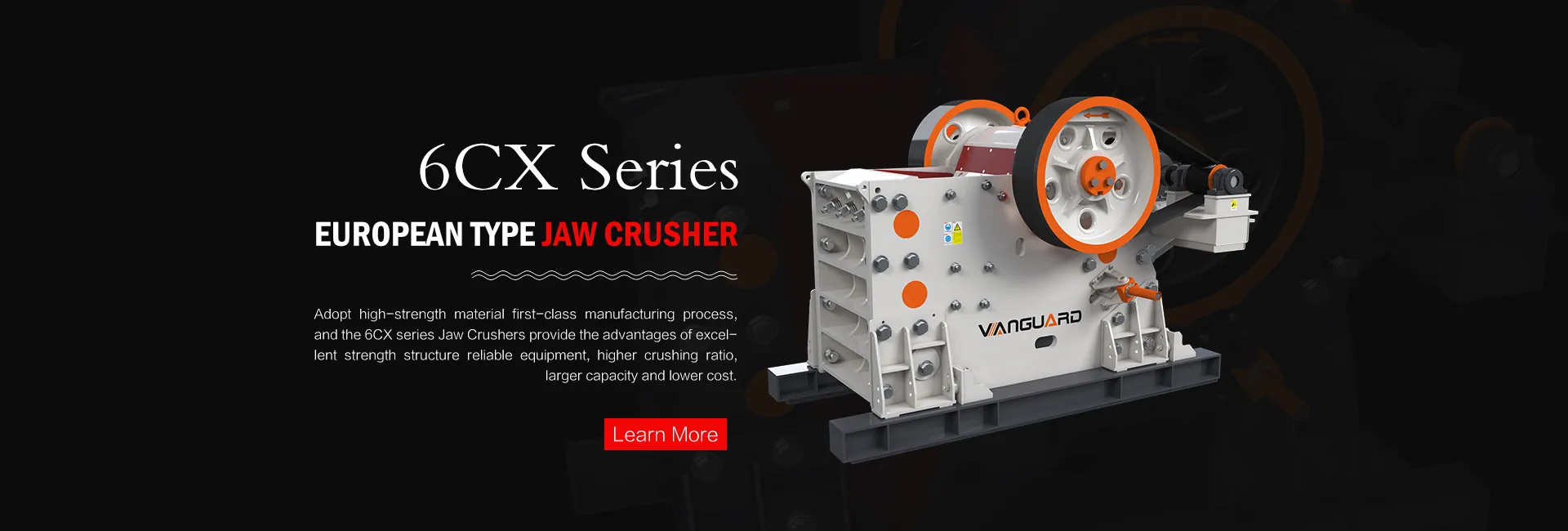
Same logic: "jaw + cone + screen + VSI". Jaw (e.g. 6CX series) primary, cone (e.g. multi-cylinder CP or single-cylinder CS·CH series) secondary, vibrating screen sizing, VSI (5X/VSI) shaping or sand; build it modular, start small and scale.
| Option | Best for | Representative machines |
| Stationary crushing line | High tonnage, steady, fixed spec | Jaw (6CX series) + cone (CP/CS·CH series) + screen + VSI (5X/VSI) |
| Crawler mobile plant | No-road / rough, follow-the-ore | LA series (C96/C106 jaw + LA cone) |
| Wheel mobile plant | Roads, multi-site rotation | VP series (VPE jaw + VPC cone) |
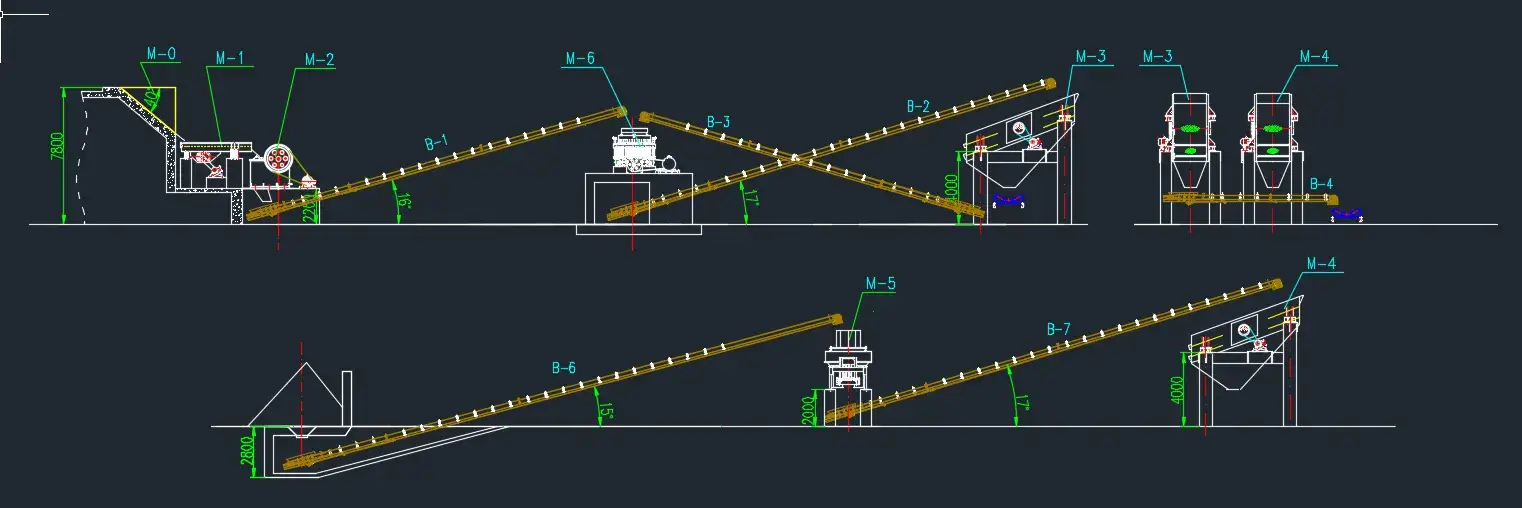
Typical process flow (where the granite plant sits)
Feed (granite ROM) -> ZSW grizzly/vibrating feeder (scalps clay/moisture) -> jaw crusher (primary: stationary 6CX series or mobile LA series / VPE) -> cone crusher (secondary: stationary CP/CS·CH series or mobile LA/VPC cone) -> vibrating screen (sizing) -> VSI (5X/VSI, shaping/sand) -> finished aggregate (0-5 / 5-10 / 10-20 / 20-40 mm); oversize returns to cone in closed circuit. The crawler is stabilized by its wide track and low center and powers up on arrival; the wheel levels on outriggers after set-up.
Selection by tonnage and product spec
Down to numbers and product, the config is clear.
| Your need | Recommended setup | Vanguard model |
| Small-mid tonnage (tens to ~100 tph), follow-the-ore | Wheel VP series (jaw + cone) | VP series (VPE jaw + VPC cone) |
| No-road / remote face | Crawler LA series (jaw + cone) | LA series (C96/C106 jaw + LA cone) |
| High steady tonnage | Stationary line (jaw + cone + screen + VSI) | 6CX jaw + CP/CS·CH cone + VSI (5X/VSI) |
| High-spec cubic shape / manufactured sand | Add VSI shaping at the end | VSI (5X/VSI), with washer XSD/LSX |
Lessons From the Field
We have supported many granite lines in wet tropical conditions; a few points worth stating up front.
Clay and moisture are the first wall. Malaysian feed runs high moisture in the rainy season; the ZSW feeder's scalping deck must be generous or the screen cakes and the chamber clogs, halving output. For concrete sand, put washing (XSD/LSX) in the flow from the start.
Do not force impact on granite. Granite is abrasive; impact blow bars burn fast and need frequent service. Let the cone's laminated chamber do the secondary close - it wears better and holds shape, cheaper over the life of the job.
At higher, steadier tonnage, mobile alone falls short. Once mid-stage tonnage is stable and the body is long-lived, a stationary line's unit cost is lower and the run steadier. Mobile's value is "fast early, flexible" - not forever replacing stationary.
Shape and grading set the sale price. Where local infrastructure demands cubic shape and low flakiness, an end-of-line VSI is not a bonus but a must - leave the capacity and chamber for it early.
Selection checklist and common mistakes
Break selection into a few items you can tick off.
1. Tonnage and continuity? Big and steady -> stationary; small-mid, follow-the-ore -> mobile. 2. Road conditions? No-road/rough -> crawler LA series; roads and many sites -> wheel VP series. 3. Product spec? Ordinary aggregate -> jaw + cone + screen; high shape / sand -> add VSI at the end. 4. Heavy clay/moisture? Yes -> generous ZSW scalping, washing (XSD/LSX) if needed. 5. Stable power? Weak/off-grid -> diesel or dual-fuel mobile.
Mistake one: impact is cheaper on granite - the rock is hard and abrasive, blow bars wear fast, costlier long run. Mistake two: people think a crawler must be secured before it stands steady - it is stabilized by wide track and low center and powers up on arrival, needing no external supports at all. Mistake three: mobile means tiny tonnage - crawler lines at 100-200 tph are common. Mistake four: ignore clay and moisture - skip scalping in the rainy season and the chamber and screen clog, killing output.
FAQ
Run "jaw primary + cone secondary"; add VSI (5X/VSI) at the end for shape or sand. Do not force impact on hard rock.
High, steady, long-life, fixed spec -> stationary crushing line. Scattered, follow-the-ore, multi-site -> mobile (crawler LA series / wheel VP series).
No-road/rough -> crawler (wide track, low center, powers up on arrival, no external supports). Roads and multi-site rotation -> wheel, faster to move.
Not advised for hard rock. Granite is abrasive; impact blow bars wear fast. Use a cone's laminated chamber for the secondary close - wears better, holds shape.
Give the ZSW feeder's scalping deck room; in the rainy season feed runs wet, so plan it. For concrete sand, add washing (XSD/LSX).
Add a VSI (5X/VSI) at the end for shaping/sand. Where infrastructure demands shape, VSI is a must, not a bonus.
Stationary lines run from ~100 tph to several hundred by model and chamber; mobile commonly tens to ~200 tph.
Crawler is stabilized by wide track, low center, powers up on arrival, no external supports. Wheel levels on outriggers after set-up. Stationary needs a concrete base.
Stationary: 6CX jaw, CP/CS·CH cone, 5X/VSI sand. Mobile: LA series (crawler) and VP series (wheel). Modular MBP also available. Pick by ore and tonnage.
Mobile: almost no civil works, days to a couple of weeks. Stationary: civil base, measured in months.
Feed -> ZSW scalping -> jaw primary -> cone secondary -> screen sizing -> VSI shaping/sand -> product; oversize in closed circuit. Crawler stabilized by wide track, low center, powers up on arrival.
Fix tonnage, product spec, road, clay/moisture and power, then stationary vs mobile and model. Need help? Contact Vanguard Machinery for a free material analysis and tailored proposal.
Conclusion
Malaysian granite is hard, abrasive and rained on - so nail three things: match machines to "jaw + cone (+ VSI shaping)", pin down feed clay/moisture and product grading, and split stationary vs mobile by scale. Large, steady, long-life quarries get the lowest unit cost from a stationary crushing line (6CX jaw + CP/CS·CH cone + screen + VSI). Scattered or follow-the-ore work uses mobile - crawler (LA series, wide track, low center, powers up on arrival, no external supports) for no-road sites, wheel (VP series) for fast road moves. Do not force impact on granite, do not skip rainy-season scalping, and put VSI in when shape matters. Vanguard Machinery builds both stationary and mobile - each a line of "feeder -> primary -> secondary -> screen -> shaping -> product." Need a pick? Contact Vanguard Machinery for a free material analysis and tailored proposal.




