

In a high-quality granite aggregate production line, the final particle shape, gradation, and fines content directly determine market competitiveness. So, for granite aggregate shaping, should you choose a 5X series impact sand maker or a cone crusher? Vanguard Machinery draws on operating data from hundreds of granite sand-making lines worldwide to provide a practical selection guide.
1. Granite Crushing Characteristics Drive Equipment Choice
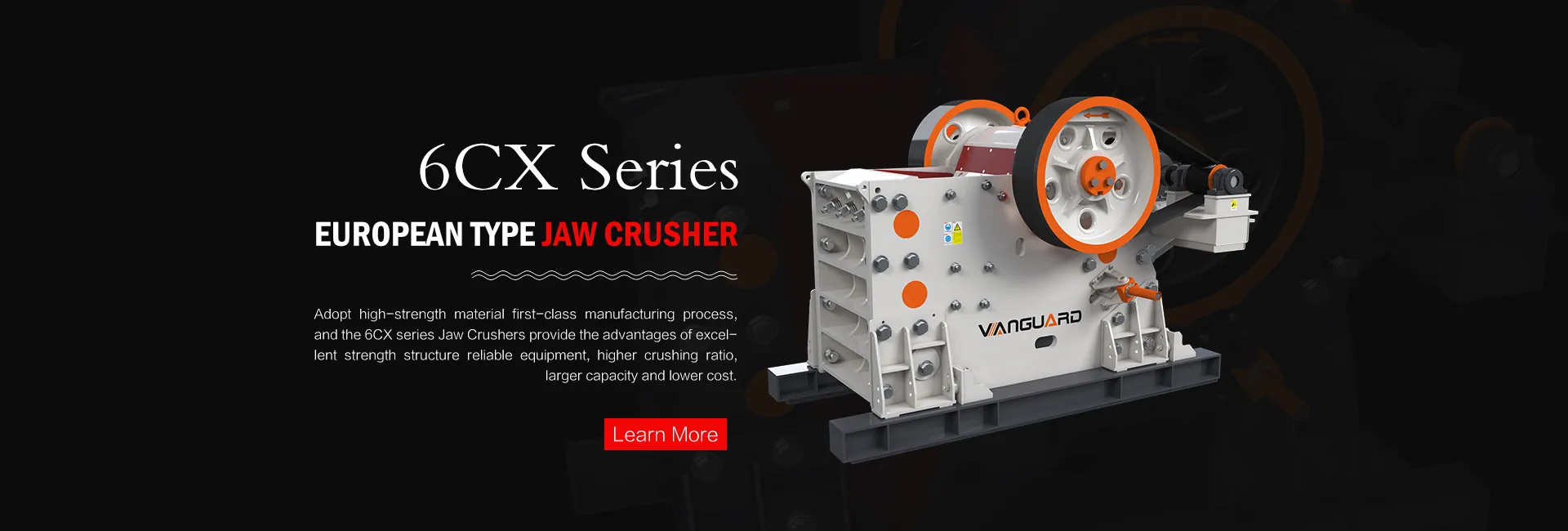
Granite is a hard acidic igneous rock with a Mohs hardness of 6 to 7 and a compressive strength of 120–250 MPa. Its high quartz and feldspar content makes it highly abrasive. During crushing, this material wears down liners, hammers, and mantles rapidly, so the shaping equipment must balance high crushing efficiency with controllable wear costs. When Vanguard Machinery designs granite processing lines, it typically uses a jaw crusher plus a cone crusher for primary and secondary crushing, then finishes with either a 5X series impact sand maker or a cone crusher for final shaping.
2. 5X series Sand Maker: The Particle Shape Specialist
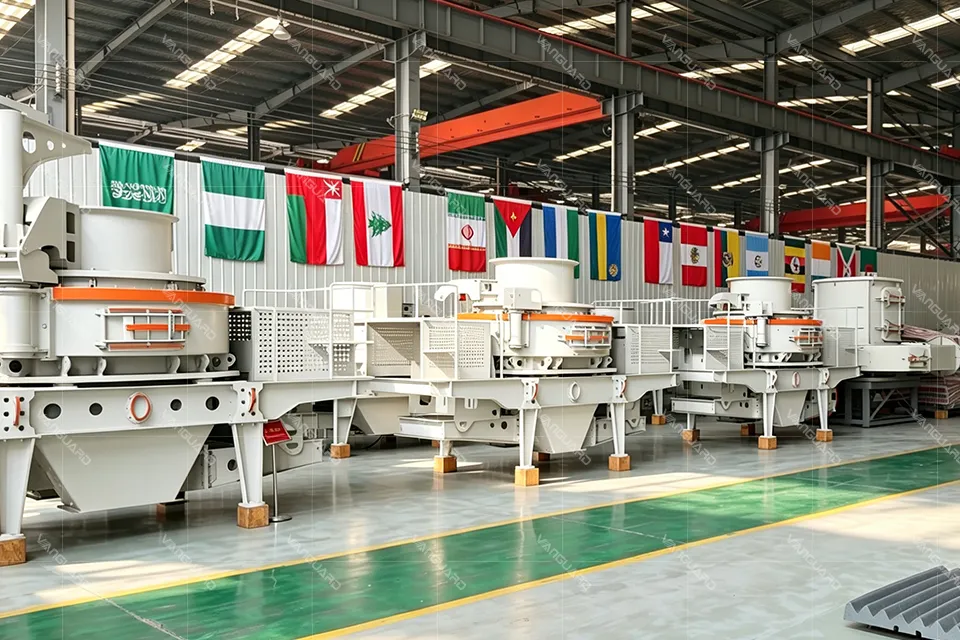
The 5X series sand maker crushes material by high-speed impact against the chamber lining or a cascading material bed, using either rock-on-rock or rock-on-iron principles. Its main strengths are:
Excellent particle shape: The finished aggregate has a high cubic content and low flakiness, making it ideal for expressways, ready-mix concrete, and other applications with strict shape requirements.
Controllable fineness modulus: By adjusting feed rate, rotor speed, and cascade flow ratio, operators can flexibly produce 0–5 mm manufactured sand, 5–10 mm, and 10–20 mm premium aggregates.
Manageable fines content: Combined with Vanguard Machinery’s air classification system, fines content can be kept stable at 5%–12%.
The trade-off is faster wear on rotors, distributor cones, and peripheral guard plates when processing hard feed.
3. Cone Crusher: The Steady Secondary and Tertiary Workhorse
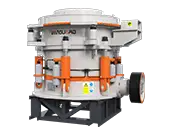
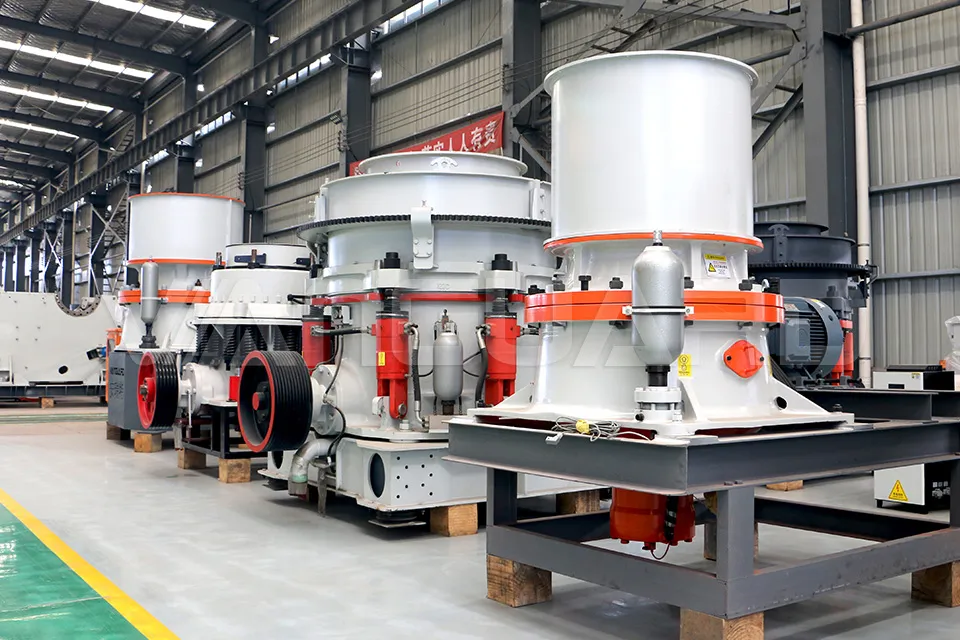
A cone crusher uses laminated crushing, squeezing material between a moving mantle and a fixed concave. Its characteristics include:
High throughput: A single large cone crusher can process 200–600 t/h, making it suitable for continuous large-scale production.
Longer wear part life: Laminated crushing distributes wear evenly across liners, giving them longer service life than impact-type equipment.
Stable discharge: Hydraulic or electronic discharge opening control keeps the product size within a narrow range.
However, cone crushers are better suited for secondary and tertiary crushing and aggregate sizing than final shaping. They usually produce slightly higher flakiness than 5X series units.
4. Key Parameter Comparison
In terms of crushing principle, 5X series relies on impact and attrition, while cone crushers rely on compression and laminating. For particle shape, 5X series delivers more cubical products, while cone crushers produce slightly more flaky particles. For throughput, cone crushers offer higher single-unit capacity, while 5X series stands out in shaping and sand-making stages. For wear costs, cone crushers have longer-lasting wear parts, while 5X series requires more frequent replacement. For application scenarios, 5X series suits premium manufactured sand and high-grade aggregate shaping, while cone crushers suit large-scale secondary crushing and aggregate classification.
5. Controlling 5X series Wear Costs in Granite Operations
When processing highly abrasive granite, 5X series wear parts directly affect the cost per ton. Vanguard Machinery recommends three optimization measures: choose high-chrome alloy or ceramic composite rotors, distributor cones, and peripheral guard plates; keep feed size under about 40 mm to avoid destructive impact on the rotor; and regularly inspect rotor balance and cascade bed thickness to maintain stable rock-on-rock operation. With these measures, 5X series wear part life can be extended by 20%–40%, significantly reducing operating cost per ton.
6. How Vanguard Machinery Matches Equipment to Feed Conditions
Beyond the basic 5X series-versus-cone question, feed conditions play a decisive role. Vanguard Machinery engineers evaluate the blasted rock size, moisture content, quartz percentage, and clay content before recommending a flowsheet. For example, when feed quartz content exceeds 35%, Vanguard Machinery may propose a cone crusher as the main shaping stage and limit the 5X series to sand-making duty, reducing exposure of the 5X series rotor to the hardest particles. When the target product includes a high proportion of manufactured sand, the 5X series is placed after screening so only appropriately sized particles enter the shaping chamber, improving energy efficiency and protecting wear parts.
7. Why Supplier Experience Matters in Equipment Selection
The choice between 5X series and cone crusher depends not only on catalog specifications but also on the supplier’s experience in designing lines for specific rock types. Vanguard Machinery collects wear, energy consumption, and product yield data from real job sites, enabling more accurate forecasts of output and total cost of ownership. This approach reduces the risk of poor layout and helps the line reach its design capacity faster.
8. Selection Guide: Match the Machine to the Production Target
Vanguard Machinery recommends the following configurations based on production goals:
If the target is premium manufactured sand, expressway aggregate, or concrete-grade sand, prioritize a 5X series sand maker as the shaping and sand-making core.
If the target is 10–31.5 mm continuously graded aggregate for large-scale infrastructure materials, a cone crusher is the better choice as the secondary crushing core.
If the goal is to produce both sand and aggregate, use a two-stage process: cone crusher first, then 5X series for shaping and sand-making. This combination balances particle shape and output.
7. Vanguard Machinery Granite Production Line Solutions
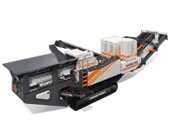
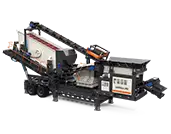
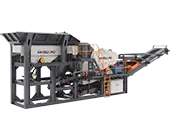
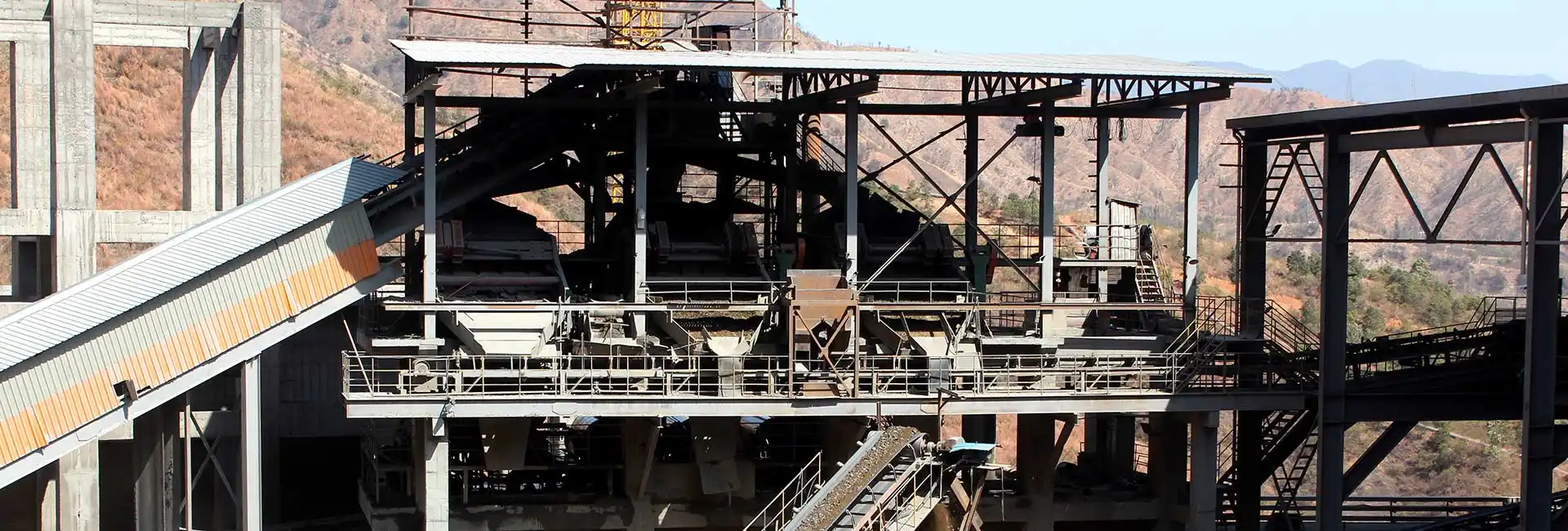
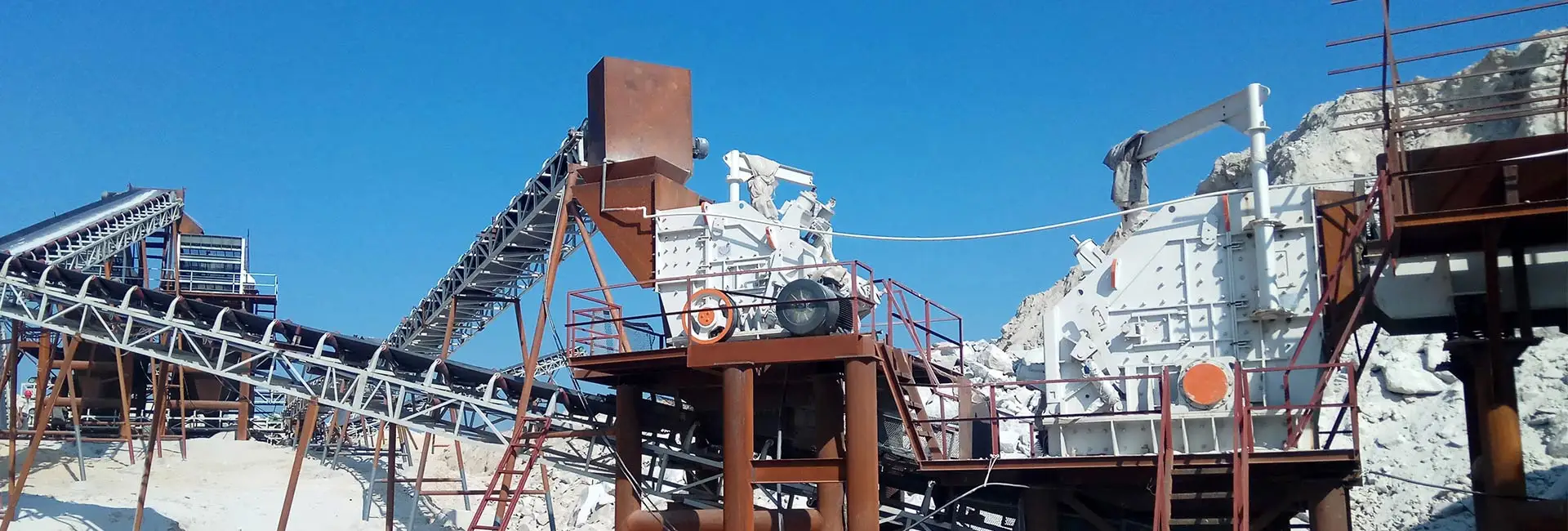
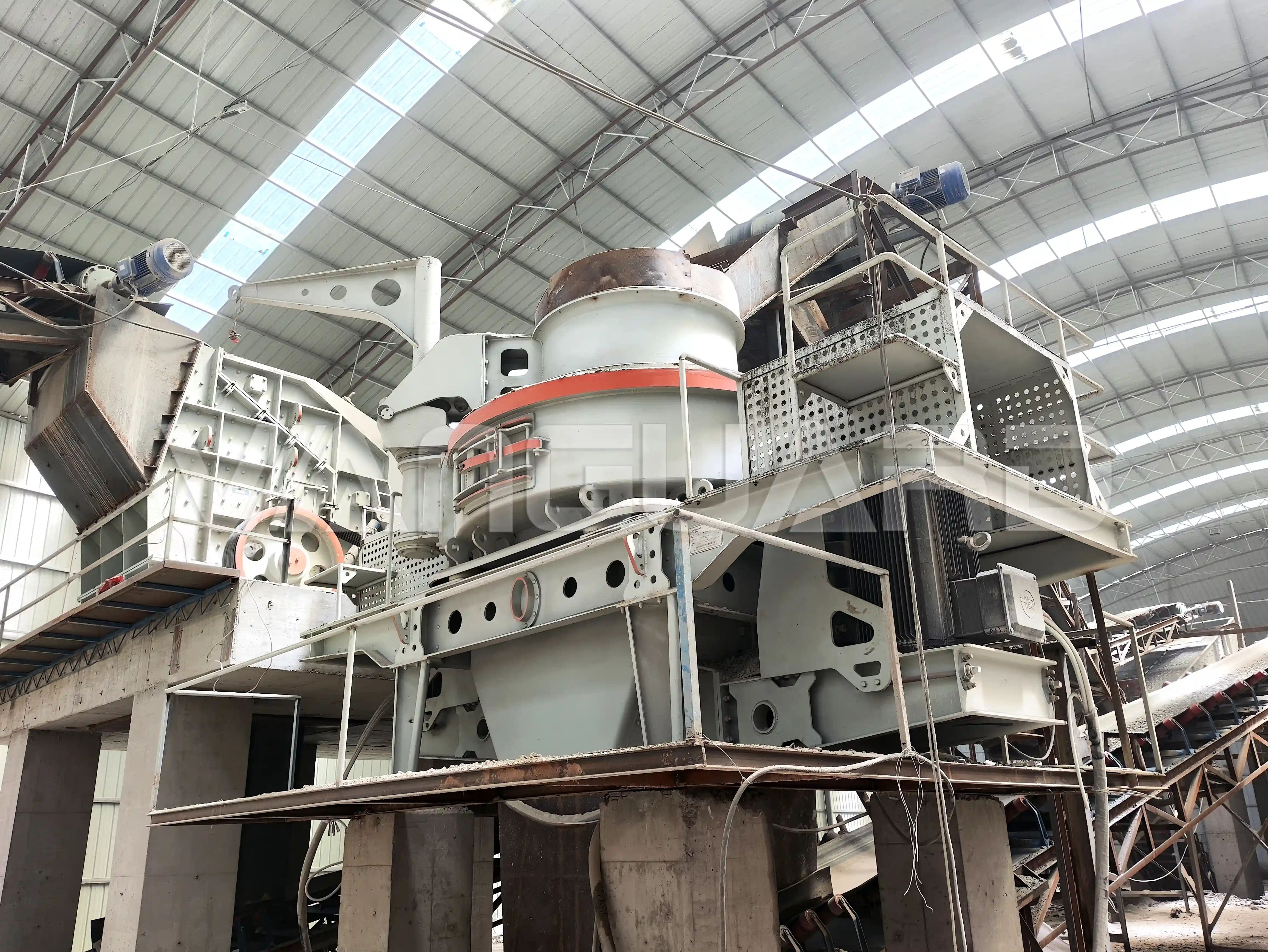
Vanguard Machinery offers customized granite crushing and shaping solutions. A typical configuration includes a PE jaw crusher, a CP/CS single-cylinder or multi-cylinder hydraulic cone crusher, a 5X series series vertical shaft impact sand maker, vibrating screens, and a sand washing and recovery unit. The entire line can be modularized according to feed hardness, product specifications, and capacity requirements, covering output ranges from 50 to 800 t/h. Vanguard Machinery’s granite lines have been successfully deployed in aggregate projects across Southeast Asia, the Middle East, Africa, and South America.
Conclusion
Granite aggregate shaping is not simply about choosing between 5X series and cone crushers. The right decision depends on the end product’s intended use, gradation requirements, and cost control. 5X series impact sand makers excel at shape improvement and manufactured sand production, while cone crushers excel at stable secondary crushing and large-scale sizing. Combining both wisely is the key to maximizing the value of granite resources.
FAQ: Common Questions About Granite Aggregate Shaping
Q1: What is the most reasonable equipment combination for granite crushing?
A: A jaw crusher plus cone crusher plus 5X series sand maker is the most common setup. The jaw crusher handles primary crushing, the cone crusher handles secondary and tertiary crushing, and the 5X series handles shaping and sand-making. This combination balances output, particle shape, and wear costs.
Q2: Is a 5X series sand maker suitable for all types of granite?
A: 5X series units work well for medium-to-high hardness granite with quartz content below about 35%. If quartz content is higher, wear parts wear faster, and high-chrome alloy or ceramic composite wear parts should be selected.
Q3: Can I choose just one machine, either a cone crusher or a 5X series?
A: Yes, depending on the product requirements. If you only need 10–31.5 mm aggregate, a cone crusher is sufficient. If you need premium manufactured sand or high-grade aggregate, a 5X series is essential.
Q4: Can Vanguard Machinery provide a complete granite production line?
A: Yes. Vanguard Machinery supplies complete equipment and process solutions covering crushing, screening, sand-making, and sand washing and recovery, along with installation, commissioning, operator training, and after-sales spare parts support.
- Prev: No more
- Next:How to Choose the Best Granite Crushing Plant for Malaysia




