

Why Chinese Crusher Manufacturers Have Earned Global Recognition
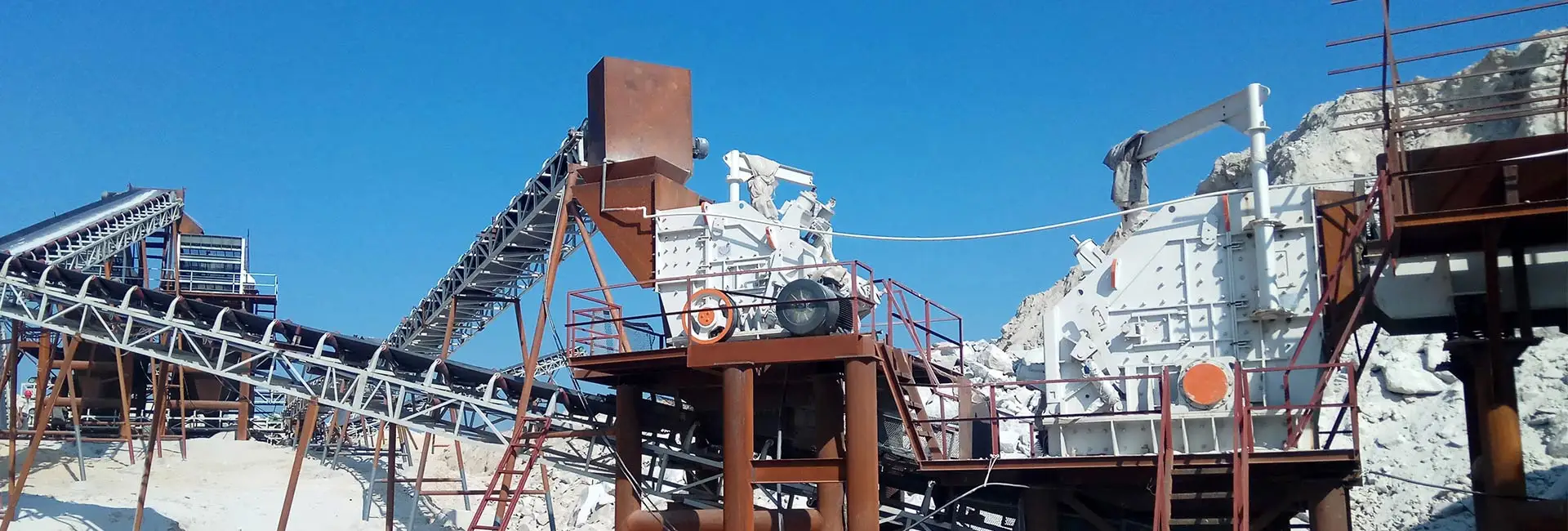
Over the past two decades, China's crusher manufacturing industry has undergone a profound transformation — from imitating imported designs to developing proprietary technology, and from serving the domestic market to exporting worldwide. Chinese-made jaw crushers, cone crushers, impact crushers, VSI crushers, and mobile crushing plants are now shipped to over 100 countries across Southeast Asia, the Middle East, Africa, South America, and Central Asia. A complete supply chain, mature foundry processes, and steadily improving engineering capabilities have given Chinese crushers distinct advantages in cost-performance, lead time, and spare parts availability.
The competitiveness of Chinese crusher manufacturers goes well beyond price. A growing number of Chinese factories have built in-house finite element analysis teams to optimize frames, main shafts, and crushing chambers. Heat treatment processes for wear-resistant alloys such as high manganese steel and high chromium cast iron have reached international standards. For buyers, the real question is how to identify — among the many Chinese suppliers — those with genuine engineering depth and consistent quality control.
| Advantage | Details |
| Complete supply chain | Castings, forgings, motors, bearings all sourced domestically |
| Short lead time | Standard models in 2-4 weeks; custom builds in 6-10 weeks |
| Cost-performance | Equipment investment 30%-50% lower at comparable capacity |
| Fast spare parts | Common wear parts shipped in 7-15 days |
| Customization | Chamber profiles and parameters adjusted to material properties |
| Export experience | Familiar with CE, GOST, SONCAP certification requirements |
Vanguard Machinery Core Product Lines
Vanguard Machinery focuses on the research, development, and manufacturing of crushing, sand-making, and grinding equipment. The product range covers the entire process chain from raw material feeding to finished product output. Five major product lines — stationary crushers, mobile crushing plants, grinding mills, sand makers, and auxiliary equipment — each comprise multiple series to handle different materials, capacities, and product specifications.
| Product Line | Key Series | Typical Applications |
| Stationary crushers | 6CX, PE/PEX, PEW, 6FX, LF, CI6X, CP, CS/CH, CSV, 5X, VSI, PCZ, PXJ | Aggregates, mineral crushing |
| Mobile crushing plants | VPE, VPF, VPC, VPV, VPM-3, VPM-4, C96/C106/C116, LA, MBP | C&D waste, aggregates, road construction |
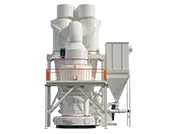
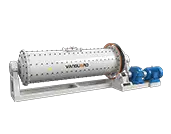
| Grinding mills | YGM, LM, HGM, LUM | Limestone, barite, calcite grinding |
| Sand makers | 5X, VSI | Manufactured sand, aggregate shaping |
| Auxiliary equipment | ZSW, ZY, YA, XSD, LSX, WS, B | Feeding, screening, washing, conveying |
Stationary Crusher Series
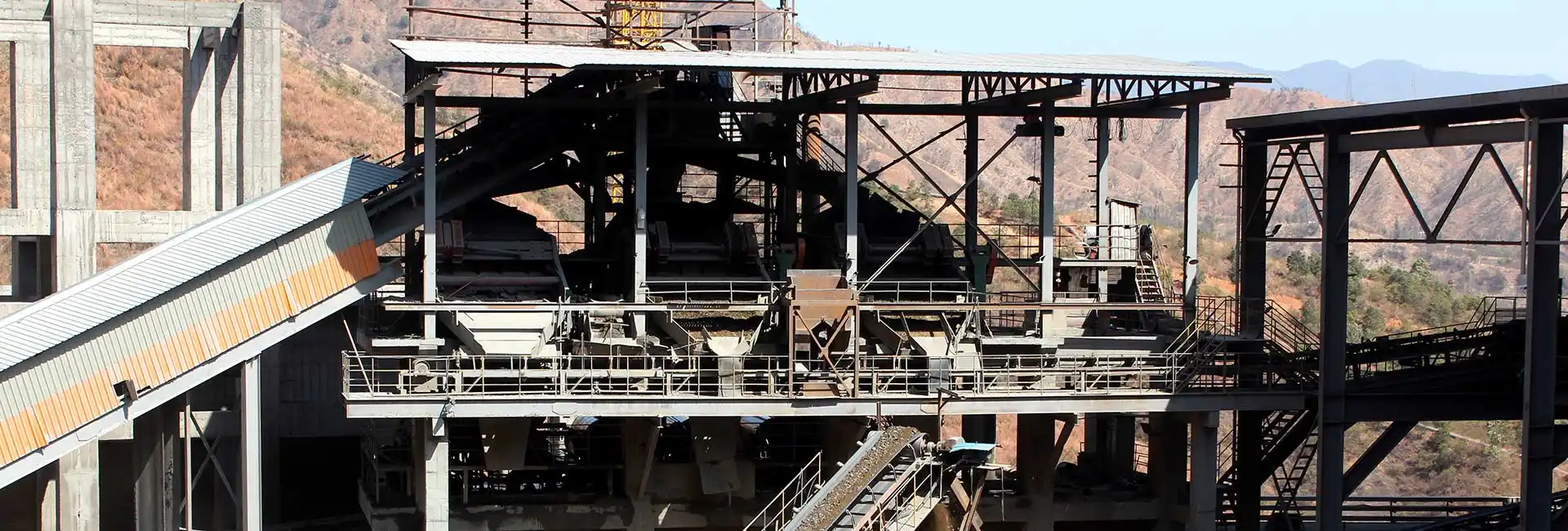
Stationary crushers form the backbone of aggregate plants and mineral processing operations. Vanguard Machinery's stationary range covers six crusher types — jaw, impact, cone, VSI, hammer, and fine crusher — capable of handling materials from granite and basalt to limestone and iron ore across the full hardness and abrasiveness spectrum.
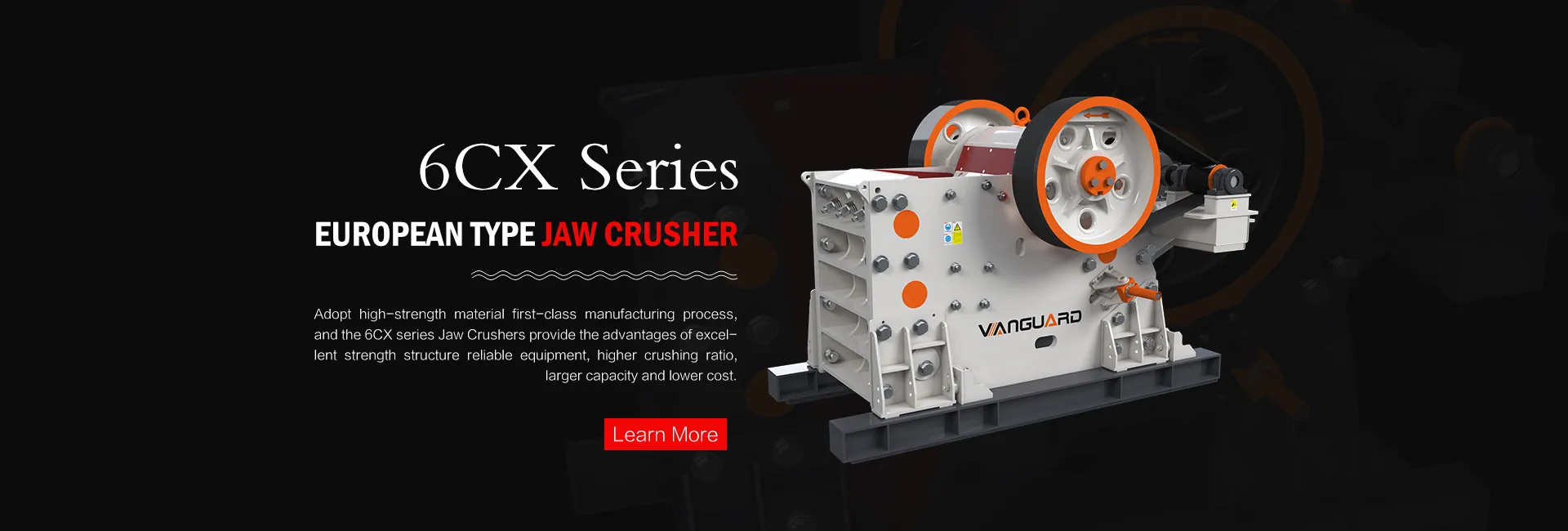
Jaw crushers are the first stage in any crushing circuit. The 6CX Series features a deep crushing chamber and welded frame, accepting large feed sizes with a high reduction ratio — ideal for large-scale aggregate projects. The PE/PEX Series offers a simpler structure and easier maintenance, delivering strong value in small to medium operations. The PEW Series adopts a European-style design with a wedge discharge setting adjustment system, suited to plants requiring higher automation.
Impact crushers are well suited to secondary crushing of materials below medium hardness, such as limestone. The 6FX Series and LF Series feature heavy-duty rotors with large reduction ratios and good product shape. The CI6X Series represents the latest generation, with precision-machined rotors and multiple chamber designs that maximize blow bar utilization in plants producing 300 tph or more.
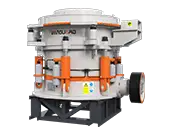
Cone crushers are the workhorse of secondary and tertiary stages, particularly for hard rocks like granite and basalt. The CP Series multi-cylinder hydraulic cone crusher offers tramp iron protection and auto-clearing, with layered compression chambers producing near-cubic aggregate. The CS/CH Series single-cylinder hydraulic cone crusher has a compact structure where the hydraulic system handles discharge adjustment, tramp release, and clearing in one. The CSV Series Symons cone crusher uses laminated crushing for stable performance and good economy in mid-capacity projects.
The 5X Series vertical shaft impact crusher uses a rock-on-rock principle, producing manufactured sand with excellent particle shape and continuous grading — the top choice for high-quality sand production. The VSI Series suits medium-capacity sand-making operations with a proven, reliable design.
The PCZ Series heavy-duty hammer crusher handles primary crushing of brittle materials like limestone in a single pass, simplifying the circuit. The PXJ Series fine crusher is used for tertiary crushing or pre-crushing before sand making, delivering fine and uniform output.
Mobile Crushing Plant Series
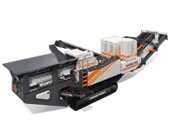
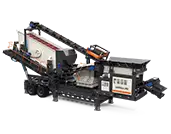
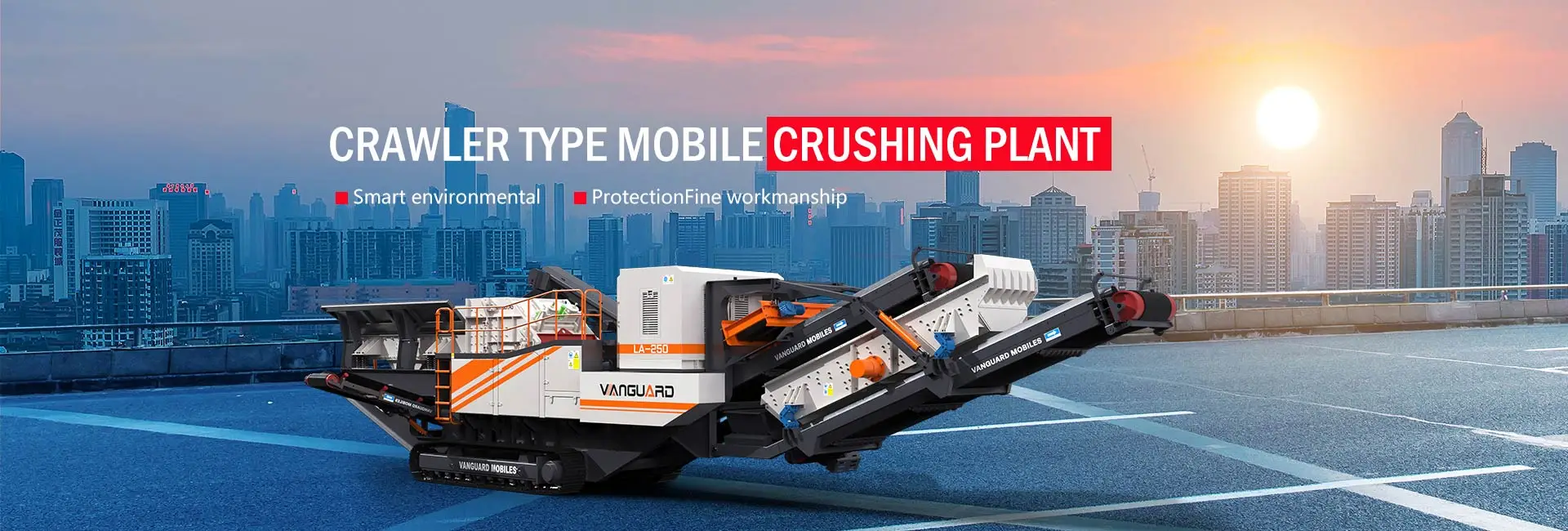
Mobile crushing plants integrate feeding, crushing, screening, and conveying into a single unit that goes to work without foundation construction — ideal for construction and demolition waste recycling, highway and railway projects, and short-term aggregate supply. Vanguard Machinery offers three categories: tire-type, crawler-type, and modular.
The VPE Series mobile jaw crushing plant handles primary crushing; the VPF Series mobile impact plant handles secondary crushing; the VPC Series mobile cone plant is built for hard rock; and the VPV Series mobile VSI plant produces shaped sand. The VPM-3 Series combined mobile plant integrates feeding, crushing, and screening on one chassis for space-constrained sites. VPE models include VPE57, VPE69, VPE750, VPE96, and VPE110, with capacities ranging from 50 to 500 tph.
The C96/C106/C116 crawler mobile jaw plants use hydraulic track drive to navigate slopes and soft ground. LA Series crawler cone plants, impact plants, and screening plants can be combined flexibly to build a complete mobile circuit. The LA2100X3 crawler inclined screen handles high-capacity classification in large mobile operations.
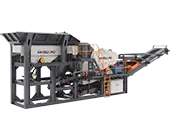
MBP Series jaw, cone, and screening plants use a modular design for easy transport and rapid installation — well suited to mid-size aggregate projects that require periodic relocation.
Grinding Mill Series
Vanguard Machinery's grinding mill range covers the full spectrum from coarse to ultrafine powder. The YGM Series high pressure grinding mill handles non-metallic ores below Mohs 9 and moisture 6%, with output adjustable from 80 to 325 mesh. The LM Series vertical roller mill integrates grinding, drying, and classification, suited to large grinding stations. The HGM Series three-ring mill achieves 300-3000 mesh for ultrafine applications. The LUM Series ultrafine vertical mill combines the efficiency of vertical grinding with ultrafine classification for high-value powders such as ground calcium carbonate and kaolin.
Auxiliary Equipment Series
A complete crushing circuit needs feeding, screening, washing, and conveying equipment alongside the crushers. ZSW Series vibrating feeders provide steady, continuous feed with a pre-screening function. vibrating screen three-axis horizontal screens and ZY Series self-aligning damping screens handle product classification in different scenarios. XSD Series and LSX Series sand washers remove clay and impurities from aggregate surfaces. The WS Series fine sand recovery unit reclaims fine sand from wash water, boosting yield. B Series belt conveyors handle material transfer between stages.
How to Evaluate and Select a Chinese Crusher Manufacturer
With so many Chinese crusher factories competing for business, buyers should evaluate suppliers across several dimensions:
| Dimension | Key Indicators |
| Engineering capability | FEA analysis, chamber optimization design |
| Manufacturing capability | In-house casting, machining, welding, assembly |
| Quality control | ISO 9001 certification, factory test reports |
| Project experience | Successful cases with similar material and capacity |
| Spare parts supply | Stock of common wear parts, lead time, overseas warehouse |
| After-sales service | On-site installation guidance, remote support, response time |
| Certifications | CE, GOST, SONCAP export certifications |
| Contract terms | Warranty period, performance guarantee, liability clauses |
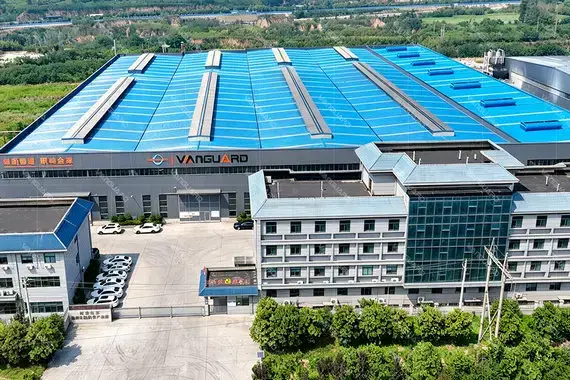
When selecting a crusher manufacturer, a factory visit is strongly recommended. Inspect the foundry, machining workshop, and assembly hall. Pay particular attention to heat treatment — the quality of water toughening for high manganese steel liners directly determines wear part life. Request a crushing test report for your material, or ask to visit a reference site where actual capacity and product gradation can be verified.
After-Sales Service and Spare Parts Support
Crushers operate under heavy continuous loads, and wear parts need periodic replacement. Reliable spare parts supply and after-sales service are essential to maintaining plant availability. Vanguard Machinery has built a three-tier spare parts system: common wear parts (jaw plates, liners, blow bars, hammers, impact plates) are stocked and shipped within 7-15 days; custom parts are produced to drawing with a 4-8 week lead time; overseas customers can source parts through local dealers or overseas warehouses to cut logistics time.
For after-sales support, Vanguard Machinery provides full technical assistance from installation through commissioning. Engineers are dispatched to site for installation guidance and operator training. Remote technical support is available during operation via video and online communication. Parts failing under warranty due to non-human causes are replaced free of charge; post-warranty repair and parts supply continue on a paid basis.
Frequently Asked Questions
The gap in design and manufacturing quality between Chinese and European crushers has narrowed significantly. The main differences now lie in brand premium and the selection of certain core components such as high-end bearings. At comparable capacity and performance, Chinese crushers typically cost 30%-50% less in both equipment investment and spare parts, with shorter lead times. For budget-conscious clients or projects with tight schedules, Chinese crushers offer superior value.
The most reliable method is a factory visit. Check whether the foundry has induction furnaces and heat treatment equipment, whether the machining shop has large CNC gantry mills and CNC lathes, and whether the assembly area has a test platform. Ask for factory test videos and recent customer reference sites. If a visit is not possible, request factory walkthrough videos, ISO 9001 certificates, and product inspection reports.
Certification requirements vary by destination. Middle East and African markets typically require SONCAP or PVOC; CIS countries need GOST or EAC; the EU market requires CE marking. Vanguard Machinery assists clients with these certifications. Export documents include a packing list, commercial invoice, certificate of origin, bill of lading, and equipment manual.
If your raw material source is scattered, the project duration is short, or you need to relocate frequently, a mobile crushing plant is the better choice. If the material source is fixed, the project spans five years or more, and capacity exceeds 500 tph, a stationary line offers lower long-term operating costs and easier maintenance. Many operators run a hybrid setup — a stationary line for primary production supplemented by a mobile plant for auxiliary work.




