

Expert Opinion
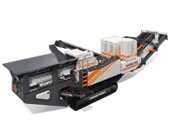
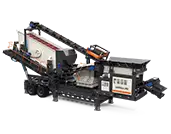
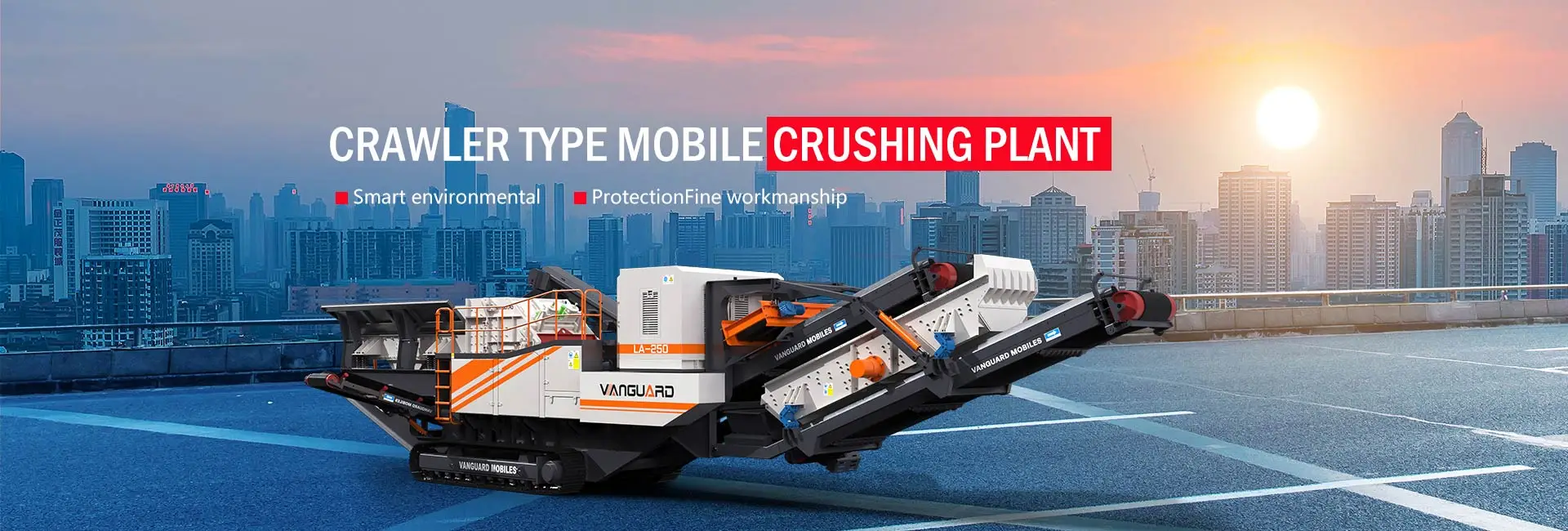
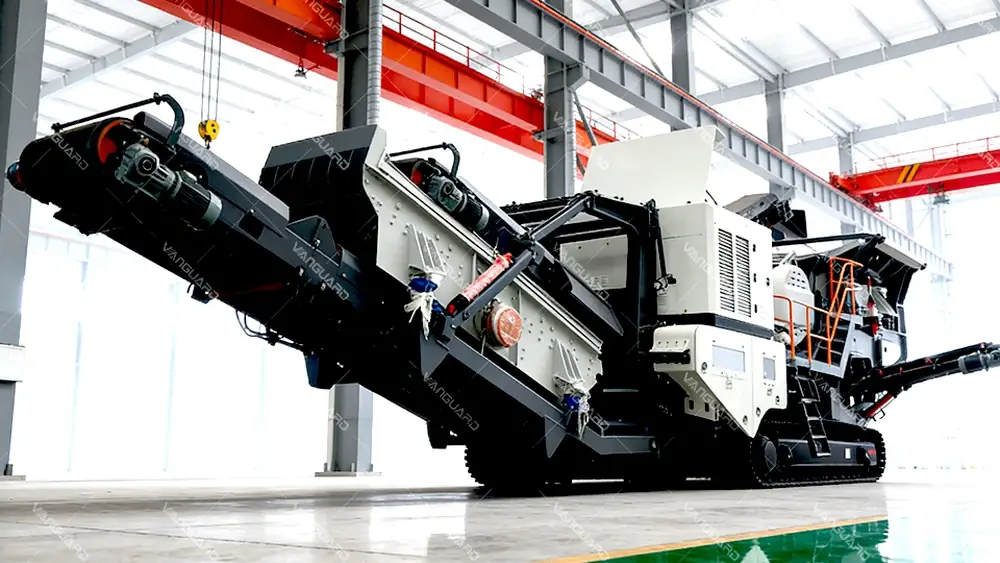
The first fork in any mobile crushing plan is crawler versus wheeled, and there is no overall winner. Each chassis only shines for a specific job. A crawler plant rides on its own tracks: it crawls across mud, slope and broken ground and starts crushing within minutes of arrival, with no trailer, no crane and no ground prep. A wheeled plant rolls on tyres: cheaper to buy and easy to service, but it needs a tractor or truck to tow it, then a levelled, compacted pad and a securing step to steady it before work. Rule of thumb: pick crawler when you move often across rough sites or into a pit; pick wheeled when the plant sits for months near a road and you watch every dollar of capex. Vanguard Machinery builds both chassis families, and the four dimensions below show where each one pays off.
Key Differences
| Comparison | Crawler | Wheeled |
| Transit | self-propelled on tracks | towed by tractor or truck |
| Ground pressure | low, load spread by tracks | higher, needs firm pad |
| Setup time | minutes, powers up on arrival | hours, pad and levelling |
| Terrain | pit, slope, mud, remote | paved or compacted yard |
| Capex | higher | lower |
| Opex | more fuel and track wear | lower fuel, easy service |
| Capacity ceiling | up to about 500 t/h class | up to about 300 t/h class |
Best-fit scenarios
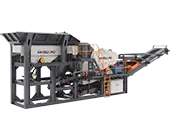
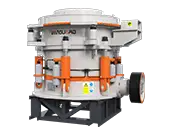
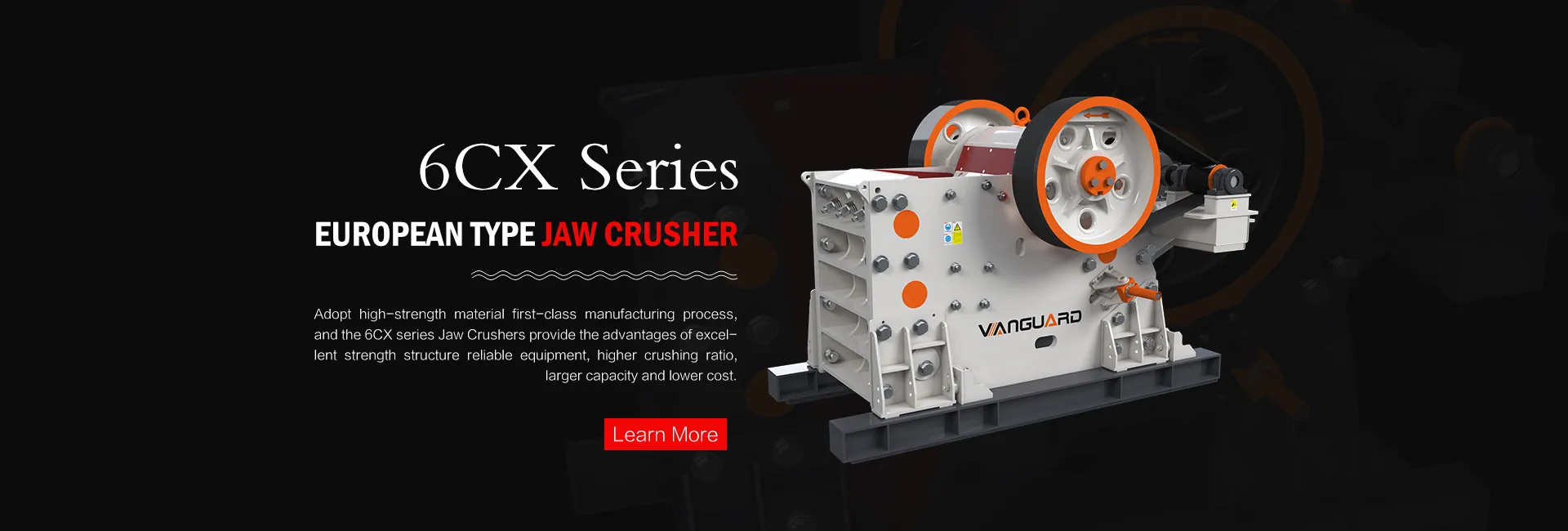
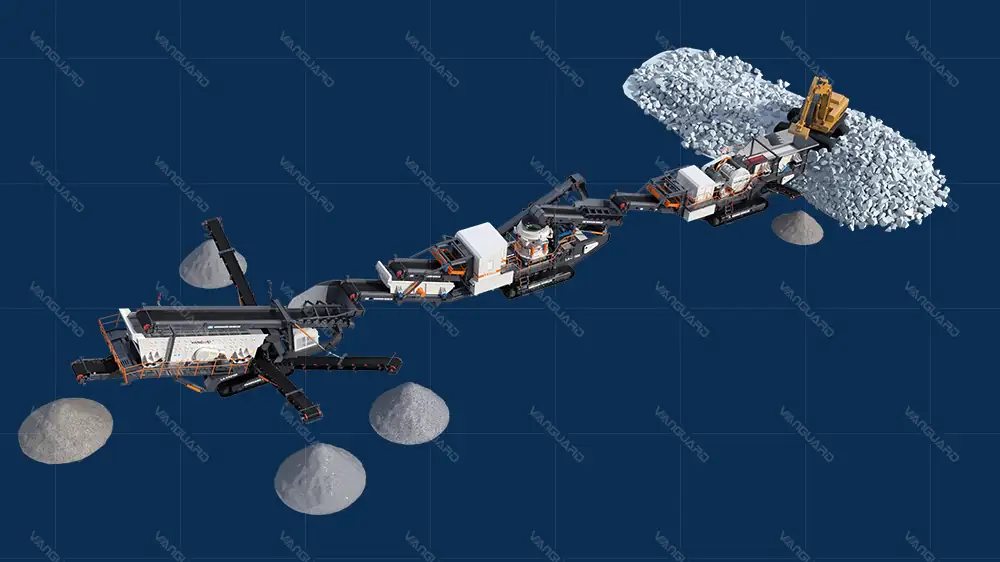
Crawler fits three jobs: quarries that keep pushing the face forward, contractors who chase demolition and road jobs, and remote sites with no real road. For primary duty, mount a Crawler Type Mobile Jaw Crushing Plant; for hard-rock secondary, a Crawler Type Mobile Cone Crushing Plant; for soft rock or concrete recycling, a Crawler Type Mobile Impact Crushing Plant. One warning: impact is for soft rock and demolition material only. Granite and basalt are far too abrasive, so they must run jaw plus cone, never impact, or the blow bars are gone in days.
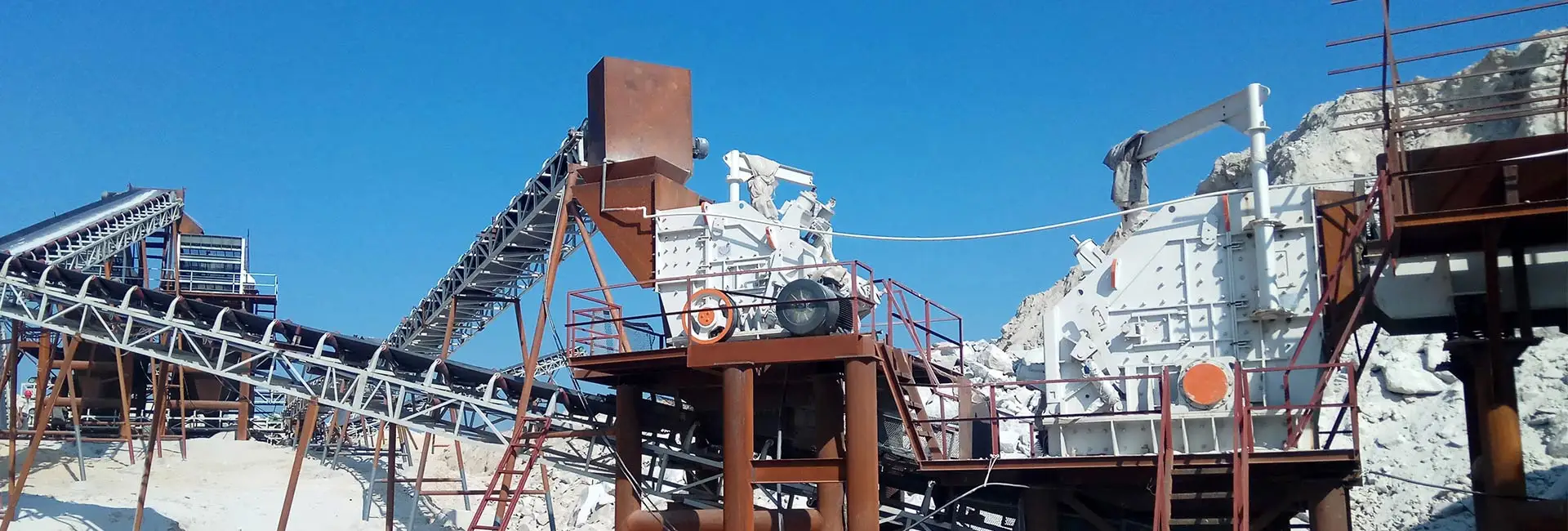
Wheeled fits aggregate yards, ready-mix plants and sites right beside a highway, where the plant stays put for a long stretch. Primary goes on a VPE mobile crushing plant, the cone stage on a VPC mobile crushing plant, and sand making on a VPV mobile crushing plant. It does not self-drive, but it is cheap to buy and cheap to run, and a short yard shuffle is just a tow away.
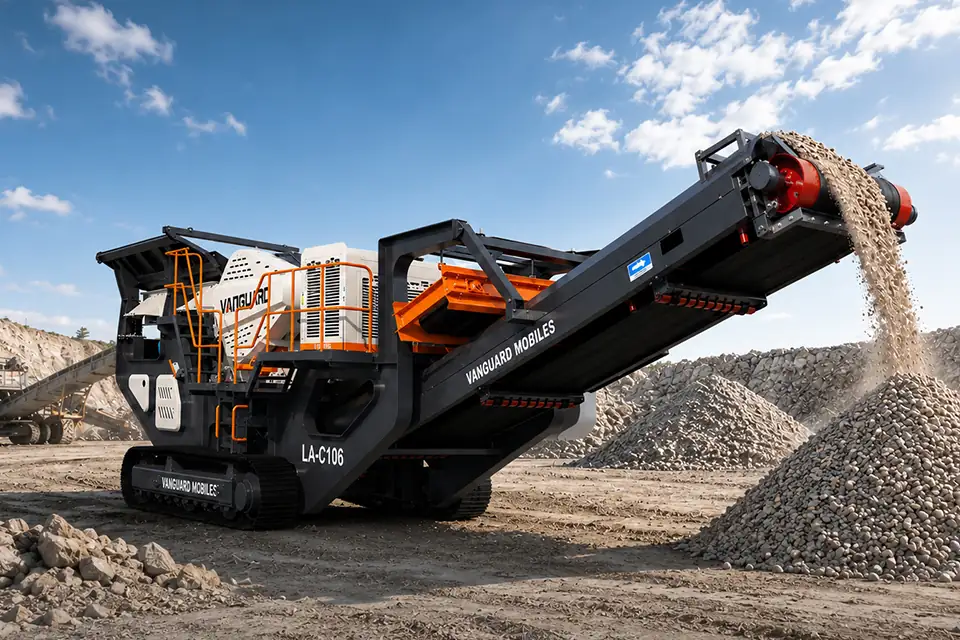
Transit and setup
A crawler plant stays stable through its wide track footprint and low centre of gravity, so it powers up on arrival and crawls straight to the feeder. A wheeled plant is different: a tractor tows it in, then the frame is levelled and secured on the pad. On soft, uncompacted ground it rocks. That makes every wheeled move hide the cost of levelling, towing and jacking — look past the sticker price.
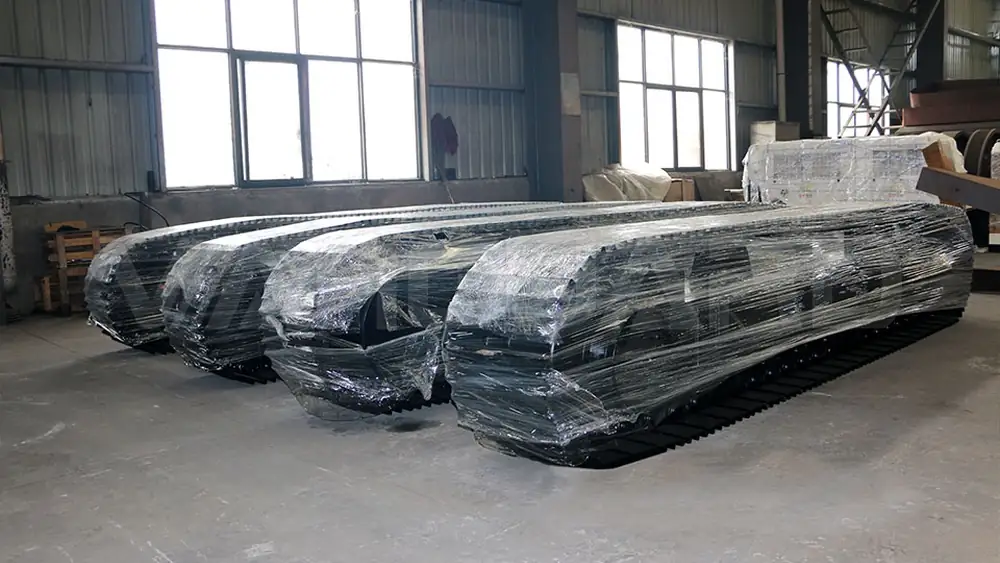
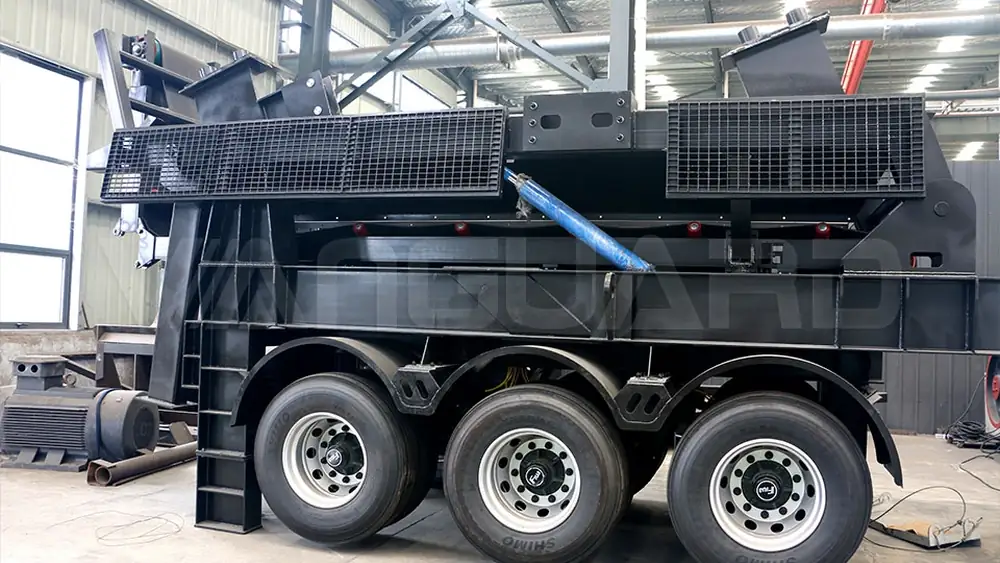
Investment and running cost
Crawler capex runs roughly thirty to fifty percent higher, but it saves the towing, crane and site-prep cost of every move and wins back schedule on fast jobs. Wheeled is cheaper to buy and burns less fuel, yet each relocation eats pad prep, towing and levelling labour. Count move frequency into the total, and that often decides the better deal more than the naked price gap. A quick test: list your moves per year and the hours each one costs. Past about twenty moves a year on rough ground, the crawler usually wins on total cost because the slow wheeled mobilisation adds up; below that, the wheeled plant wins on the lower ticket price and fuel.
Spec snapshot
| Model | Type | Feed (mm) | Capacity (t/h) | Best for |
| C96 (crawler jaw) | crawler primary | <=500 | 100-350 | hard-rock primary |
| LA cone (crawler cone) | crawler secondary | <=300 | 100-350 | hard-rock secondary |
| LA impact (crawler impact) | crawler crusher | <=500 | 100-350 | soft rock or demolition only |
| VPE (tyre jaw) | tyre primary | <=500 | 50-250 | yard primary |
| VPC (tyre cone) | tyre secondary | <=300 | 50-250 | yard secondary |
| VPV (tyre sand) | tyre sand | <=50 | 30-180 | manufactured sand |
Common selection mistakes
- Running impact on granite or basalt: high Mohs chews blow bars in days, pure money burn. - Assuming a wheeled plant drives itself: it tows, it does not self-propel. - Crushing on a wheeled plant without a levelled pad: the frame rocks, hurting product and life. - Forcing a crawler onto a single fixed yard: the extra capex never pays back over years.
Lessons From the Field
A few patterns show up on site again and again. Crawler earns its premium when the face moves more than once a week or the plant must descend into a pit: the self-powered crawl removes the crane and pad bill that quietly eats a wheeled plant's price edge. Wheeled is the smarter buy when the plant will sit in one yard most of the year beside a decent road; lower capex and simpler service beat the slower moves. On hard rock (granite, basalt, river pebble at Mohs 7 plus) run jaw plus cone only; impact belongs to soft limestone, demolition concrete and asphalt where blow bars actually last. The mistake we see most is a wheeled plant set on uncompacted fill that rocks, wrecking product shape and bearing life, so budget the pad. And do not oversize for peak hour. A plant sized for average tonnage runs loaded and sips fuel; one sized for the spike runs empty and burns it.
FAQ
The crawler plant Self-propelled on tracks, it crawls in on its own with no trailer.
Wheeled: lower capex and less fuel, overall cheaper. Crawler costs more to buy and saves on moves.
Yes. Its wide track and low centre keep it steadier on slopes and mud than a wheeled unit.
Jaw for primary plus cone for secondary, never impact. Impact is for soft rock or demolition only.
Crawler often needs wider haul-road clearance and sometimes an oversize-load escort when moved between sites; wheeled usually tows as a standard trailer. Check local rules before you commit.
Crawler keeps a stronger second-hand price where contractors chase pit and demolition work; wheeled holds well in aggregate-yard markets. Either way, service history matters more than chassis type.
Conclusion
Match the chassis to how often and where you move. Frequent rough-site moves or pit work favour crawler; a long stationary yard beside a road favours wheeled. Not sure? List your material, tonnage and move count, and Vanguard Machinery can run a free material analysis before you commit.




