

Quick Answer
For hard-rock gold, the secondary crusher has to survive silica. Most hard-rock gold deposits carry enough quartz that abrasiveness - not just compressive strength - drives liner wear and downtime. That is why a cone, and specifically a single-cylinder hydraulic cone (CS·CH series), tends to be the right secondary for this ore: the laminated crushing chamber handles abrasive feed without eating blow bars, the discharge setting stays put under load, and a closed circuit holds the mill feed top size where the grinding stage wants it. Soft oxide and saprolite are the exception, where impact can work.
Key Takeaways
- ✔ Quartz content, not just hardness, decides crusher wear on gold ore - that points to a cone for the secondary - ✔ A single-cylinder hydraulic cone (CS·CH) holds a steady discharge and steady size, which is what recovery actually depends on - ✔ Against multi-cylinder, spring and impact, the single-cylinder wins on simplicity, continuity and total cost on abrasive gold ore - ✔ Size by tonnage, pick the chamber (secondary vs fine) by what the ore needs - ✔ A screen on the secondary is not optional - runaway feed size is the usual cause of poor recovery
Why gold ore is hard on crushers
Free-milling gold sits as coarse, easy-to-liberate particles, so once you crush and grind, gravity or cyanide pulls it out. Refractory gold is locked in sulphides like pyrite and has to be oxidised or roasted before the gold is reachable - crushing and grinding are only pre-treatment there. Either way, the real question is the size you need to reach before the mill, and that is set by the secondary stage.
Most hard-rock gold carries a lot of quartz. In practice that means abrasiveness is the thing that kills a crusher on this ore, more than compressive strength does. Silica-rich feed turns impact blow bars into a consumable you replace weekly, while a cone's laminated chamber spreads the wear across the mantle and concave and keeps producing. We have pulled impact rotors off high-silica hard-rock gold lines inside a month because the blow-bar cost alone outran the whole cone option.
One reason impact gets specified anyway is that the quoted price looks lower. The capital cost of an impact crusher is often below a cone of similar throughput, so on a spreadsheet it wins. The wear cost only shows up after start-up, which is usually past the point where the spec can be changed without a change order.
Why the single-cylinder cone, specifically
Let me put it side by side.
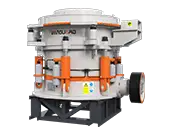
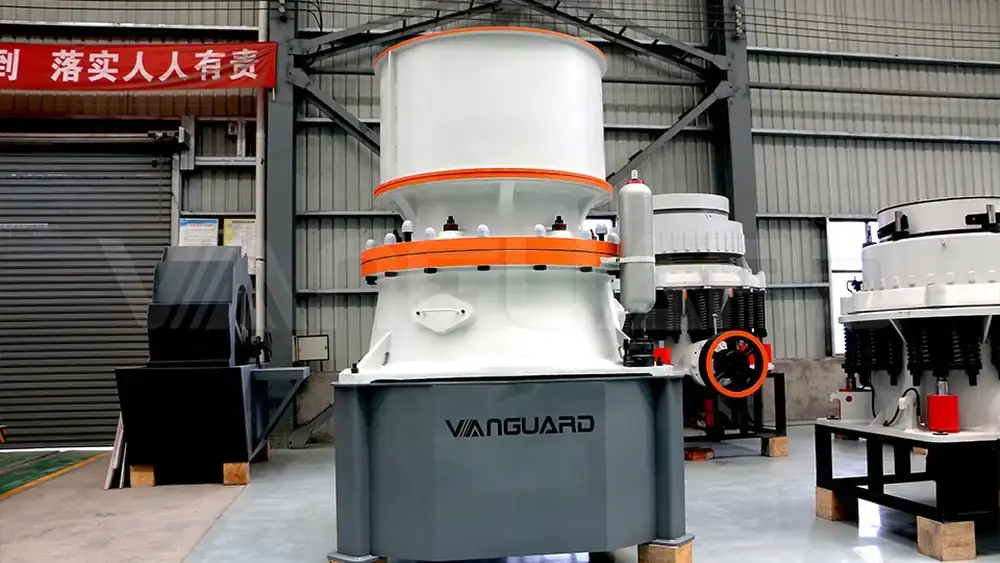
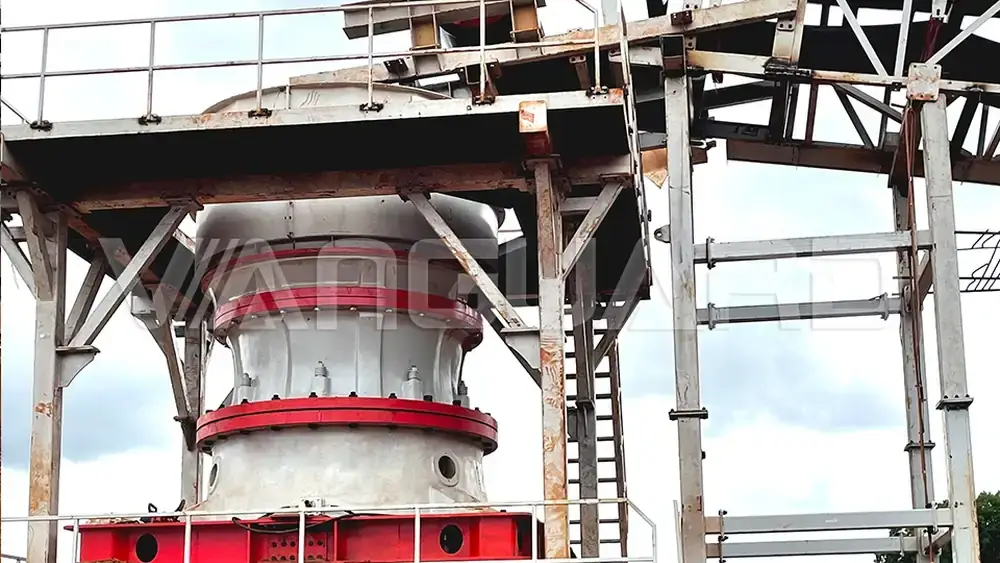
Multi-cylinder cones give you more chamber options and higher peak capacity, which matters on very hard ore or very high tonnage. The single-cylinder design (CS·CH) keeps the main shaft as one piece, so setting adjustment and tramp release are simple hydraulic functions, not a bank of cylinders to balance. For a gold project where the priority is a steady discharge and steady size, that simplicity is an advantage, not a compromise. Most gold operations do not need the extra chambers.
Spring cones are still around on older sites. They set the gap with shims and a maintained spring pack, which means a stop and manual labour every time the wear profile changes. A single-cylinder cone changes setting hydraulically in minutes and keeps running. On a gold line where continuity directly drives ounces, the spring design's downtime is hard to justify.
On abrasive quartz-vein gold this is not close. Impact blow bars wear fast and need frequent change-outs; a cone's laminated chamber simply lasts. Even where impact gives a slightly better shape, the downtime and parts cost usually erase that benefit on hard-rock gold.
| Aspect | Single-cylinder cone (CS·CH) | Multi-cylinder (CP) | Spring cone (CSV) | Impact (6FX/LF) |
| Secondary role | Main secondary on gold ore | Very hard / very high tph | Legacy, being retired | Soft oxide only |
| Setting adjust | One hydraulic function | Bank of cylinders | Shims, manual | Gap adjust |
| Continuity / care | High, simple | High but complex | Frequent stops | Blow bars wear fast |
| Wear on abrasive gold | Laminated chamber, steady shape | Good | Fair | Blow bars burn |
| Fit for gold | Holds size, protects recovery | Extreme cases only | Not advised | Red-clay/saprolite only |
What the single-cylinder cone does well
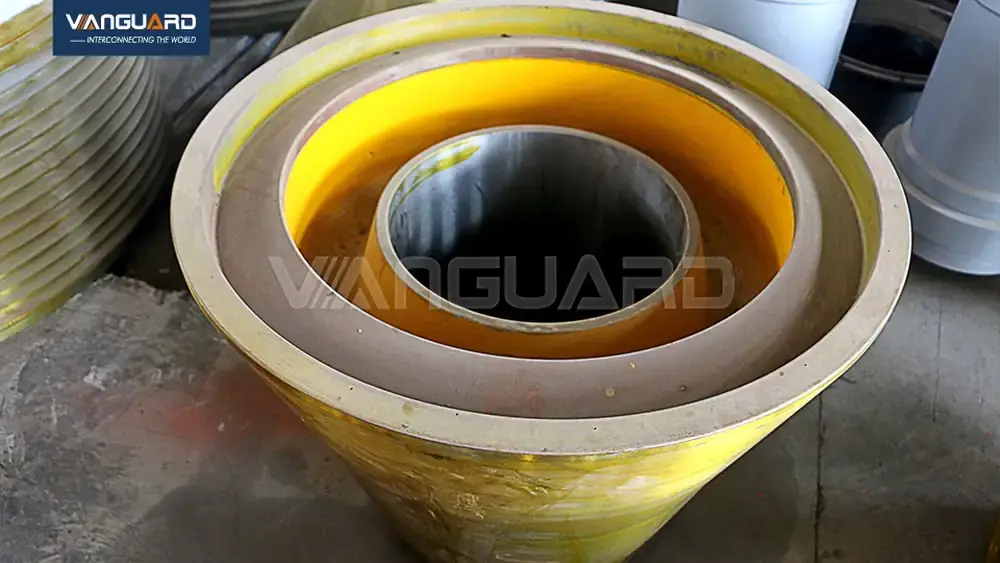
The CS·CH chamber makes the rock crush rock. Wear spreads across the mantle and concave instead of concentrating on a few blow bars, so the product stays in spec longer between changes and the shape stays regular enough for clean liberation downstream.
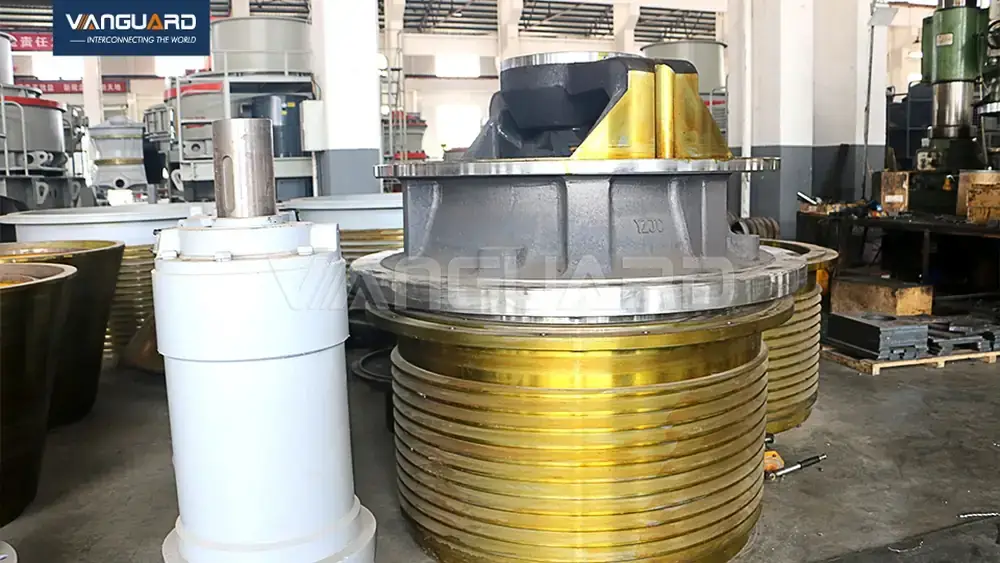
Because the main shaft is a single piece, setting adjustment and tramp protection are one hydraulic action. Chamber changes between secondary and fine take minutes, not a teardown, which is what keeps the line running instead of waiting on maintenance.
Put a screen after the secondary so oversize goes back through. The mill feed stays at the target size - heap leach often wants below 10-20 mm. Hold that and the mill stops choking on coarse lumps that should never have reached it.
Sizing the CS·CH by tonnage
| Your tonnage | Recommended CS·CH chamber / config | Note |
| Small-mid (tens of tph) | Smaller size, secondary chamber | Steady for start-up or ramp-up |
| Mid (around 100 tph) | Standard size, secondary chamber | The common gold-ore secondary |
| High (hundreds of tph) | Large size; add multi-cylinder CP only if needed | Very hard / very high tph |
Matching the cone to the gold ore
| Your gold ore | Recommended secondary | Notes |
| Hard abrasive high-silica ore | Single-cylinder cone, secondary, closed screen loop | Primary case for this crusher |
| Clay-heavy oxide | Scalp first, then single-cylinder secondary | ZSW scalping feeder; wash (XSD/LSX) if needed |
| Soft red-clay / saprolite | Impact or hammer can work | 6FX/LF, this ore only |
| Refractory (pyrite-locked) | Single-cylinder secondary before oxidation / roasting | Pre-treatment only |
Where it fits in the line
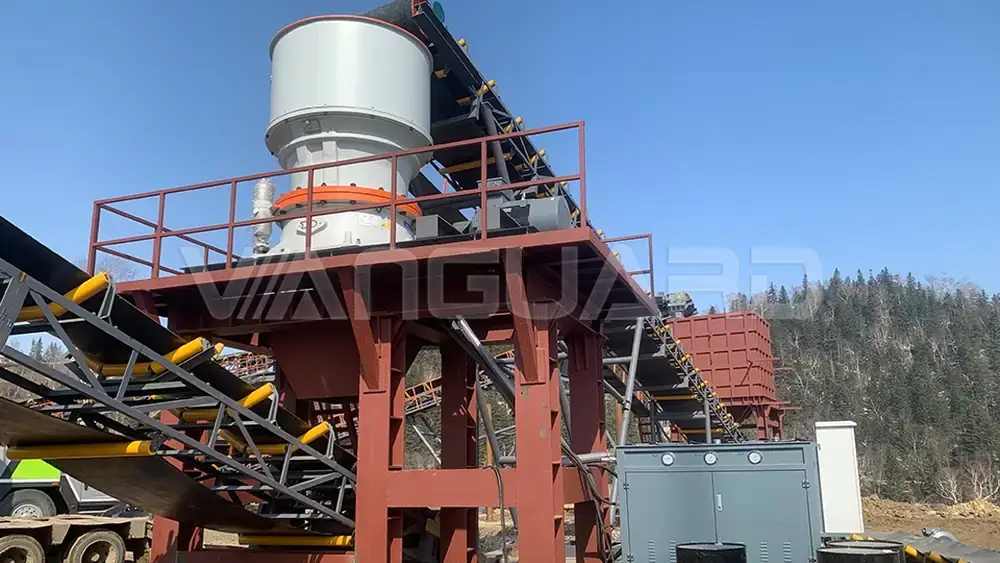
The single-cylinder cone takes the jaw crusher's output and hands a controlled discharge size to the screen.
ROM gold ore -> ZSW scalping feeder (removes clay) -> jaw crusher (primary) -> single-cylinder cone (secondary, screen holds the size) -> vibrating screen (sizing; oversize returned) -> fine crush / shaping (PXJ or VSI) -> mill (LM vertical mill / YGM high-pressure mill) -> mill-ready ore. The cone is the point where the whole line's size is set.
Feed -> scalping -> jaw primary -> single-cylinder cone secondary (screen holds the size) -> screen -> fine crush / shaping -> mill liberation -> mill-ready ore; oversize in closed circuit.
Lessons from the field
We have reviewed enough gold lines to know where they go wrong, and it is rarely the crusher type - it is the circuit around it.
On a 300 tph high-silica hard-rock gold project in Zimbabwe, the mill feed kept running over specification and the ball mill overloaded repeatedly. The secondary was a cone, but it was running open-circuit. After a closed-circuit screen was added, the mill feed held below 20 mm and throughput rose noticeably without touching the crusher.
A second job, a laterite gold site in West Africa, had been specified with an impact crusher for capital cost. In the silica-rich pockets the blow bars were gone inside three weeks. Swapping to a single-cylinder cone (CS·CH) cut the weekly parts cost and stopped the unplanned stops, even though the impact had looked cheaper on paper.
The mistake we see most often: treating the chamber as fixed. A single-cylinder cone in a fine chamber will not take the secondary feed it should, and capacity drops while wear climbs. Use the secondary chamber for the secondary duty and keep the fine chamber for what it is built for.
One honest caveat: the single-cylinder cone is not the answer to every gold problem. On a very hard ore at very high tonnage, a multi-cylinder design earns its place through capacity. And on soft oxide with no silica, impact is genuinely fine. Pushing a cone where it is not needed is its own mistake.
Selection checklist and common mistakes
1. Ore type? Quartz-vein and abrasive -> cone secondary; soft oxide -> impact can work. 2. Tonnage and continuity? Size the CS·CH by tonnage and chamber. 3. Clay content? High -> generous ZSW scalping, washing (XSD/LSX) if needed. 4. Mill feed size? Heap leach / flotation set a limit -> secondary on a screen, plus a fine-crush close. 5. Chamber match? Secondary duty uses the secondary chamber, not the fine chamber.
Mistake one: buying on impact's lower sticker. On abrasive gold the blow-bar bill overtakes the cone option fast. Mistake two: keeping a spring cone for "robustness" - the shim adjustments cost you stops. Mistake three: assuming multi-cylinder is always better - most gold projects do not need it. Mistake four: ignoring mill feed size - open-circuit secondary is the usual root cause of poor recovery.
FAQ
On hard abrasive high-silica hard-rock gold, a cone - and usually the single-cylinder CS·CH - for the secondary. Soft oxide can take impact.
Most gold projects are happier with single-cylinder (CS·CH): one-piece spindle, simple hydraulic setting, good continuity. Go multi-cylinder (CP) only for very hard ore or very high tonnage.
Night and day on service. Single-cylinder adjusts hydraulically in minutes; spring cones need shim changes and stops. For a gold line where continuity is ounces, spring is hard to justify.
Soft oxide and saprolite, yes - we have seen it run fine where silica is low. But on high-silica hard-rock gold, plan for weekly blow-bar changes. Practical tip: if your ore report shows SiO2 above roughly 60% and you are tempted by impact, run the wear-cost number before you commit; on most hard-rock gold it flips the decision.
Because open-circuit secondary is the most common reason a gold line misses its recovery target. The screen returning oversize is what keeps the mill feed in spec.
Right after the jaw, before the screen. It sets the discharge size the rest of the line depends on.
Tens of tph -> smaller size, secondary chamber. Around 100 tph -> standard size. Hundreds of tph -> large size, with multi-cylinder CP only if the ore or tonnage demands it.
Scalp hard with the ZSW feeder before the cone, and add washing (XSD/LSX) if the clay sticks. Practical tip: in our experience the clay problem shows up first as screen blinding, not crusher wear - if your screens are pegging, look at scalping before you blame the cone.
The CS·CH series, with secondary and fine chambers and a one-piece spindle with hydraulic setting. For very hard ore or very high tonnage we pair it with the multi-cylinder CP series. Tell us the ore and tonnage and we will size it.
Capacity drops and wear climbs. Secondary duty takes the secondary chamber; don't force the fine chamber to eat primary-sized feed.
Feed -> ZSW scalping -> jaw primary -> single-cylinder cone secondary (screen holds the size) -> screen -> fine crush / shaping -> mill -> mill-ready ore; oversize in closed circuit.
Fix the ore type, tonnage, clay and the mill feed size, then pick the CS·CH size and chamber. Practical tip: send us a sample for a free material analysis before you lock the spec - a one-kilo ore sample has settled more than one argument about impact vs cone on our side.
Conclusion
On hard-rock gold, the secondary crusher lives or dies by silica. A single-cylinder hydraulic cone (CS·CH) earns its place because it holds a steady discharge and a steady mill feed top size, which is what recovery actually rests on - multi-cylinder only where tonnage or hardness demands it, spring on its way out, impact reserved for soft oxide. Get the closed circuit right, scalp the clay, and match the chamber to the duty. If you are specifying a cone for a gold project, Vanguard Machinery's CS·CH series is sized and chambered to your ore and tonnage - contact us for a free material analysis and a tailored proposal.
- Prev: No more
- Next:No more




