

Quick Answer
Dolomite is calcium-magnesium carbonate (CaMg(CO3)2), a touch harder than limestone at Mohs 3.5–4. A practical plant runs jaw crush → impact medium crush → de-iron → grinding, with the mill picked by end use. YGM high-pressure mill covers 80–325 mesh for agricultural and base filler stock; LM vertical mill handles high-tonnage glass and ceramic feed; HGM micro-powder mill reaches 325–2500 mesh for feed-grade and coating powder. Because dolomite feeds glass and refractory lines, iron control is the make-or-break step — pre-magnet and line the mill with ceramic or high-manganese.
Key Takeaways
- ✔ Dolomite is not limestone — the magnesium is what drives refractory, glass and farm uses, not just filler - ✔ Jaw + impact is the cost-effective pair for mid-hard dolomite; cone only when you need shaped aggregate - ✔ Iron control decides glass / refractory grades — pre-magnet and use low-iron liners - ✔ Match mill to fineness and tonnage: YGM for mid filler, LM for big glass / ceramic volume, HGM for ultra-fine feed / coating - ✔ Plan the plant around graded use: aggregate, powder, and downstream calcining
What dolomite is, and why it runs differently from limestone
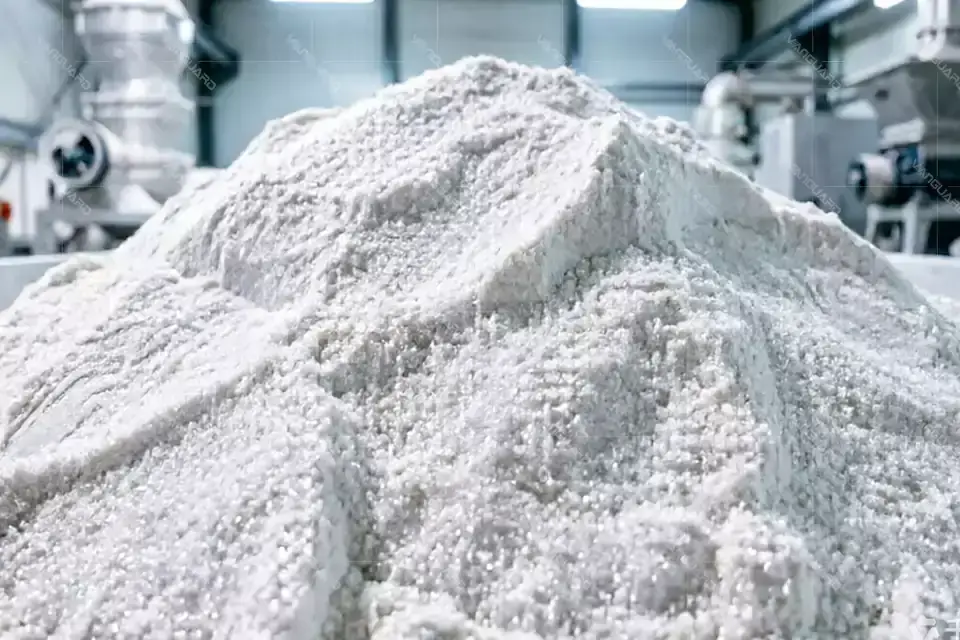
Dolomite is calcium-magnesium carbonate. That extra magnesium is the whole story: it is what makes the stone useful for refractory brick, glass batches and agricultural lime, not just as a cheap filler. It is a touch harder than limestone (Mohs 3.5–4) and a bit more abrasive, so liner choice and iron control matter more than people expect.
Treat it as limestone and you miss the magnesium premium — glass plants pay for low-iron dolomite, farms pay for the magnesium in ag-lime.
Refractory grade goes to dead-burned dolomite (downstream calcining, outside our scope but it sets the purity bar); glass grade needs very low iron; farm grade needs the Ca/Mg ratio right and a steady fine cut.
How a dolomite line is laid out
Two crushing passes, then grinding, with iron control built in.
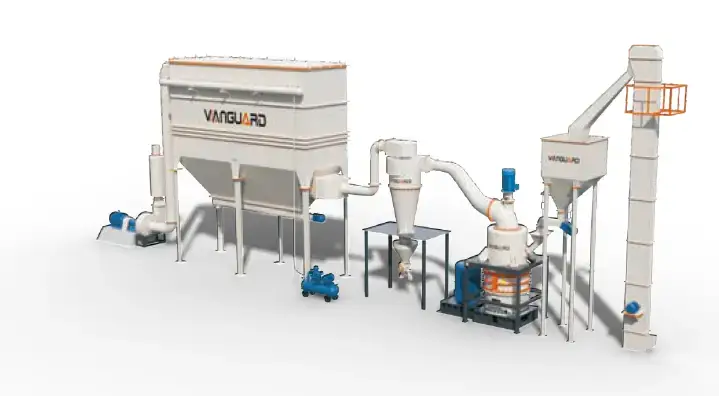
Run-of-mine dolomite → jaw (6CX/PE) → impact (PF/PFV) → de-ironing → mill (YGM/LM/HGM) → classifier → qualified powder → use-specific bin.
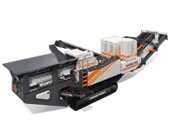
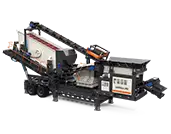
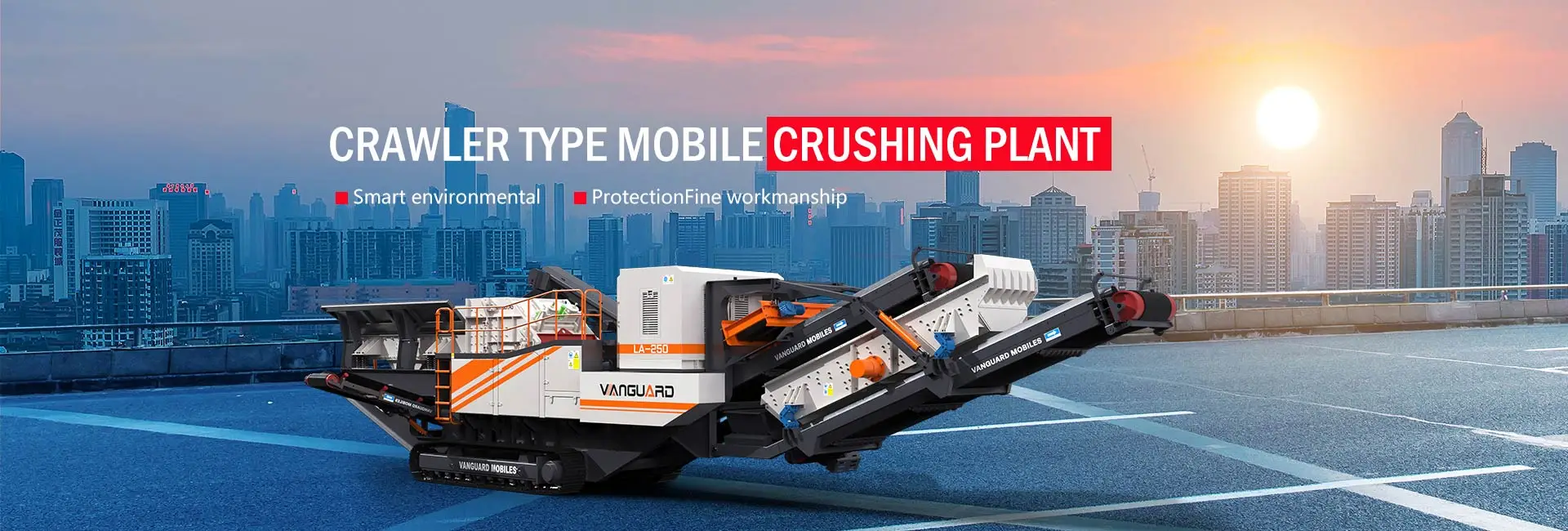
Most dolomite plants are fixed crushing lines. Where the quarry moves, a tyre-type mobile plant (VPE + VPF) crushes on site and cuts haul cost.
The crushing section
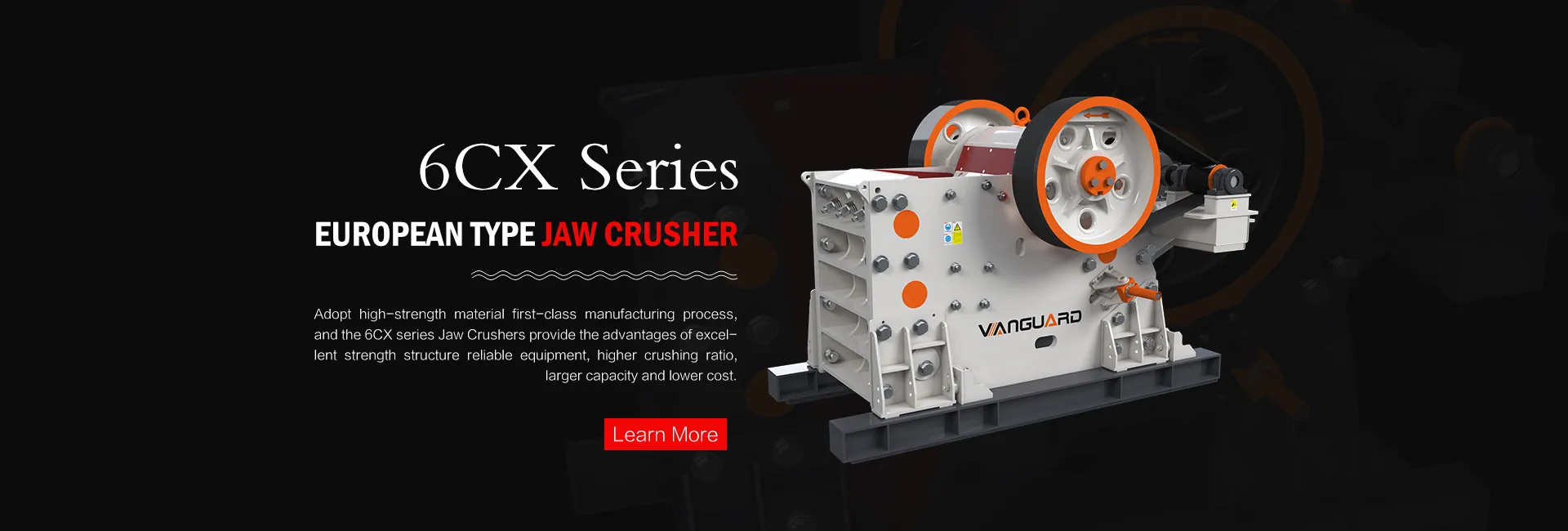
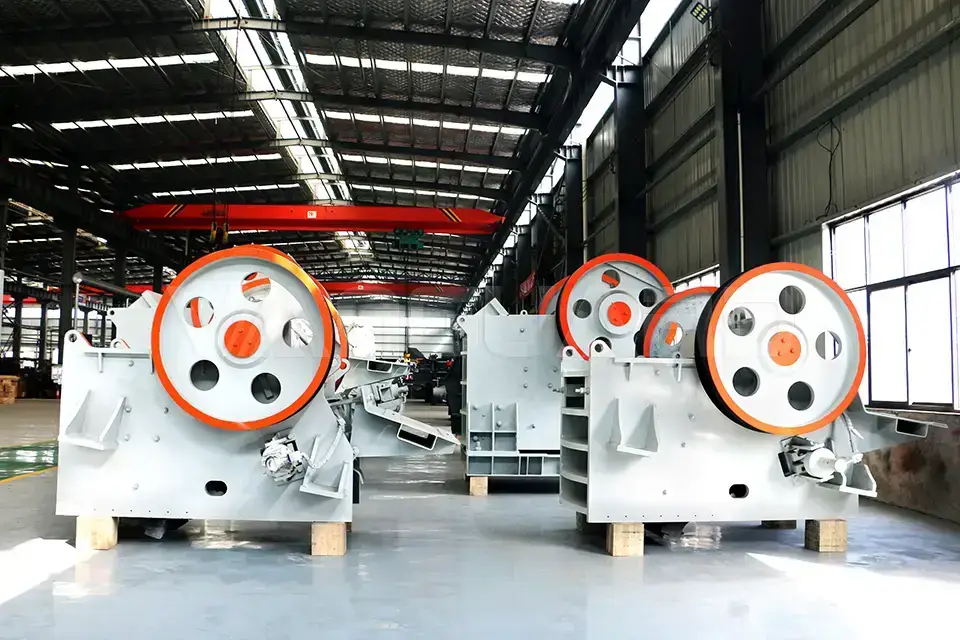
A jaw (6CX/PE) takes pit-run boulders down to a top size the rest of the line can swallow — the cheapest, most forgiving first stage. For mid-hard dolomite the second choice is impact or cone.
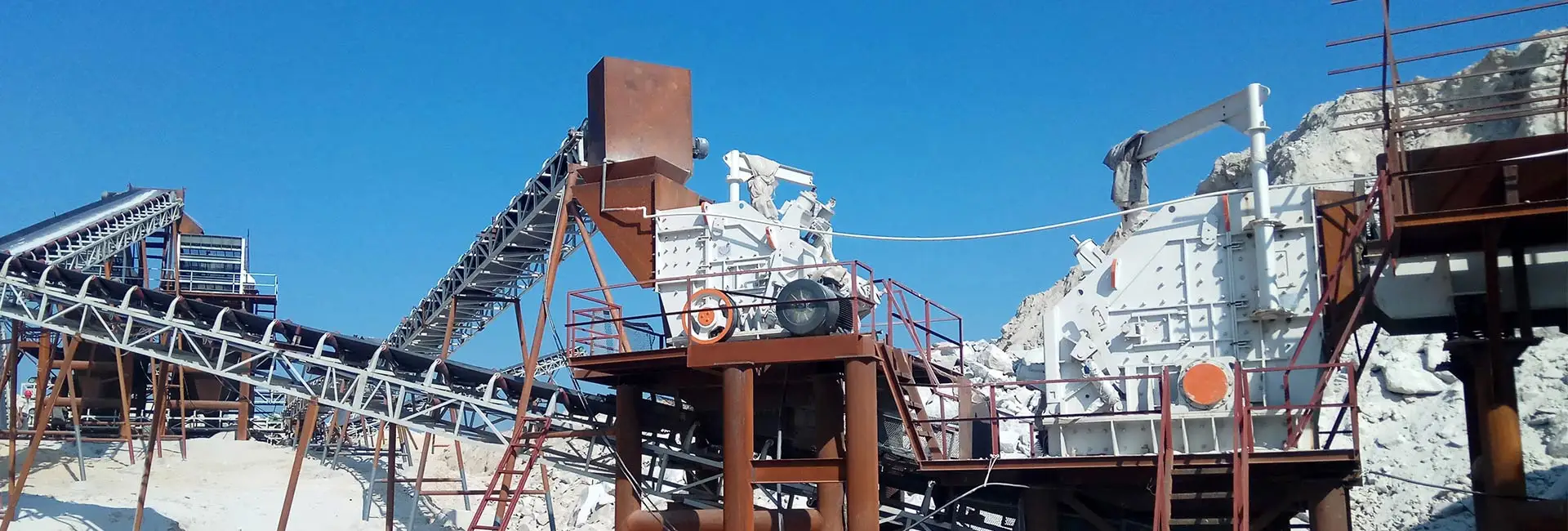
An impact (PF/PFV) gives cubic stock and a clean cut at low power — ideal when most of the rock is heading to the mill or to construction aggregate.
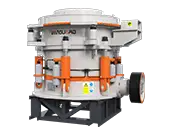
If a sized aggregate spec dominates, a cone (CP/CS) holds the grading tighter and wears slower on abrasive rock, at higher cost and power.
Hammer mills over-grind dolomite and load the mill with fines; impact keeps the distribution where you want it.
| Aspect | Impact PF/PFV | Cone CP/CS |
| Shape | cubic, clean cut | tighter grading |
| Power | lower | higher |
| Best for | crush-to-mill / aggregate | tight-spec aggregate / abrasive rock |
| Cost | lower | higher |
Before grinding: de-iron and watch moisture
Dolomite going to glass or refractory is judged on iron.
A few tenths of a percent of Fe2O3 can drop glass-grade dolomite to filler grade. Suspend a magnet over the belt and run a drum magnet before the mill.
Line the mill with ceramic or high-manganese wear parts so the grinding media does not add iron to the product. Glass and refractory buyers check this.
Dolomite is cleaner than gangue but still benefits from drying below ~6–8% before fine grinding; damp feed balls up in the mill.
| Stage | Equipment | Role |
| Coarse crush | Jaw 6CX/PE | lump to manageable size |
| Medium crush | Impact PF/PFV or cone CP/CS | shape and size |
| Clean | Suspension + drum magnet | drop iron before mill |
| Dry (optional) | Rotary / flash dryer | below ~6–8% moisture |
| Grind | YGM / LM / HGM | to target fineness |
| Classify | Separator | cut to spec |
Pick the mill by what the powder is for
The end use sets the fineness, and fineness sets the mill.
| Target fineness | Typical use | Mill |
| 80–325 mesh | agricultural lime, base filler | YGM high-pressure mill |
| 80–400 mesh | glass & ceramic raw feed, high tonnage | LM vertical mill |
| 325–2500 mesh | feed-grade, coating, ultra-fine filler | HGM micro-powder mill |
Three mills matched to fineness
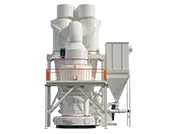
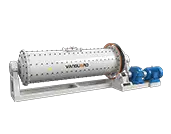
The YGM high-pressure mill is the workhorse for 80–325 mesh stock — ag-lime with the right Ca/Mg, and general filler. Lower investment, easy upkeep, the right call for mid-scale plants.
When the offtake is a glass or ceramic plant, volume is high and iron must stay low. The LM vertical mill grinds and dries in one pass, and its ceramic liner option keeps Fe2O3 down.
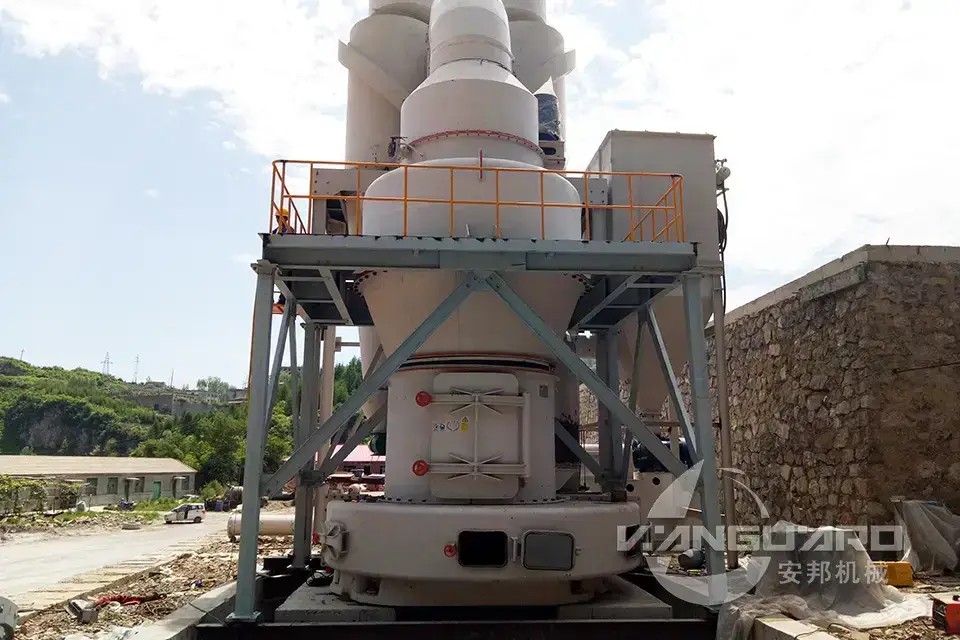
For 325–2500 mesh — feed-grade dolomite, paint extender, high-end filler — the HGM micro-powder mill with its classifier holds a tight ultra-fine cut.
Graded use of dolomite: three outlets
Plan the plant so one quarry feeds three markets.
Off-spec and coarse fractions go to road base and construction aggregate after the cone stage.
The mill stream splits to ag-lime, glass / ceramic feed, and ultra-fine filler by fineness.
The purest, lowest-iron fraction is the feedstock for dead-burned dolomite (refractory) and dolomitic lime — calcining is a customer step, but it sets our purity bar.
Common pitfalls: iron stain, over-grinding, damp clogging
Three things sink a dolomite line.
Skip the magnet and the powder picks up iron from worn liners — glass buyers reject it. Magnets first, ceramic liners second.
Hammer the rock and you load the mill with slimes; impact + classifier keeps the cut tight and the mill fed with the right size.
Feed above ~6–8% moisture and the mill balls up. Dry or pre-dry for the fine fractions.
How we size a line
What decides a dolomite plant, from lines we have equipped.
Glass grade lives or dies on iron. Crews spec the crusher and forget the liner; a steel liner bleeds iron into low-iron dolomite and the glass plant sends it back. Ceramic-lined mill + pre-magnet, and the same stone clears spec.
Impact earns its place. On mid-hard dolomite a cone costs more and over-compacts; an impact stage gives the cubic stock the mill and the aggregate spec both want, at lower power.
Don't chase one mesh. Plants that fix a single fineness leave money on the table; split the stream by grade and the quarry feeds three markets from one line.
Selection checklist and mistakes
1. End use? → ag-lime 80–325 mesh; glass / ceramic 80–400 mesh; ultra-fine 325–2500 mesh. 2. Daily volume? → mid YGM, high LM, ultra-fine HGM. 3. Iron spec? → glass / refractory needs pre-magnet + ceramic liner. 4. Moisture? → pre-dry below ~6–8% for fine grind. 5. Mobile or fixed? → fixed line; mobile (VPE+VPF) if quarry moves.
Mistake one: treat it as limestone — miss the magnesium premium. Mistake two: steel liner for glass grade — iron contamination, rejects. Mistake three: one fixed mesh — leave grade-split margin on the table.
FAQ
Refractory (dead-burned dolomite), glass batches, ceramic raw feed, agricultural lime (Ca/Mg), and filler. The magnesium is the value driver.
Same mill families (YGM/LM/HGM) work, but dolomite needs stricter iron control for glass / refractory grade, and runs a touch harder.
Yes. Cone (CP/CS) when you need tight aggregate grading or face abrasive rock; impact (PF/PFV) is cheaper for general crush-to-mill.
Glass and refractory grades are judged on Fe2O3; a few tenths of a percent drops the grade. Pre-magnet and use ceramic / high-manganese liners.
YGM high-pressure mill for 80–325 mesh ag-lime — right Ca/Mg cut, lower cost.
Usually 80–400 mesh feed, with Fe2O3 held low; LM vertical mill with ceramic liner is the common choice.
Keep it below about 6–8% for fine grinding; dry or pre-dry the fine fractions.
YGM for mid-scale filler / ag-lime; LM for high-tonnage glass / ceramic feed with built-in drying.
Yes — a tyre-type mobile plant (VPE + VPF) works where the quarry moves; most plants are fixed lines.
Use impact (not hammer) for the second crush and let the classifier set the cut; don't feed the mill fines it should make.
Purity and low iron matter most; the lowest-iron fraction is the calcining feedstock. We set the bar at the mill and magnet stage.
After two crush passes top size is typically <20>
Fix end use and target mesh, daily volume, iron spec and moisture — then pick jaw + impact / cone, magnets, dryer and the mill.
Jaw 6CX/PE, impact PF/PFV, cone CP/CS, YGM/LM/HGM mills, plus tyre-type mobile plant VPE+VPF for moving quarries.
Conclusion
A dolomite plant is not a limestone plant with a different name — the magnesium is what earns the premium in refractory, glass and farm markets, and iron control is what protects it. Jaw + impact for the crush, pre-magnet and ceramic liners for the grade, YGM / LM / HGM matched to fineness, and you feed three markets from one quarry. Need a tailored flowsheet? Contact Vanguard Machinery for free material analysis and selection.
- Prev: No more
- Next:No more




