





Quick Answer
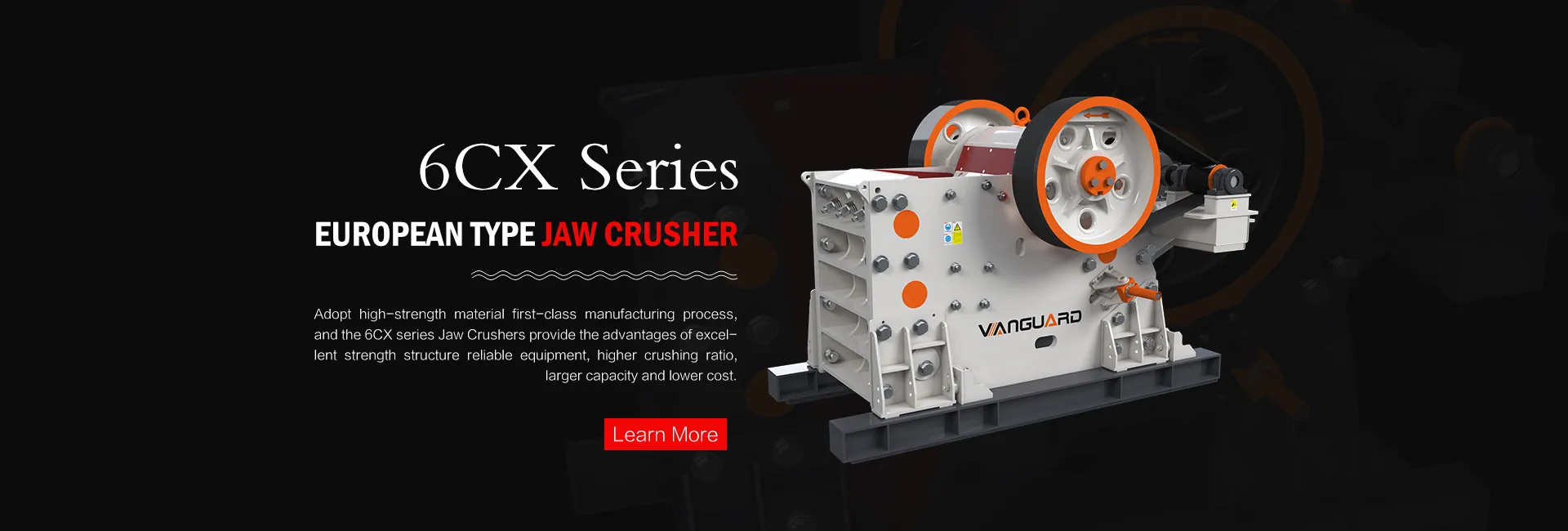
Calcium carbonate is soft (Mohs ~3), so wear is not the issue — the real question is how fine you need it and how accurately you can classify it. Rule of thumb: 80–325 mesh filler, go YGM high-pressure suspension mill; 200–400 mesh at volume, go LM vertical roller mill; 325–2500 mesh superfine, go HGM three-ring micro powder mill; above 1250 mesh ultrafine, LUM ultrafine vertical mill saves more power. Pre-crush lumps below 20 mm with a jaw crusher (6CX/PE), dry-grind and let the classifier set the cut, and for plastic grade add surface coating. Vanguard Machinery covers all four. Need a layout? Contact Vanguard Machinery for a free material analysis and tailored selection.
Key Takeaways
- ✔ With calcium carbonate, fineness — not hardness — decides the mill type - ✔ 80–325 mesh: YGM; high-volume 200–400 mesh: LM; superfine 325–2500 mesh: HGM; top ultrafine: LUM - ✔ Pre-crush below 20 mm with a jaw crusher, dry-grind, and let the classifier set the cut - ✔ Plastic-grade GCC needs surface coating (stearic acid/coupling agent) for compatibility - ✔ This covers ground calcium carbonate (GCC); precipitated (PCC) is a different, chemical process
Fineness Decides Where the Powder Goes
Grinding calcium carbonate is not like crushing ore for a mill or flotation feed — here the powder is the product. The mesh count decides who buys it.
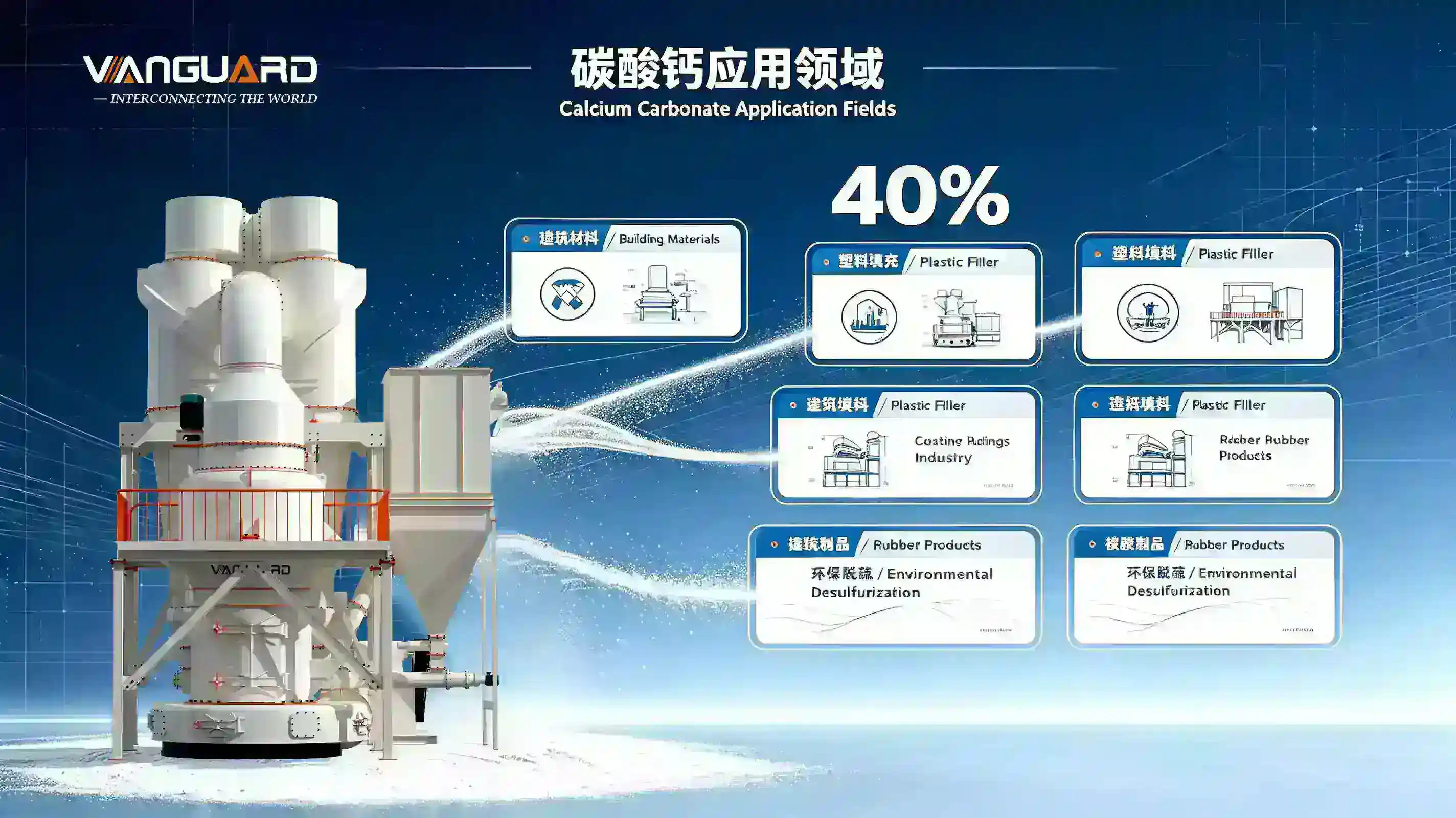
Base stock for PVC pipe, rubber, ordinary paint, paper. High volume, not fussy on fineness — a YGM high-pressure mill supplies it steadily.
Premium paint, sealant, cultured stone. Needs tighter size distribution and stable whiteness; a vertical or three-ring mill both fit.
Engineering plastics and high-end coatings care about dispersion and reinforcement. This is the home of the HGM three-ring mill, with LUM taking the top end more efficiently.
Mohs 3 means the rollers and rings wear slowly. What separates good lines from bad is how precisely the classifier picks out on-spec powder — miss it and you get too coarse or too fine, and whiteness and flow both drop.
The Four Main Mill Types
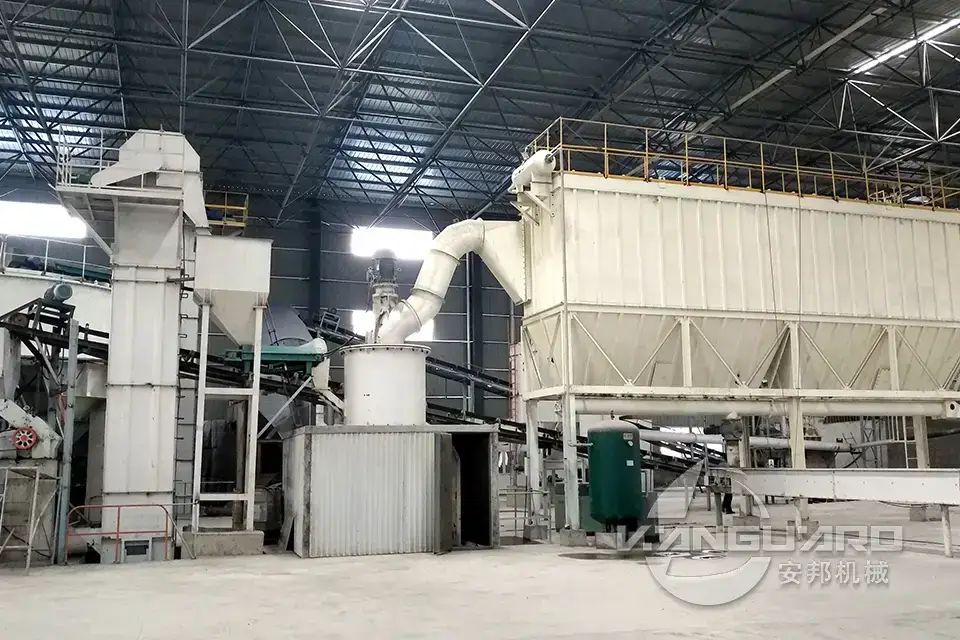
Vanguard Machinery covers the full line from coarse to ultrafine; match the mill to the mesh.
A classic suspended-roller design, low investment, easy maintenance — the first choice for small-to-mid volume basic filler.
Integrates grinding, drying and classifying; low power use, big single-line capacity — built for scale GCC filler plants.
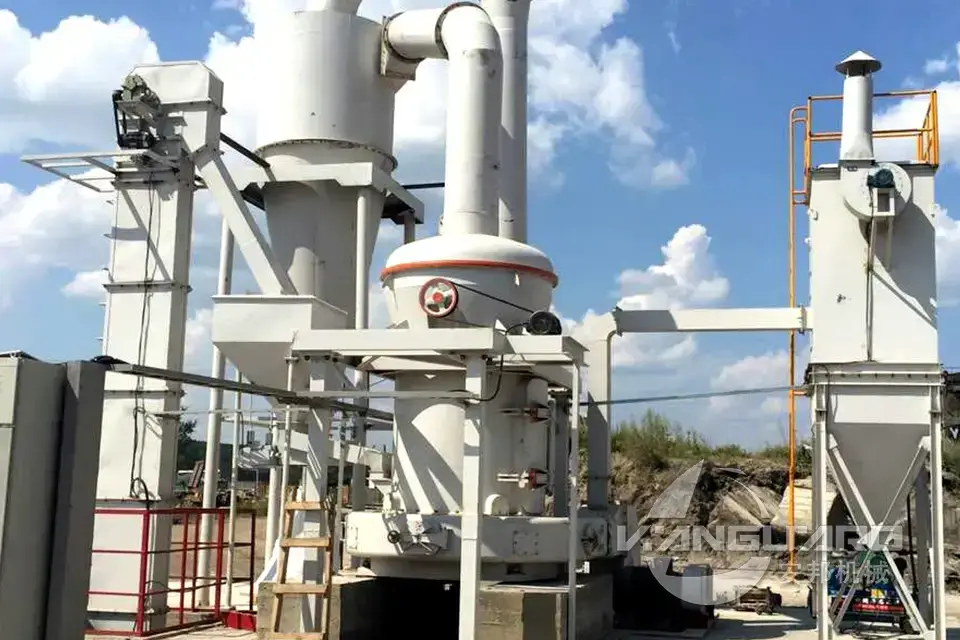
Medium-speed three-ring grinding with multi-stage classification, made for superfine powder in plastic and coating grades.
Takes the vertical mill and pushes ultrafine classification through; above 1250 mesh it is more power-efficient and finer — the tool for top-end ultrafine.
| Mill | Fineness | Capacity trait | Use case |
| YGM high-pressure suspension | 80–325 mesh | low cost, easy care | basic filler, small-mid volume |
| LM vertical roller | 200–400 mesh | high volume, low power, grind-dry-classify | scale GCC filler |
| HGM three-ring micro | 325–2500 mesh | medium speed, fine cut | superfine, plastic/coating |
| LUM ultrafine vertical | 400–2500 mesh | efficient ultrafine, lower energy | top-end ultrafine |
How to Pick by Fineness
Lock the target mesh and the mill is basically set.
| Target fineness | Recommended mill | Note |
| 80–325 mesh | YGM | best-value basic filler |
| 200–400 mesh (volume) | LM | scale GCC, saves power |
| 325–1250 mesh | HGM | mainstream superfine |
| 1250–2500 mesh | HGM / LUM | top ultrafine, LUM saves more |
| >2500 mesh | LUM | top ultrafine, steadier cut |
Process Points for Calcium Carbonate
Choosing the mill is only step one; GCC has gates ore crushing never sees.
Run lump limestone/marble through a jaw crusher (6CX/PE) down to under 20 mm before the mill — protects the mill and lifts output.
Most GCC is dry-ground. The classifier blows on-spec powder up and returns coarse to re-grind; its precision sets whiteness, flow and customer acceptance.
GCC for engineering plastics must be surface-coated with stearic acid or coupling agent (coating mill), or it will not mix with resin and will agglomerate. A step no crushing line has.
GCC is physically ground limestone/marble; PCC is chemically precipitated, its fineness set by reaction, not a mill. This article covers the GCC grinding line.
Typical Vanguard Machinery GCC Mill Models
Match the series to fineness and volume.
| Series | Type | Role in GCC line |
| YGM | high-pressure grinding mill | coarse 80–325 mesh |
| LM | vertical roller mill | scale 200–400 mesh |
| HGM | three-ring micro powder | superfine 325–2500 mesh |
| LUM | ultrafine vertical mill | top ultrafine 400–2500 mesh |
| 6CX / PE | jaw crusher | pre-crush below 20 mm |
Typical Process Flow
Dry GCC line and coated ultrafine line differ.
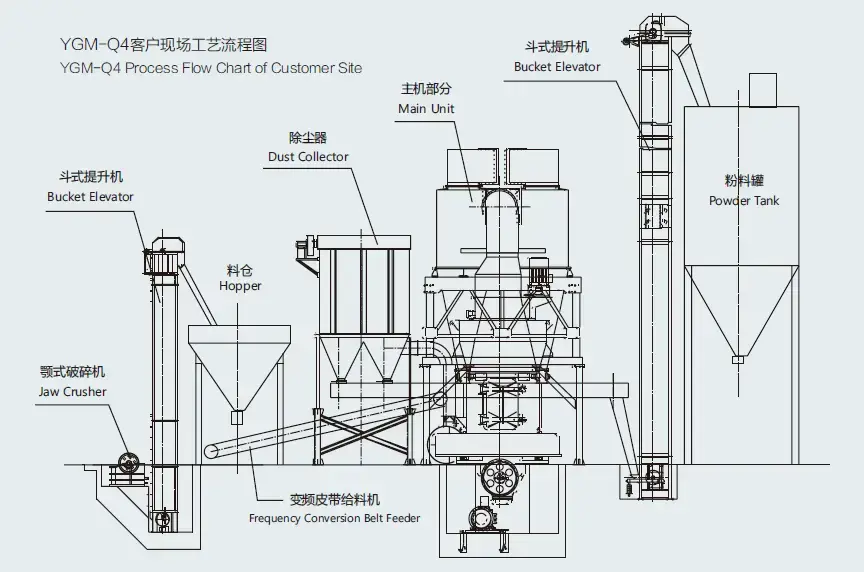
Raw ore → jaw crusher (6CX/PE, below 20 mm) → elevator → storage bin → feeder → grinding mill (YGM/LM/HGM/LUM) → classifier → on-spec powder (cyclone) → pulse dust collection → collecting silo → packing.
Raw ore → jaw crusher → grinding mill (HGM/LUM) → classifier → on-spec ultrafine → coating mill (stearic acid) → collecting → packing. Coating comes after grinding; the finer the powder, the more even the coating must be.
Field Experience
What really makes a good GCC line, from the plants we have supported.
Set fineness first, mill second. Many customers ask “which mill is best” before fixing target mesh and volume — change the mesh and the model can jump from YGM to LUM. Get the order wrong and you rework everything.
The classifier is the lifeline. We have seen the same mill with a poorly tuned classifier ship powder that swings coarse to fine, whiteness drifts, and the customer rejects it; lock the cut and airflow and the product steadies at once.
Do not skip coating. Plastic-grade GCC without surface coating agglomerates in the extruder and loses strength. Matching the coater to the mill is a pit we have helped customers out of.
Selection Checklist and Mistakes
A five-minute checklist.
1. Target mesh? → 80–325 YGM; 200–400 LM; 325–2500 HGM; top ultrafine LUM. 2. What volume? → big volume LM, small-mid YGM/HGM. 3. Dry or wet? → GCC is mostly dry; slurry only if the customer needs it. 4. Plastic grade? → add a coating mill. 5. Feed size? → pre-crush below 20 mm with a jaw crusher (6CX/PE).
Mistake one: buy a mill before fixing mesh — wrong model, full rework. Mistake two: watch the host, ignore the classifier — fineness drifts, whiteness drops. Mistake three: skip coating for plastic grade — powder won't mix with resin, strength fails.
FAQ
No “best”, only “right”. Fix mesh first: 80–325 YGM, volume 200–400 LM, superfine 325–2500 HGM, top ultrafine LUM.
200–325 YGM; 800 HGM; 1250 HGM or LUM (LUM saves more); coarse volume LM.
Value and small-mid volume, mid-coarse powder → YGM. Single-line high volume, scale GCC filler → LM.
Both work. HGM covers 325–2500; LUM is more power-efficient and finer above 1250 mesh — pick LUM for the top end.
Yes. Run lump limestone/marble through a jaw crusher (6CX/PE) below 20 mm to protect the mill and raise output.
Most GCC is dry-ground to powder; wet is only when the customer wants slurry (e.g. paper stock). This guide is dry-first.
Stearic acid/coupling coating makes the powder compatible with resin and stops agglomeration, so engineering plastics keep strength and appearance; without it, strength fails.
No. GCC is physically ground (the line here); PCC is chemically precipitated, fineness set by reaction, not a mill.
Same mill makes less as mesh gets finer. Want fine and volume → go bigger or use an efficient ultrafine like LUM.
Both are GCC, both Mohs ~3, same process. Marble usually grades whiter, better for premium filler.
It sets the cut size of on-spec powder — accurate cut means steady whiteness, good flow, passed inspection; a drifting cut means rejects.
First target mesh and annual volume, then dry/wet and coating, then the model (YGM/LM/HGM/LUM).
Conclusion
In calcium carbonate grinding, hardness is not the gate — mesh is the conductor. Basic filler goes YGM, scale filler LM, superfine HGM, top ultrafine LUM; pre-crush with a jaw, dry-grind with the classifier setting the cut, and coat for plastic grade. This logic holds on GCC lines again and again. Need a tailored layout? Contact Vanguard Machinery for a free material analysis and selection.
- Prev: No more
- Next:No more




