

1. Why Basalt Demands Special Crusher Selection
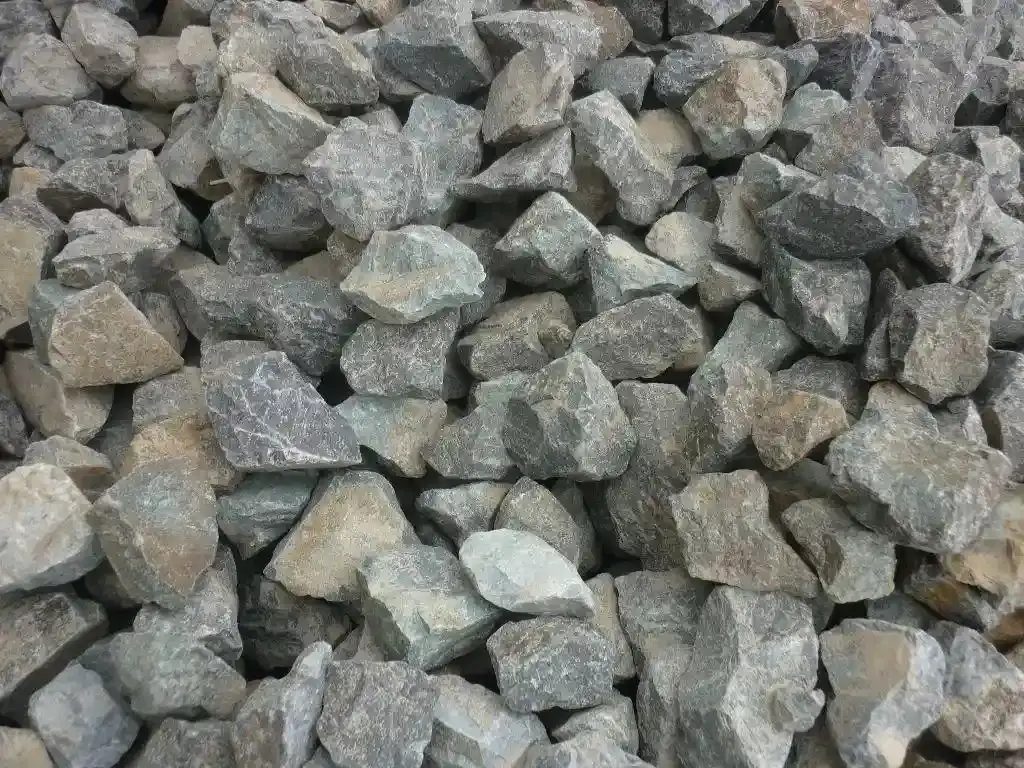
Basalt is a dense volcanic extrusive rock with a Mohs hardness of 5 to 7, compressive strength reaching 100 to 300 MPa, and SiO2 content typically between 45% and 52%. The combination of high hardness, high abrasiveness, and high toughness makes basalt one of the most challenging materials to crush in the aggregate industry. Choosing the wrong crusher leads to rapidly consumed wear parts, frequent downtime for component replacement, and operating costs that can quickly erode project profitability.
Unlike softer rocks such as limestone, basalt exerts severe abrasive action on metal components during crushing. A standard impact crusher processing basalt may see blow bar life shrink to one-fifth or even one-tenth of what it achieves on limestone, sending per-tonne wear costs soaring. For this reason, basalt crushing circuits should be built around compression crushing and rock-on-rock impact crushing, minimizing direct metal-to-rock contact wherever possible.
Key Physical Properties of Basalt
| Property | Typical Range | Impact on Crushing |
| Mohs Hardness | 5-7 | Requires compression-type crushers |
| Compressive Strength | 100-300 MPa | Discharge setting must be adjusted accordingly |
| Abrasiveness Index (Ai) | 0.8-1.5 | High wear part consumption |
| Density | 2.8-3.0 t/m3 | Heavy equipment loading |
| SiO2 Content | 45%-52% | Highly abrasive to metal |
| Toughness | High | Resists cleavage fracture |
Best Primary Crusher for Basalt: Jaw Crusher
Jaw crushers operate on a pure compression principle. The movable jaw and fixed jaw exert enormous pressure on the rock, causing it to fracture. This principle does not rely on high-speed impact, and the contact area between metal components and rock is small with limited sliding distance. As a result, jaw crushers achieve far longer wear part life than impact-type machines when processing hard basalt.
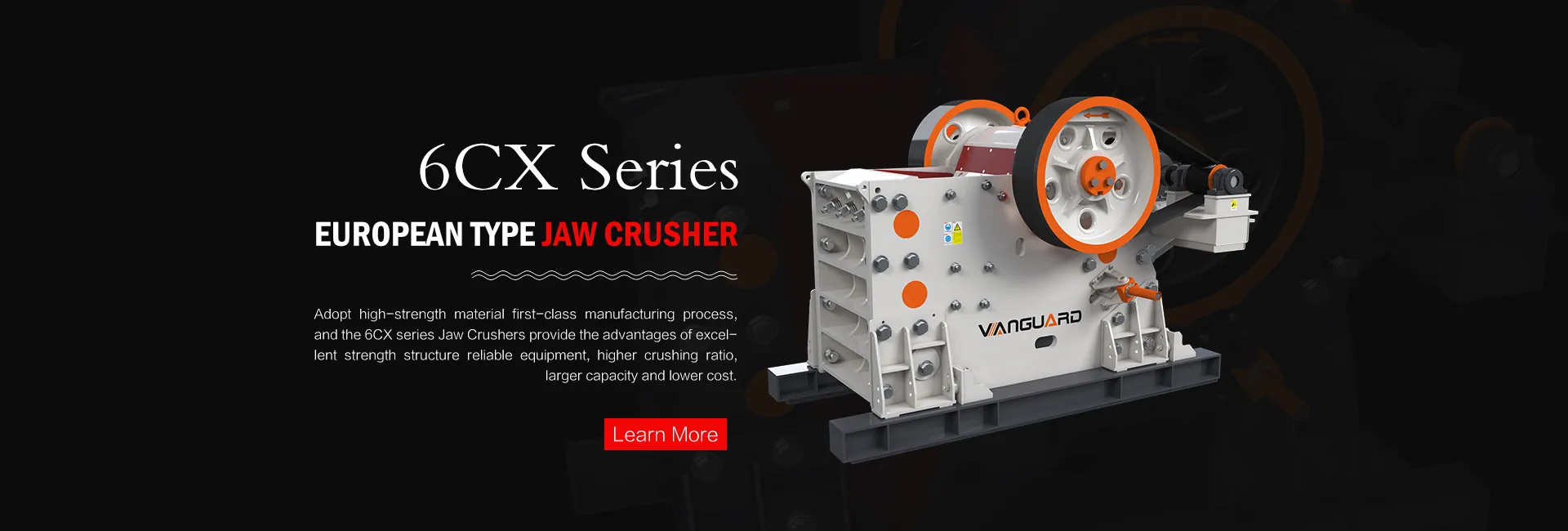
6CX Series Jaw CrusherThe 6CX Series is Vanguard Machinery's premium jaw crusher, optimized for hard rock applications. It features a deep crushing chamber with an extended effective stroke and a maximum feed size of 1,100 mm. The welded frame is reinforced through finite element analysis, providing high rigidity and resistance to deformation under continuous basalt processing. The jaw plates are made of high-manganese steel and undergo water toughening treatment. Under the high-impact loads of basalt crushing, the surface work-hardens progressively, increasing from approximately 220 HB to over 450 HB and forming a self-adapting wear-resistant layer.
PE/PEX Series Jaw CrusherThe PE Series offers a more cost-effective option for small to medium-sized basalt projects. The PEX Series fine jaw crusher is commonly deployed in the secondary stage, reducing basalt below 150 mm to under 40 mm and providing suitable feed for downstream cone crushers. For basalt plants with capacities under 200 tonnes per hour, a PE primary plus PEX secondary configuration delivers excellent economic value.
Best Secondary Crusher for Basalt: Cone Crusher
Cone crushers share the compression principle with jaw crushers, but their inter-particle layer compression is significantly more efficient. Material trapped between the mantle and concave is compressed by multiple layers of particles, delivering a high reduction ratio and producing aggregate shapes closer to cubical. For hard basalt, cone crusher wear parts typically last three to five times longer than those of impact crushers.
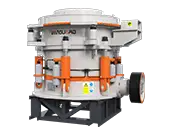
CP Series Multi-Cylinder Hydraulic Cone CrusherThe CP Series multi-cylinder hydraulic cone crusher is the workhorse of basalt secondary and tertiary crushing. Its mantle and concave liners are available in different material formulations, including high-manganese steel and high-chromium cast iron, matched to basalt's specific abrasion characteristics. The multi-cylinder hydraulic system provides tramp iron release and automatic cavity clearing: when an uncrushable object enters the chamber, the hydraulic cylinders automatically lower the mantle to discharge the obstruction, then reset to the original setting. The layer-compression chamber design ensures that material forms a dense bed inside the crushing cavity, with particles crushing against each other and reducing direct metal-to-rock contact.
CS/CH Series Single-Cylinder Hydraulic Cone CrusherThe CS/CH Series single-cylinder hydraulic cone crusher also performs well on basalt. Its compact design integrates discharge adjustment, tramp iron protection, and cavity clearing into a single hydraulic cylinder. The CS model is suited for secondary crushing, while the CH model handles tertiary applications. When processing basalt, Vanguard Machinery recommends selecting the medium or hard-rock cavity profile and reducing the speed slightly to minimize liner wear.
Best Tertiary Crusher for Basalt: VSI Crusher
When basalt needs to be processed into manufactured sand or high-quality shaped aggregate, the 5X Series vertical shaft impact (VSI) crusher is the optimal choice. The 5X Series operates on the rock-on-rock principle: material is accelerated by a high-speed rotor and flung against a self-formed material lining inside the crushing chamber, where particles collide with each other at high velocity. Metal components play almost no role in the actual crushing, making wear part consumption extremely low, an ideal characteristic for abrasive basalt.
Basalt sand produced by the 5X Series features excellent particle shape, with a flakiness index below 5% and a cubical ratio exceeding 90%. The gradation is continuous and conforms to the highest category of construction sand standards. In rock-on-rock mode, metal consumption is only one-tenth to one-fifth of rock-on-steel mode, making it the most economical solution for basalt sand production.
Why Impact Crushers and Hammer Crushers Are Not Ideal for Basalt
Impact crushers and hammer crushers excel on softer materials like limestone, but they have inherent disadvantages when processing basalt:
| Equipment Type | Wear Part Life on Basalt | Per-Tonne Wear Cost | Suitability |
| Impact Crusher (6FX/CI6X) | 80-150 hours | Very high | Not recommended |
| Hammer Crusher (PCZ) | 50-120 hours | Very high | Not recommended |
| Jaw Crusher (6CX/PE) | 800-1500 hours | Low | Recommended (primary) |
| Cone Crusher (CP/CS) | 600-1200 hours | Medium | Recommended (secondary/tertiary) |
| VSI Crusher (5X/VSI) | 1500-3000 hours (rock-on-rock) | Very low | Recommended (shaping/sand) |
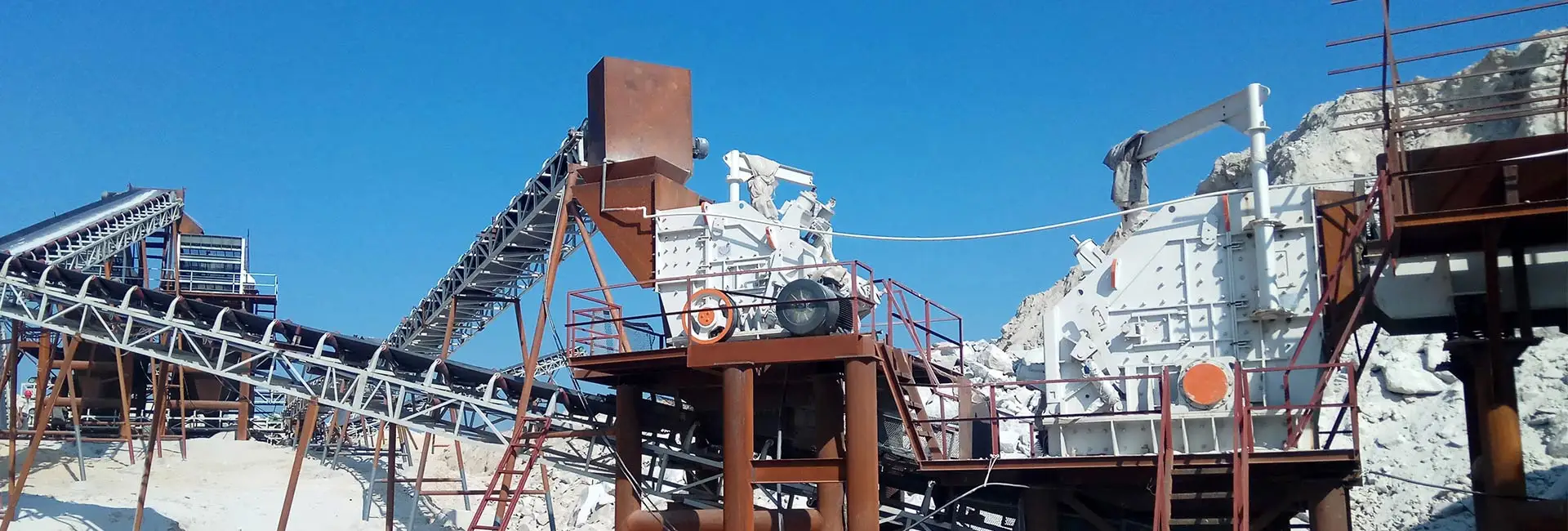
Impact crusher blow bars and impact plates wear rapidly under high-speed basalt impact, requiring frequent replacement that drives up both parts cost and downtime. Hammer crushers face the same rapid wear issue, and basalt's high toughness can cause material to wedge between hammers. Basalt crushing circuits should therefore follow the jaw crusher plus cone crusher plus VSI crusher compression route.
Recommended Basalt Crushing Circuit Configurations
The following table presents Vanguard Machinery's recommended configurations for basalt crushing plants at different capacity levels:
| Capacity (t/h) | Primary | Secondary/Tertiary | Shaping/Sand | Screening |
| 100-200 | PE69 jaw crusher | CS cone crusher | 5X VSI crusher | TS1845 screen |
| 200-400 | 6CX jaw crusher | CP cone crusher | 5X VSI crusher | TS2460 screen |
| 400-600 | 6CX jaw crusher | CP + CS dual cone | 5X VSI (dual) | TS3070 screen |
| 600-800 | 6CX jaw (dual) | CP cone (dual) | 5X VSI (dual) | TS3070 screen (dual) |
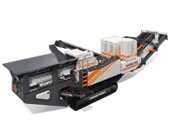
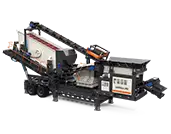
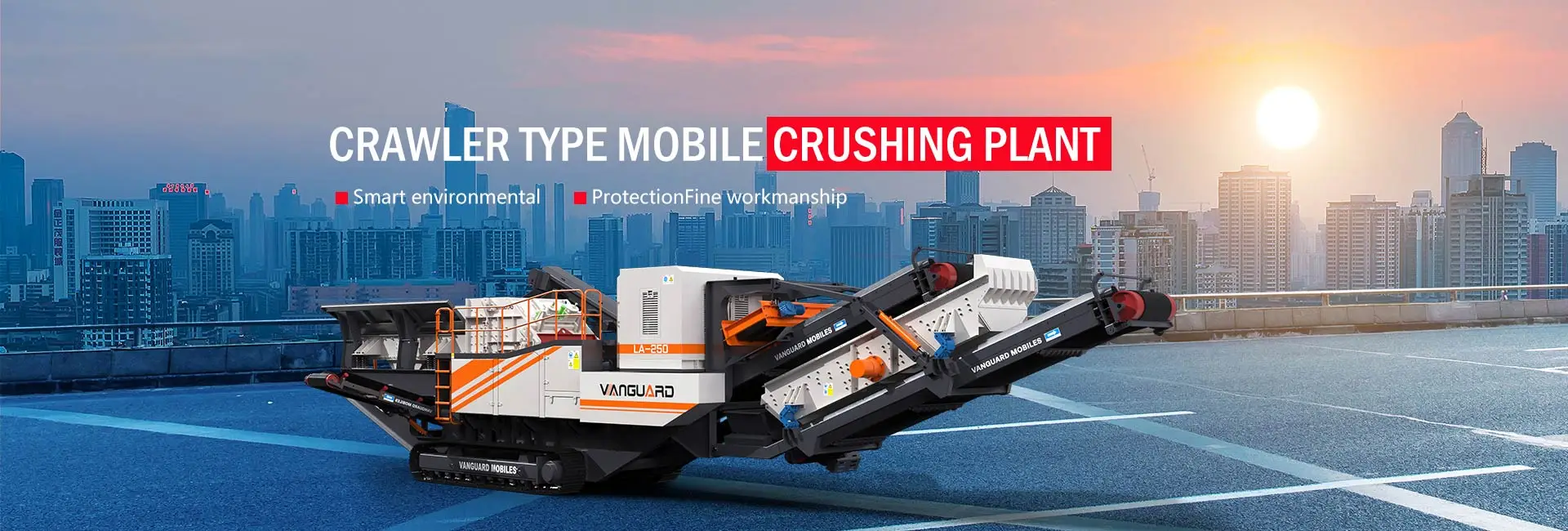
For mobile basalt crushing applications, the VPE Series tire-type mobile jaw plant handles primary crushing, the VPC Series mobile cone plant covers secondary and tertiary stages, and the VPV Series mobile VSI plant performs sand making and shaping. Projects requiring frequent relocation can benefit from the C96/C106/C116 crawler-type mobile jaw plants and the LA Series crawler-type mobile cone plants.
Wear Part Management and Cost Control
Operating costs for basalt crushing circuits depend primarily on wear part consumption. Several measures can effectively reduce per-tonne costs:
First, select the right liner material. Jaw plates and cone liners should use high-manganese steel (ZGMn13Cr2), which forms an effective work-hardened layer under basalt's high-impact conditions. For fine crushing stages where abrasive wear dominates, high-chromium cast iron liners can improve wear resistance by 30% to 50% compared to high-manganese steel.
Second, optimize the chamber profile. Cone crushers should use the medium or hard-rock cavity, with reduced stroke and slightly lower speed to maintain capacity while minimizing liner wear. Regularly inspect the liner wear profile and adjust or flip liners when wear becomes uneven.
Third, control feed size and feed rate. Maintain a choke-fed condition in the cone crusher so the material bed acts as a cushion, reducing direct metal-to-rock contact. Keep feed size below 80% of the maximum recommended feed opening to prevent oversized chunks from causing localized impact damage to liners.
Frequently Asked Questions
Q1:Can I use an impact crusher for basalt?Technically yes, but economically it is impractical. Blow bar life on basalt is only 80 to 150 hours, making per-tonne wear costs five to ten times higher than a cone crusher. For any basalt project producing over 100,000 tonnes per year, the wear parts cost of an impact crusher will far exceed the equipment purchase price. Impact crushers should only be considered as a temporary solution for very small-scale operations or when material moisture is high enough to cause cone crusher chamber clogging.
Q2:How long do cone crusher liners last when processing basalt?It depends on liner material, basalt hardness, and feed size. The CP Series multi-cylinder cone crusher with high-manganese steel liners processing basalt at Mohs 6 to 7 typically achieves 800 to 1,200 hours for secondary crushing liners and 400 to 800 hours for tertiary crushing liners. High-chromium cast iron liners can extend life by 30% to 50%. Periodically flipping liners can add another 15% to 20% to the total service life.
Q3:Is the 5X Series necessary for basalt sand making, or can the VSI Series do the job?Both the 5X Series and VSI Series use the rock-on-rock principle and are well suited for basalt sand production. The 5X Series is the newer generation, with an optimized rotor structure, longer tip life, and hydraulic opening for easier maintenance, making it ideal for large-scale continuous production. The VSI Series has a simpler design and lower investment cost, suitable for smaller projects or budget-conscious customers. The difference in sand particle shape between the two is minimal, so the choice comes down to capacity requirements and budget.
Q4:How should I select screening equipment for a basalt crushing plant?Basalt aggregate demands high screening efficiency. Vanguard Machinery recommends the TS Series three-axis horizontal screen. The elliptical motion generated by the three-axis exciter effectively prevents screen hole blinding, achieving screening efficiency above 95%. Polyurethane screen panels are recommended over metal mesh, offering 3 to 5 times the wear life under basalt's abrasive conditions and lasting 6 to 12 months. For basalt feed with high fines content, add a washing stage using the XSD Series sand washer before screening to remove surface dust.
- Prev: No more
- Next:No more




